 20 citations
,
January 2003 in “Chemical and Pharmaceutical Bulletin”
20 citations
,
January 2003 in “Chemical and Pharmaceutical Bulletin” The new progesterone derivatives effectively inhibit 5α-reductase and bind to the androgen receptor.
1 citations
,
July 2024 in “Journal of Investigative Dermatology” TAK-279 effectively reduces psoriasis symptoms and is safe.
 57 citations
,
November 2006 in “International Journal of Cancer”
57 citations
,
November 2006 in “International Journal of Cancer” A49T gene variant linked to higher prostate cancer risk, lower hormone levels, and slightly reduced balding risk.
 3 citations
,
February 2019 in “Animal biotechnology”
3 citations
,
February 2019 in “Animal biotechnology” The PLP2 gene affects cashmere fiber quality in goats and is linked to hair growth and loss.
 August 2015 in “International Journal of Genetics and Molecular Biology”
 Certain genetic markers may increase or decrease prostate cancer risk.
 April 2018 in “Journal of Investigative Dermatology”
 Removing STAT5 from 3D-cultured human skin cells reduces their ability to grow hair.
66 citations
,
August 2007 in “Applied and environmental microbiology” The engineered yeast strain BLYAS can quickly and sensitively detect androgenic chemicals.
40 citations
,
December 2010 in “Human Genetics” 11 citations
,
April 2012 in “Journal of Investigative Dermatology” A specific mutation in PA-PLA1α causes abnormal hair growth.
1 citations
,
September 2020 in “Journal of dermatology” Researchers found a new mutation in the LIPH gene of a woman with a rare hair condition.
May 2010 in “Faculty Opinions – Post-Publication Peer Review of the Biomedical Literature” A mutation in the KRT74 gene causes woolly hair by affecting hair texture.
May 2010 in “Faculty Opinions – Post-Publication Peer Review of the Biomedical Literature” A mutation in the KRT74 gene causes woolly hair by affecting hair texture.
70 citations
,
December 2008 in “Cancer Research” CXCR2 in skin cells promotes tumor growth.
 1 citations
,
May 2022 in “Голова и шея.”
1 citations
,
May 2022 in “Голова и шея.” p53 protein may help protect or kill neurons under stress.
 19 citations
,
December 2015 in “Journal of Investigative Dermatology”
19 citations
,
December 2015 in “Journal of Investigative Dermatology” The protein p53 directly reduces the production of Keratin 17, a skin and hair protein, in rats with radiation dermatitis.
13 citations
,
November 2018 in “Animal Genetics” A new gene variant causes curly coats in some dog breeds.
84 citations
,
February 2015 in “Experimental Dermatology” PPARγ is crucial for skin health but can have both beneficial and harmful effects.
88 citations
,
June 2000 in “Journal of Investigative Dermatology” Keratin 17 is important for hair and nail structure and affects pachyonychia congenita symptoms.
 45 citations
,
November 2012
45 citations
,
November 2012 The conclusion is that androgen receptor gene polymorphism might be a marker for polycystic ovary syndrome, but more research is needed.
17 citations
,
October 2023 in “Molecules” Plant-derived PDRN from ginseng roots effectively heals skin and improves its barrier.
 April 2018 in “Journal of Investigative Dermatology”
 CENPV, a new partner of CYLD, helps regulate ciliary acetylated tubulin and is overexpressed in certain skin tumors.
January 2019 in “Columbia Academic Commons (Columbia University)” TRPV3 and TRPV6 channels change structure to regulate calcium and heat responses.
 2 citations
,
January 2020 in “BioMed Research International”
2 citations
,
January 2020 in “BioMed Research International” Phaeodactylum tricornutum extract helps hair follicle cells grow by activating the ERK1/2 pathway.
 23 citations
,
December 2013 in “British Journal of Dermatology”
23 citations
,
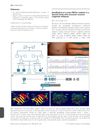
December 2013 in “British Journal of Dermatology” A new gene mutation linked to a skin condition was found in a Spanish family.
115 citations
,
August 2004 in “The journal of investigative dermatology/Journal of investigative dermatology” Modulating Cytochrome P450 activity could help develop new skin disease treatments.
 2 citations
,
November 2018 in “Indian Journal of Pharmaceutical Education”
2 citations
,
November 2018 in “Indian Journal of Pharmaceutical Education” The developed model can predict effective 5-alpha-reductase enzyme inhibitors.
10 citations
,
April 2022 in “Critical reviews in food science and nutrition” Skin odorant receptors respond to flavors and could be targeted to improve skin health and treat diseases.
211 citations
,
February 1994 in “Proceedings of the National Academy of Sciences” Too much parathyroid hormone-related protein in skin disrupts hair growth in mice.
May 2025 in “Texas Digital Library (University of Texas)” Extracellular ATP promotes growth, while adenosine inhibits it in Arabidopsis plants.
150 citations
,
June 1999 in “Oncogene”