 September 2017 in “Journal of Investigative Dermatology Symposium Proceedings”
 Prostaglandin D2 increases testosterone production in skin cells through a process involving reactive oxygen species, which could be a new target for treating hair loss and other skin conditions driven by testosterone.
 April 2016 in “Journal of Investigative Dermatology”
 Double-stranded RNA activates a pathway that causes a skin protein to be expressed in the wrong place.
61 citations
,
September 1994 in “Journal of Medical Genetics” Pachyonychia congenita is linked to a keratin gene on chromosome 17.
 January 2018 in “Springer eBooks”
 PDE inhibitors, especially PDE4 inhibitors like apremilast, are effective for certain inflammatory skin conditions but have side effects and can be costly.
54 citations
,
May 2015 in “Endocrinology” Manipulating 5α-reductase type 2 can affect liver fat production and glucocorticoid effects.
July 2025 in “Journal of Investigative Dermatology” Upadacitinib effectively treats pyoderma gangrenosum.
 286 citations
,
April 2009 in “The journal of neuroscience/The Journal of neuroscience”
286 citations
,
April 2009 in “The journal of neuroscience/The Journal of neuroscience” TRPA1 is crucial for mechanical sensitivity in skin sensory neurons.
 24 citations
,
November 2019 in “Experimental Dermatology”
24 citations
,
November 2019 in “Experimental Dermatology” PPAR-γ is important for healthy hair and its problems, and more research on PPAR-γ treatments is needed.
 April 2026 in “bioRxiv (Cold Spring Harbor Laboratory)”
 A new microneedle patch significantly improves melanoma treatment by using a special material to activate cancer-fighting drugs and disrupt cancer cells.
 7 citations
,
July 2005 in “Journal of Dermatological Science”
7 citations
,
July 2005 in “Journal of Dermatological Science” The gene URB is more active in human hair growth cells and responds to a hair-related hormone.
 5 citations
,
December 2015 in “Dermatologic Therapy”
5 citations
,
December 2015 in “Dermatologic Therapy” Using a certain drug on the skin can help prevent hair loss caused by pulling on the hair.
 4 citations
,
May 2025 in “npj Parkinson s Disease”
4 citations
,
May 2025 in “npj Parkinson s Disease” PINK1 is important for controlling gut immune responses linked to early Parkinson's disease.
 13 citations
,
December 2012 in “Canadian Urological Association Journal”
13 citations
,
December 2012 in “Canadian Urological Association Journal” 5ARIs like finasteride can help prevent prostate cancer and treat BPH, but guidelines should be updated to reflect this.
20 citations
,
August 1997 in “PubMed” Increased K+ permeability alone may not promote hair growth.
![Synthesis and In Vitro Study of 17β-[N-Ureylene-N,N′-Disubstituted]-4-Methyl-4-Aza-5α-Androstan-3-Ones as Selective Inhibitors of Type I 5α-Reductase](/images/assets/d19df8a7-8de6-4430-8a0d-4ffa1f502985/small/15608.jpg) 5 citations
,
February 1997 in “Bioorganic & Medicinal Chemistry”
5 citations
,
February 1997 in “Bioorganic & Medicinal Chemistry” New compounds were made that effectively block a specific enzyme related to androgen conditions.
October 2014 in “Archivio Istituzionale della Ricerca (Universita Degli Studi Di Milano)” A new type of nerve cell involved in itch perception was discovered.
 16 citations
,
September 2016 in “Neuropharmacology”
16 citations
,
September 2016 in “Neuropharmacology” Activating TSPO helps protect the retina from damage caused by high eye pressure in glaucoma.
 December 2025 in “The AAPS Journal”
 Finasteride and dutasteride's effects are mainly due to target binding saturation and slow enzyme turnover.
 105 citations
,
May 2011 in “The journal of investigative dermatology/Journal of investigative dermatology”
105 citations
,
May 2011 in “The journal of investigative dermatology/Journal of investigative dermatology” Activating TRPV3 stops human hair growth.
14 citations
,
July 2016 in “Journal of Endocrinology” The equine epididymis mainly uses type 1 5α-reductase, and both finasteride and dutasteride can inhibit its activity.
16 citations
,
November 2018 in “The journal of pain/Journal of pain” 14,15-EET may help reduce poststroke pain by affecting certain brain proteins.
 August 2018 in “Journal of The American Academy of Dermatology”
 A 5-year-old girl with a rare skin disorder was effectively treated with skin creams instead of oral medication.
 October 2017 in “The Indian Journal of Animal Sciences”
 The prolactin gene polymorphism doesn't affect cashmere quality in these goats.

Proretinal nanoparticles are a safe and effective way to deliver retinal to the skin.
 March 1998 in “Journal of dermatological science”
 Diphencyprone initially increases mouse hair growth, then slows it, possibly due to changes in specific protein levels.
8 citations
,
June 2004 in “Journal of Investigative Dermatology” Certain peptides can prevent hair loss in young rats caused by a cancer drug.
 9 citations
,
February 2018 in “Journal of Pharmaceutical and Biomedical Analysis”
9 citations
,
February 2018 in “Journal of Pharmaceutical and Biomedical Analysis” Quick, selective detection of tadalafil and finasteride in human plasma developed.
 2 citations
,
January 2007 in “Acta Dermato Venereologica”
2 citations
,
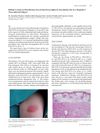
January 2007 in “Acta Dermato Venereologica” A patient developed a blister at the injection site after hepatitis C treatment.
1 citations
,
January 2002 in “PubMed” PM-9, like finasteride, may help treat certain diseases by blocking a key enzyme.
 1 citations
,
October 2023 in “European journal of histochemistry”
1 citations
,
October 2023 in “European journal of histochemistry” Ozone and procaine boost the release of healing factors in platelet-rich plasma.