 December 2022 in “Journal of Tropical Pharmacy and Chemistry”
 The hair tonic made from oil palm leaf extract is very effective in preventing hair damage from the sun.
Carbohydrates are crucial for skin development and may help understand skin conditions.
7 citations
,
August 2017 in “European journal of endocrinology” Mutations in the POC1A gene can cause a unique form of extreme insulin resistance and short stature.
1 citations
,
January 2019 in “Pan African Medical Journal” Keratosis pilaris causes small skin bumps, mainly in women, and treatments offer only temporary relief.
 July 2026 in “Pharmacological Reports”
 Topical latanoprost acid may help hair growth in women with hair loss.
 3 citations
,
October 2021 in “PLoS ONE”
3 citations
,
October 2021 in “PLoS ONE” Piperonylic acid speeds up wound healing by reducing inflammation and boosting collagen.
 22 citations
,
January 1968 in “THE JOURNAL OF VITAMINOLOGY”
22 citations
,
January 1968 in “THE JOURNAL OF VITAMINOLOGY” α-Tocopheryl acetate is well absorbed through healthy skin.
 May 2020 in “JAAD case reports”
 Using anthralin and calcipotriene together might help treat tough cases of alopecia areata, but more research is needed to understand how it works.
 9 citations
,
February 2019 in “Journal of Clinical Research in Pediatric Endocrinology”
9 citations
,
February 2019 in “Journal of Clinical Research in Pediatric Endocrinology” Children with classic congenital adrenal hyperplasia have thicker heart fat and are at higher risk for heart problems and early atherosclerosis.
 March 2026 in “Inflammopharmacology”
 Ursolic acid from Ochrosia elliptica leaves may help manage PCOS symptoms.
January 2013 in “วารสารเภสัชศาสตร์อีสาน (Isan Journal of Pharmaceutical Sciences, IJPS)” Mangosteen peel extract effectively inhibits acne-causing bacteria.
23 citations
,
February 2015 in “The American journal of pathology” Keratosis pilaris is often linked to genetic mutations and causes skin and hair abnormalities, regardless of those mutations.
 11 citations
,
January 2006 in “International Journal of Cosmetic Science”
11 citations
,
January 2006 in “International Journal of Cosmetic Science” Some oils can penetrate hair and reduce the stickiness between fibers, but mineral oil cannot.
8 citations
,
January 2019 in “Journal of cosmetic dermatology” Modified phenol peels effectively reduced stubborn skin pigmentation in patients with Lichen Planus Pigmentosus.
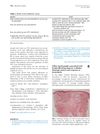
July 2024 in “LA Referencia (Red Federada de Repositorios Institucionales de Publicaciones Científicas)” Adipose tissue and eccrine gland displacement are common in certain alopecias but don't help differentiate between them.
 32 citations
,
September 2017 in “Journal of the American Academy of Dermatology”
32 citations
,
September 2017 in “Journal of the American Academy of Dermatology” Oral isotretinoin effectively treats yellow facial papules in frontal fibrosing alopecia patients.
23 citations
,
March 2017 in “JAAD case reports” The document suggests a possible link between FAM111B gene mutations and increased cancer risk, particularly pancreatic cancer.
 2 citations
,
January 2008 in “Journal of Society of Cosmetic Chemists of Japan”
2 citations
,
January 2008 in “Journal of Society of Cosmetic Chemists of Japan” PMS nanoparticles improve damaged hair by protecting and restoring its surface and color.
March 2026 in “Drug Testing and Analysis” PTeCA is a reliable marker for detecting oxidative hair treatments.
 September 2022 in “Biomedicines”
 Lipid Accumulation Product and Free Androgens Index are effective for assessing fatty liver disease risk in women with Polycystic Ovary Syndrome.
 1 citations
,
January 2025 in “American Journal of Translational Research”
1 citations
,
January 2025 in “American Journal of Translational Research” PPARα agonists may help treat alopecia areata by reducing inflammation.
62 citations
,
July 2022 in “Science Immunology” TREM2 macrophages and unsaturated lipids contribute to acne inflammation.
 September 2016 in “Journal of the Society of Cosmetic Scientists of Korea”
 Pine resin and abietic acid were found to promote hair growth in mice.
 December 2023 in “Biological & pharmaceutical bulletin”
 IPM enhances skin penetration of hydrophilic drugs.
 2 citations
,
December 2018 in “Journal of cosmetic dermatology”
2 citations
,
December 2018 in “Journal of cosmetic dermatology” Higher CRBP1 levels are linked to more severe alopecia areata.
 87 citations
,
March 2014 in “Biochimica et Biophysica Acta (BBA) - Molecular and Cell Biology of Lipids”
87 citations
,
March 2014 in “Biochimica et Biophysica Acta (BBA) - Molecular and Cell Biology of Lipids” Cholesterol sulfate buildup due to a genetic mutation disrupts the skin barrier, leading to the scaling skin seen in X-linked ichthyosis.
 January 2017 in “Nasza Dermatologia Online”
 Both treatments helped hair regrowth in alopecia areata, with isopropanol being better tolerated.
8 citations
,
May 2005 in “The American journal of dermatopathology/American journal of dermatopathology” The hair defect is due to abnormal inner root sheath keratinization.
4 citations
,
July 2023 in “Analytical and Bioanalytical Chemistry” June 2021 in “Egyptian Journal of Dermatology and Venereology” Psoriasis, acne, and hair loss are linked to unhealthy cholesterol levels, increasing heart disease risk.