Search
for
Sort by
Research
180-210 / 1000+ resultsresearch Development of a portable reflectance confocal microscope and its application in the noninvasive in vivo evaluation of mesenchymal stem cell-promoted cutaneous wound healing
A new portable microscope can effectively monitor skin wound healing in real-time.

research PÉ DIABÉTICO NA ATENÇÃO BÁSICA: UMA REVISÃO DE LITERATURA
The document concludes that Passiflora incarnata could help with anxiety, telemedicine might improve heart failure care, screen time for kids has increased, pregnant teens in Brazil are mostly okay with their body image, rare tuberculosis infection can occur after knee surgery, older and severely ill people are more likely to have long COVID-19 symptoms, HPLC might diagnose more diabetes cases, and psychiatrists should be involved in pain management.
research Enhanced polycystic ovary syndrome screening: incorporating population and symptom-specific scales into a validated questionnaire and assessment of the syndrome’s associated factors: an analytical cross-sectional study
Efficient PCOS screening is crucial for early detection, with lifestyle factors like fruit intake potentially aiding prevention.
research Direct‐to‐consumer healthcare and its expanding role in the Australian healthcare system
Direct-to-consumer telemedicine in Australia needs formal evaluation for safety and quality.
research Objective evaluation of photoepilation by phototrichogram
Photoepilation significantly reduces hair, and phototrichograms can objectively measure its effectiveness.
research MICRO-URZĄDZENIA, BEZPRZEWODOWE KAPSUŁKI, MAPY, STYMULATORY I ROZRUSZNIKI STOSOWANE DO DIAGNOSTYKI I LECZENIA ZABURZEŃ MOTORYKI PRZEWODU POKARMOWEGO
New technologies improve diagnosis and treatment of digestive disorders.
research The BIOMarkers in Atopic Dermatitis and Psoriasis (BIOMAP) glossary: developing a lingua franca to facilitate data harmonization and cross‐cohort analyses
The BIOMAP glossary standardizes data to improve research on atopic dermatitis and psoriasis.
research Asynchronous telemedicine for isotretinoin management: A direct care pilot
Asynchronous telemedicine for acne treatment is effective and improves access and productivity.
research Objective outcome measures: Collecting meaningful data on alopecia areata
The document suggests using standardized methods to track and measure hair loss in alopecia areata, including patient self-assessment and a 50% improvement in specific scores as a treatment goal.

research Alopecia in adolescents-A survey
The document's conclusion cannot be provided because the document is not accessible or understandable.

research Patient-centered care
The document's conclusion cannot be provided because the document is not accessible or understandable.
research Proceedings of the Inaugural Pediatric Dermatology Research Alliance (PeDRA) Conference
The conference concluded with plans for joint research into children's skin conditions and emphasized the importance of collaboration and patient-focused research.

research PSS21 GAP ANALYSIS FOR PATIENT-REPORTED OUTCOMES MEASURES FOR ALOPECIA
No current patient-reported outcome measure fully meets FDA requirements for alopecia treatments.
research Smart Diagnostic System for Health Risk Assessment
WomenCare helps predict PCOD risk in women to encourage early medical consultation.
research Comparison of large language models in generating patient handouts for the dermatology clinic: A blinded study
ChatGPT is preferred for creating dermatology patient handouts, but all models can be useful with oversight.
research Integrated single-cell RNA-sequencing data of unwounded and wounded mouse skin and fibroblasts.
The dataset includes detailed genetic information from mouse skin cells before and after injury.
research Integrated single-cell RNA-sequencing data of unwounded and wounded mouse skin and fibroblasts.
The dataset includes detailed genetic information from mouse skin cells before and after injury.
research 49147 Comparing the Quality of ChatGPT- and Physician-Generated Responses to Patients' Dermatologic Questions in the Electronic Medical Record
Physician responses are better than ChatGPT for dermatology questions.
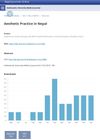
research Aesthetic Practice in Nepal
The document's conclusion cannot be provided because the document is not accessible or understandable.
research Biomonitoring of arsenic, lead, manganese and mercury in hair from a presumably exposed Uruguayan child population
research Development of a low-cost device for photobiomodulation using 3D printing
A low-cost, 3D-printed light therapy device is safe and effective but needs more testing before use on people.
research Use of a Healthcare Claims Database for Post-Marketing Safety Assessments of Eribulin in Japan: A Comparative Assessment with a Prospective Post-Marketing Surveillance Study
Healthcare claims databases can help monitor drug safety, but may report adverse events differently than direct surveillance.
research Use of modern technological devices (photography, mobile phone applications and artificial intelligence) in dermatology
Technology, like mobile apps and AI, is improving skin condition diagnosis and treatment.
research 公表学術論文等リスト 2018
research Results of 60-second timed hair counts in women between the ages of 20–60 years
The 60-second timed hair count is a reliable and simple way to measure hair shedding at home, showing older women tend to shed more hair than younger women.
research Detection of lentiviral constructs for release testing of CAR- T cells using digital droplet PCR
The new ddPCR method reliably detects unwanted viruses in CAR-T cell products, ensuring their safety for patients.
research Green and Emerging Microextraction Strategies for Bioanalytical Determination of Hormones: Trends, Challenges, and Applications
Microextraction techniques improve hormone testing while being environmentally friendly.
research rPanglaoDB: an R package to download and merge labeled single-cell RNA-seq data from the PanglaoDB database
rPanglaoDB helps study rare cell types by merging RNA data, confirming fibrocytes' role in healing.
research H11 More cancer, better counting or better at diagnosis? The history of skin cancer registration
High-quality data on skin cancer is crucial for understanding its trends and allocating healthcare resources effectively.