July 2025 in “Carbohydrate Polymers” The green alga Parachlorella sp. has potential for use in cosmetics and health products due to its antioxidant, anti-hypertensive, and hair growth properties.
 February 2026 in “Phycology”
 Microalgae can sustainably improve nutrition and cosmetics with their diverse beneficial compounds.
15 citations
,
March 1987 in “Phycologia” Phosphorus limitation causes significant hair growth in certain algae.
 3 citations
,
January 2022 in “Medical Mycology Journal”
3 citations
,
January 2022 in “Medical Mycology Journal” Malassezia fungi in healthy noses can form a "spaghetti-and-meatballs" structure.
 9 citations
,
January 2008 in “Medical mycology”
9 citations
,
January 2008 in “Medical mycology” A dog's skin infection caused by the fungus Chaetomium globosum was effectively treated with ketoconazole.
 1 citations
,
February 2023 in “Plant disease”
1 citations
,
February 2023 in “Plant disease” 'Eclipta prostrata' plants in Taiwan are infected with 'Candidatus Phytoplasma aurantifolia'.
2 citations
,
November 2025 in “Plant Molecular Biology” 4 citations
,
October 2001 in “Mycoses” A young cat had a rare fungal infection caused by Microsporum gypseum.
 December 2023 in “Journal of biobased materials and bioenergy”
 The algae grew better and fixed nitrogen more efficiently when they worked together, using nitrogen and iron.
 3 citations
,
December 2015 in “Acta Veterinaria Brasilica”
3 citations
,
December 2015 in “Acta Veterinaria Brasilica” A chinchilla got ringworm from stress and contact with dog-related items.
May 2019 in “Small Animal Dermatology” The dog had a good prognosis with proper treatment and cleaning.
November 2025 in “Probiotics and Antimicrobial Proteins”  July 2015 in “Actas Dermo-Sifiliográficas”
 A young woman with a rare fungal infection showed significant improvement after treatment with antifungal medication.
 March 2026 in “Dermatology Online Journal”
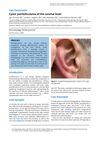
 Cystic panfolliculoma is a rare, harmless tumor that can be confused with other skin tumors.
5 citations
,
February 2013 in “PubMed” An 11-year-old girl's hair loss was caused by a Cladosporium fungal infection, which was cured with itraconazole treatment.
2 citations
,
August 2007 in “Zoonoses and Public Health” Two southern chamois in the Eastern Pyrenees had skin infections caused by a fungus.
2 citations
,
October 1931 in “Archives of Dermatology and Syphilology” A rare scalp infection in a child developed into a kerion with additional skin symptoms.
September 2015 in “Photodiagnosis and Photodynamic Therapy”  3 citations
,
April 2021 in “Berkala ilmu kedokteran/Journal of the medical sciences”
3 citations
,
April 2021 in “Berkala ilmu kedokteran/Journal of the medical sciences” A fungus called Epidermophyton floccosum can cause scalp infections.
 December 2018 in “DergiPark (Istanbul University)”
 The cat's skin condition improved with treatment, but underlying health issues must be addressed.
17 citations
,
February 1987 in “Journal of the American Academy of Dermatology” The hair cuticle acts as a barrier against fungal infection, which occurs only deep within the hair follicle.
2 citations
,
October 2001 in “Mycoses” A cat had a rare fungal infection caused by Microsporum gypseum.
17 citations
,
April 1997 in “American Journal of Dermatopathology” PC-associated alopecia has unique microscopic features.
 2 citations
,
January 2023 in “International Journal of Dermatology Research”
2 citations
,
January 2023 in “International Journal of Dermatology Research” Calotropis procera leaf extracts have antifungal properties, especially against Microsporum canis.
 6 citations
,
January 2023 in “Medical Mycology Journal”
6 citations
,
January 2023 in “Medical Mycology Journal” Fosravuconazole effectively treated a woman's scalp infection without side effects.
 June 2023 in “Antioxidants”
 Lipids from Schizochytrium sp. help prevent hair loss by protecting hair cells from damage and promoting hair growth.
3 citations
,
January 2021 in “Therapeutic advances in infectious disease” A 9-year-old girl with a healthy immune system was successfully treated for a severe fungal scalp infection caused by Microsporum audouinii.
June 2023 in “Journal of Biosciences and Health” Healthy dogs and cats often carry skin fungi without showing symptoms, which can spread to others.
14 citations
,
December 2019 in “International Journal of Phytocosmetics and Natural Ingredients” The conditioner with Spirulina and Ascophyllum extracts made hair shinier and easier to comb.
73 citations
,
April 2017 in “Scientific Reports” Nitrogen starvation in microalgae increases lipid production, making it a potential biofuel source.