6 citations
,
May 2002 in “British journal of dermatology/British journal of dermatology, Supplement” A rare skin condition linked to leukemia improved with chemotherapy.
1 citations
,
January 2009 in “The Open Dermatology Journal” Chemotherapy caused nail grooves and separation, but they healed after treatment stopped.
 22 citations
,
April 2000 in “International Journal of Dermatology”
22 citations
,
April 2000 in “International Journal of Dermatology” A 78-year-old farmer with lung disease had skin lesions from a fungal infection that healed completely with medication.
5 citations
,
June 2008 in “British Journal of Dermatology”  September 2021 in “CRC Press eBooks”
 CCCA is a common hair loss condition in African American women, often inherited and influenced by hairstyling, with unique scalp features detectable by special tools.
12 citations
,
December 2011 in “Canadian Journal of Microbiology” Serotype 4 of Ureaplasma showed the highest pathogenicity in female mice.
February 2026 in “Middle European Scientific Bulletin” Improving scalp microbiome may help restore hair and improve scalp health.
13 citations
,
June 2011 in “PubMed” The patient improved significantly after treatment, with only one small scar remaining.
 22 citations
,
January 2009 in “Medical mycology”
22 citations
,
January 2009 in “Medical mycology” A family got a fungal infection from a boy who had contact with rabbits, but they all recovered with treatment.
 11 citations
,
July 2021 in “Physiologia Plantarum”
11 citations
,
July 2021 in “Physiologia Plantarum” SIPHL1 from tomato enhances plants' response to low phosphate levels.
March 2003 in “中華皮膚科醫學雜誌” Trichothiodystrophy causes unusual hair and developmental issues.
Marine sponges from Tabuhan Island can inhibit enzymes linked to Alzheimer's and hair loss.
1 citations
,
August 2024 in “Journal of Pharmacy & Pharmaceutical Sciences” The DPCP/HPβCD complex improves solubility and anti-inflammatory effects for alopecia areata treatment.
 August 2024 in “Revista Científica Multidisciplinar Núcleo do Conhecimento”
 Malassezia restricta may be linked to intestinal diseases like Crohn's and ulcerative colitis.
 13 citations
,
January 2012 in “International journal of trichology”
13 citations
,
January 2012 in “International journal of trichology” The study found that hair fragility in Pili annulati may be caused by cavities and damage within the hair shafts.
 23 citations
,
July 2018 in “Journal of Cosmetic Dermatology”
23 citations
,
July 2018 in “Journal of Cosmetic Dermatology” Chemotherapy caused hair loss with specific patterns, but most patients had hair regrowth after treatment, while some had lasting hair loss.
September 2025 in “Journal of Applied Biological Chemistry” Grateloupia elata extract may be effective for anti-aging skincare.
1 citations
,
March 2019 in “Dermatology Reports” Dermoscopy can help diagnose tinea capitis but should be used with other tests.
February 2013 in “Archives of Disease in Childhood Education & Practice” Kerion, a severe scalp infection, causes hair loss and needs oral antifungal treatment.
1 citations
,
March 2017 in “Semina Ciências Agrárias” Hunting wild boar can cause fungal infections in dogs.
175 citations
,
September 1998 in “British Journal of Dermatology” Keratin 17 gene mutations cause both steatocystoma multiplex and pachyonychia congenita type 2.
January 2007 in “Journal of the American Academy of Dermatology” Tinea can cause scarring alopecia in children, and fungal culture is crucial for diagnosis.
 October 2023 in “The American Journal of Gastroenterology”
 Cronkhite-Canada syndrome is rare, with high mortality and cancer risk, needing more research for treatment guidelines.
 8 citations
,
January 2007 in “Mycoses”
8 citations
,
January 2007 in “Mycoses” A man's scalp infection, mistaken for bacterial, was actually a rare fungal infection treated successfully with antifungal medication.
September 2024 in “Journal of the American Academy of Dermatology” A new type of alopecia areata, called the "confetti variant," causes small bald spots that often heal on their own in a few months.
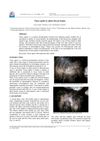
An adult Libyan woman was successfully treated for a rare scalp infection usually seen in children.
7 citations
,
February 2005 in “Veterinary Dermatology” Horses with skin disease have more surface bacteria than healthy horses.
March 2004 in “Journal of the American Academy of Dermatology” Middle-aged women with cicatricial alopecia/lichen planopilaris responded well to treatments like ketoconazole shampoo and steroids.
4 citations
,
November 1998 in “Pediatrics in review” Scalp fungal infections need oral antifungals, while other skin fungal infections can be treated with creams; keep areas dry and don't stop treatment early.
 June 2023 in “International Journal of Clinical Research and Reports”
 Method B with propylene glycol is better for stable low-concentration DPCP solutions for alopecia areata.