 57 citations
,
August 1998 in “The journal of small animal practice/Journal of small animal practice”
57 citations
,
August 1998 in “The journal of small animal practice/Journal of small animal practice” Malassezia-associated dermatitis can cause itching in cats with feline paraneoplastic alopecia.
 52 citations
,
January 1999 in “Journal of Small Animal Practice”
52 citations
,
January 1999 in “Journal of Small Animal Practice” Removing a cat's pancreatic cancer can temporarily reverse hair loss caused by the disease.
 48 citations
,
March 1997 in “Veterinary Dermatology”
48 citations
,
March 1997 in “Veterinary Dermatology” Some cats with sudden hair loss and tiredness might have cancer-related alopecia.
1 citations
,
November 2024 in “Veterinary Dermatology” The cat's hair loss was linked to a type of cancer.
 1 citations
,
June 2023 in “JAAD case reports”
1 citations
,
June 2023 in “JAAD case reports” Nivolumab treatment led to hair regrowth in a man with metastatic melanoma and alopecia areata.
 February 2008 in “Vlaams dierengeneeskundig tijdschrift”
 A cat's hair loss was linked to a severe pancreatic cancer.
10 citations
,
April 2014 in “Molecular and Clinical Oncology” Alopecia areata can be an early sign of Hodgkin’s lymphoma and may improve with lymphoma treatment.
3 citations
,
January 2022 in “JAAD Case Reports” Alopecia areata and myasthenia gravis can occur as rare symptoms of breast cancer.
 4 citations
,
July 2015 in “Journal of Feline Medicine and Surgery Open Reports”
4 citations
,
July 2015 in “Journal of Feline Medicine and Surgery Open Reports” A cat with hair loss and illness was found to have cancer spread from its colon.
 31 citations
,
June 2011 in “Journal of the neurological sciences”
31 citations
,
June 2011 in “Journal of the neurological sciences” Removing the thymoma improved the man's autoimmune conditions.
 26 citations
,
August 2018 in “American Journal of Clinical Dermatology”
26 citations
,
August 2018 in “American Journal of Clinical Dermatology” Hair loss in cancer patients can be related to the cancer itself, treatment, or other conditions, and understanding it is important for diagnosis and patient care.
29 citations
,
July 2008 in “British Journal of Dermatology” The patient had paraneoplastic pemphigus without mucosal involvement.
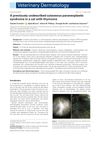 2 citations
,
March 2019 in “Veterinary dermatology”
2 citations
,
March 2019 in “Veterinary dermatology” Thymoma in cats can cause hair loss without inflammation.
April 2018 in “Blackwell's Five‐Minute Veterinary Consult Clinical Companion” Some skin conditions in pets can signal cancer or may develop into cancer, and monitoring or treating these can help detect or manage the disease.
 September 2016 in “Elsevier eBooks”
 Different types of hair loss in dogs and cats have various causes and treatments, with outcomes ranging from good to uncertain.
 14 citations
,
January 2012 in “International Journal of Trichology”
14 citations
,
January 2012 in “International Journal of Trichology” Hodgkin's lymphoma can show up as hair loss.
1 citations
,
June 2023 in “Turkish Journal of Surgery” A rare case linked complete hair loss to both pancreas and gallbladder cancer.
 January 2011 in “Elsevier eBooks”
 Alopecia in animals can be hereditary, congenital, or acquired, with treatments and outcomes varying widely.
66 citations
,
February 2002 in “Veterinary dermatology” Malassezia in cat skin biopsies may indicate internal cancer.
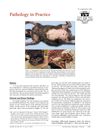 4 citations
,
May 2014 in “Javma-journal of The American Veterinary Medical Association”
4 citations
,
May 2014 in “Javma-journal of The American Veterinary Medical Association” The cat had liver cancer and a related hair loss condition, with a likely cause being bile duct cancer.
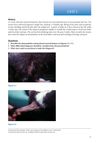 May 2019 in “Small Animal Dermatology”
 The cat had a rare condition linked to cancer, leading to its euthanasia.
April 2011 in “Companion Animal” Feline pododermatitis is less common in cats than in dogs.
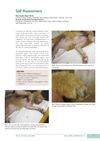 April 2008 in “Companion Animal”
 The cat's skin condition was linked to cancer and did not improve with treatment, leading to a poor outcome.
 43 citations
,
November 2007 in “Dermatologic Clinics”
43 citations
,
November 2007 in “Dermatologic Clinics” Hair and nail changes can indicate health issues, including cancer and side effects from cancer treatments.
 1 citations
,
September 2021 in “Gynäkologische Endokrinologie”
1 citations
,
September 2021 in “Gynäkologische Endokrinologie” Hair loss has many causes, so treatment varies.
 October 2025 in “Medicine”
 A potential link exists between unexplained hormone deficiency, hair loss, and testicular tumors, suggesting thorough screening is needed.
March 2021 in “Der Hautarzt” Neuroendocrine paraneoplastic syndromes often show skin changes, helping early diagnosis and requiring a team approach for best care.
Thymoma with alopecia areata may be linked to abnormal immune cells.
![Influence of FHIT on Benzo[a]pyrene-Induced Tumors and Alopecia in Mice: Chemoprevention by Budesonide and N-Acetylcysteine](/images/assets/f8f56777-f891-4879-8c45-c87d6aa82563/small/35499.jpg) 24 citations
,
May 2006 in “Proceedings of the National Academy of Sciences of the United States of America”
24 citations
,
May 2006 in “Proceedings of the National Academy of Sciences of the United States of America” Budesonide and N-acetylcysteine reduced tumors and alopecia in mice, regardless of FHIT gene status.
October 2025 in “Journal of the Endocrine Society” A postmenopausal woman had rare symptoms due to a possible ovarian tumor, needing thorough evaluation.