 2 citations
,
January 2017 in “Recent clinical techniques, results, and research in wounds”
2 citations
,
January 2017 in “Recent clinical techniques, results, and research in wounds” Using tissue expanders with galeotomies for post-burn alopecia is faster and has fewer complications.
 1 citations
,
January 2026
1 citations
,
January 2026 Use personalized cosmeceuticals for safe, effective hair and scalp treatment.
 1 citations
,
October 2023 in “International journal of Ayurveda and pharma research”
1 citations
,
October 2023 in “International journal of Ayurveda and pharma research” Herbal medications might be safer and more effective for hair loss than synthetic treatments.
 1 citations
,
October 2018 in “InTech eBooks”
1 citations
,
October 2018 in “InTech eBooks” The document concludes that treatments for cicatricial alopecia are not well-supported by evidence, but hair transplantation shows more predictable and satisfactory results.
1 citations
,
December 2017 in “Annals of Dermatological Research” Accurate early diagnosis of Lichen Planopilaris is crucial to prevent permanent hair loss.
 1 citations
,
May 2015 in “Journal of The American Academy of Dermatology”
1 citations
,
May 2015 in “Journal of The American Academy of Dermatology” Both azathioprine and betamethasone treatments effectively regrow hair in alopecia areata, but azathioprine may be safer.
 1 citations
,
October 2013 in “Expert Review of Dermatology”
1 citations
,
October 2013 in “Expert Review of Dermatology” Diagnosing alopecia areata is challenging and requires careful examination and various tests to distinguish it from other hair loss types.
 1 citations
,
January 2013 in “International Journal of Trichology”
1 citations
,
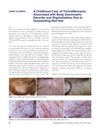
January 2013 in “International Journal of Trichology” A girl with red hair developed hair-pulling and body image disorders after being bullied for her hair color.
 1 citations
,
January 2011 in “The annals of clinical and analytical medicine”
1 citations
,
January 2011 in “The annals of clinical and analytical medicine” Hair mesotherapy showed improvement in hair growth and thickness without side effects.
 1 citations
,
August 1988 in “Journal of The American Academy of Dermatology”
1 citations
,
August 1988 in “Journal of The American Academy of Dermatology” Hair transplantation between identical twins can successfully treat severe, nonprogressive hair loss due to follicular aplasia.
 June 2026 in “International Journal of Homoeopathic Sciences”
 Homeopathic treatment led to significant hair regrowth in a woman with long-term hair loss.
 March 2026 in “Dermatology Reports”
 FFA has higher long-term remission rates than LPP.
 February 2026 in “Clinical Cosmetic and Investigational Dermatology”
 Inverted Follicular Keratosis is rare but should be considered in scalp lesion diagnoses for all ages.
 January 2026 in “Forum Dermatologicum”
 Hair loss can be caused by cancer, treatments, or skin conditions, and trichoscopy helps diagnose it.
December 2025 in “Antibiotics” Tinea capitis in older adults is often misdiagnosed but can be effectively treated with antifungal therapy.
 September 2025 in “Dermatology Online Journal”
 Biopsy is crucial for diagnosing unusual hair loss causes like lymphoma.

Integrative hair therapy improved hair loss and regrowth.
 May 2025 in “International Journal of Cosmetic Science”
 Caffeine and adenosine in shampoo may boost hair growth and change scalp microbes and lipids.
 April 2025 in “Dermatology Practical & Conceptual”
 Biopsy is crucial to accurately distinguish Erosive Pustular Dermatosis of the Scalp from Squamous Cell Carcinoma.
 April 2025 in “Dermatology Practical & Conceptual”
 Biopsy is crucial for accurately diagnosing EPDS to avoid mistaking it for SCC.
 January 2025 in “International Journal of Herbal Medicine”
 Herbs like neem, tulsi, and tea tree oil may treat dandruff without side effects.
 July 2024 in “Dermatology Practical & Conceptual”
 LC-OCT helps accurately diagnose different types of infant hair loss without invasive methods.
 June 2024 in “Journal of Cosmetic Dermatology”
 Hair transplants are better for severe hair loss, while scalp micropigmentation suits those with denser hair.
 April 2024 in “International journal of research in dermatology”
 Azathioprine can cause hair loss and matted hair.
 January 2024 in “International Ayurvedic medical journal”
 Certain Prakruti types are more prone to early male pattern baldness.
December 2023 in “Medicine” Platelet-rich gel is a simpler, cheaper, and painless option for scalp defects, but tissue expansion offers better hair growth despite more pain.
 October 2023 in “Journal of cosmetic dermatology”
 Timely treatment and prevention are crucial to avoid serious complications in hair transplants.
 September 2023 in “Cosmoderma”
 Early diagnosis and treatment of favus can prevent permanent hair loss.
 July 2023 in “Clinical dermatology review”
 Intralesional triamcinolone acetonide is better than PRP for treating scalp alopecia areata, leading to faster and more complete hair regrowth.
 January 2023 in “Dermatologic therapy”
 Dissecting Cellulitis of the Scalp is more common in young men and often associated with head and neck acne.