 1 citations
,
March 2023 in “Colloids and surfaces. B, Biointerfaces”
1 citations
,
March 2023 in “Colloids and surfaces. B, Biointerfaces” A new wound dressing with p-Coumaric acid helps heal diabetic wounds faster by reducing inflammation and promoting skin repair.
 February 2024 in “Advanced Functional Materials”
 The hydrogel patch helps heal diabetic wounds by releasing a healing agent in response to harmful molecules and improving skin regeneration.
 January 2025 in “Scripta Medica”
 PDO, PLLA, and PCL threads increase collagen in ageing skin but don't change MMP1 gene expression.
 8 citations
,
June 2012 in “PloS one”
8 citations
,
June 2012 in “PloS one” Mutations in Plcd1 and Plcd3 together cause severe hair loss in mice.
135 citations
,
April 2010 in “Journal of Investigative Dermatology” 12 citations
,
July 2004 in “Molecular genetics and genomics” A new mouse mutation causes skin and hair defects due to a gene change.
 31 citations
,
August 2005 in “The American Journal of Dermatopathology”
31 citations
,
August 2005 in “The American Journal of Dermatopathology” The study concluded that PKP1 is essential for skin integrity and hair growth, and its dysfunction causes the symptoms of ectodermal dysplasia/skin fragility syndrome.
June 2025 in “ACS Materials Letters” 39 citations
,
November 2005 in “The journal of investigative dermatology/Journal of investigative dermatology” Fatp4 is crucial for healthy skin development and function.
47 citations
,
October 2021 in “Journal of Nanobiotechnology” HPDAlR nanoparticles greatly improve skin wound healing without toxicity.
 October 2024 in “Journal of the Endocrine Society”
 Certain genetic variants reduce enzyme activity, contributing to non-classic congenital adrenal hyperplasia.
 April 2023 in “Journal of Investigative Dermatology”
 POUF51 and HES3 are key in controlling stem cell numbers in psoriasis.
147 citations
,
August 2005 in “The Plant Cell” The TIP1 gene is crucial for normal plant cell growth in Arabidopsis.
 January 2014 in “Durham e-Theses (Durham University)”
 Notch1 helps skin heal by attracting cells that aid repair.
372 citations
,
December 2004 in “Nature Genetics”  3 citations
,
January 2017 in “Yonsei Medical Journal”
3 citations
,
January 2017 in “Yonsei Medical Journal” Blocking 11β-HSD1 can lessen the harmful effects of glucocorticoids on hair growth cells.
6 citations
,
December 2023 in “Journal of Molecular Cell Biology” Removing Gsdma1/2/3 genes reduces skin cell overgrowth by blocking a specific cell pathway.
22 citations
,
December 2015 in “The journal of investigative dermatology/Journal of investigative dermatology” A mouse gene mutation increases the risk of skin cancer.
 November 2023 in “The journal of investigative dermatology/Journal of investigative dermatology”
 Removing MCPIP1 from myeloid cells in mice leads to hair loss and prevents skin tumors but causes pigmented spots.
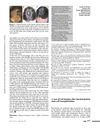 May 2018 in “European Journal of Dermatology”
 Adjusting the medication tacrolimus resolved a boy's red nail beds after a stem cell transplant.

The patch effectively promotes hair growth for alopecia areata without pain.
November 2005 in “CRC Press eBooks” SEPA 0009 is a promising and safe skin penetration enhancer for topical use.
5 citations
,
April 2017 in “The journal of investigative dermatology/Journal of investigative dermatology” The gene therapy showed significant wound healing and was safe for treating severe RDEB.
1 citations
,
December 2022 in “Bioactive Materials” The microneedle patch with quercetin, zinc, and copper effectively promotes hair regrowth for androgenic alopecia.
2 citations
,
May 2023 in “Biology” New mouse models of Pemphigus show severe symptoms and need better treatments.
14 citations
,
August 2014 in “The FASEB Journal” CAP1/Prss8 does not activate PAR2 or inhibit PN-1.
 April 2017 in “The journal of investigative dermatology/Journal of investigative dermatology”
 Most patients experienced mild to moderate skin problems during a trial for a desmoid tumor treatment.
47 citations
,
June 2015 in “Contact Dermatitis” A standardized patch test for hair cosmetics is needed in Europe to prevent allergies, especially for hairdressers.
A new genetic mutation was found causing hair and eye issues in a boy.
105 citations
,
October 2018 in “Nature” A small group of slow-growing cells causes basal cell carcinoma to return after treatment.