 January 2021 in “Our Dermatology Online”
 A young man's hair loss was the only sign of syphilis, which improved after treatment.
 January 2021 in “International journal of dermatology, venereology and leprosy sciences”
 Trichoscopy shows black dots, yellow dots, and empty follicles are common in Alopecia Areata, with broken and exclamation mark hair as typical patterns.
 February 2020 in “Our Dermatology Online”
 A synthetic drug and a South American herb may help treat alopecia areata in Chinese men.
December 2019 in “Jordan Medical Journal” Hair and scalp exams can predict zinc deficiency in children.
January 2019 in “Frontiers in neurology” A nutrition program significantly improved a woman's lupus symptoms.
 January 2019 in “International journal of dermatology, venereology and leprosy sciences”
 Hair loss in young adults is common and varies in pattern, cause, and type.
August 2018 in “Ayurline: IJ-RIM” Diet and lifestyle changes can help manage hair loss in alopecia.
 July 2018 in “Elsevier eBooks”
 New hair loss treatments show promise, but more research is needed to confirm their effectiveness.
 December 2017 in “Journal of The American Academy of Dermatology”
 The document explains how to claim CME credit by diagnosing and treating hair loss conditions in two patient cases.
 May 2017 in “Journal of The American Academy of Dermatology”
 Certain factors like patchy hair loss at the back of the head, being female, and younger age at diagnosis can lead to a worse outcome for alopecia areata.
 December 2016 in “Springer eBooks”
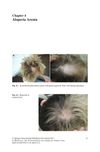
 A 45-year-old woman with autoimmune diseases experienced patchy hair loss due to alopecia areata, which has no cure but can be treated, with varying success.
The document concludes that hair loss in women is complex, often linked to aging, health conditions, and nutritional deficiencies, and emotional impacts should not be underestimated.
 January 2015 in “Springer eBooks”
 Hair damage shows as fragility, dullness, and discoloration, varies by ethnicity, and is worsened by cosmetic procedures and diseases.
 January 2014 in “대한피부과학회지”
 A hepatitis B patient lost hair in patches after starting and stopping a treatment with pegylated interferon alpha2a.
 July 2013 in “Our Dermatology Online”
 Minoxidil 2% is more effective than tacrolimus 0.1% for hair regrowth in mild to moderate patchy hair loss, and combining both might give better results.
 April 2012 in “Journal of the American Academy of Dermatology”
 Dermoscopy can help diagnose tinea capitis in children by looking for comma hairs, black dots, and broken hairs with white bands.
 April 2012 in “Informa Healthcare eBooks”
 The document concludes that diagnosing hair loss requires evaluating multiple histological features, as no single feature is definitive on its own.
 January 2012 in “Yearbook of Dermatology and Dermatologic Surgery”
 Alopecia areata is a hair loss condition that often starts before age 30 and can affect various body parts, with unpredictable hair regrowth chances.
May 2011 in “Harper's Textbook of Pediatric Dermatology” Alopecia areata causes patchy hair loss and has no cure, but treatments like corticosteroids and minoxidil can help.
 February 2010 in “Journal of The American Academy of Dermatology”
 The study concluded that patients with total hair loss and recurring hair loss had an earlier onset, longer-lasting condition, and a greater negative impact on their quality of life, with allergic conditions linked to more severe hair loss.
 February 2010 in “Journal of The American Academy of Dermatology”
 Alopecia areata has different forms and can significantly affect quality of life, especially in more severe cases.
 January 2010 in “Journal of The American Academy of Dermatology”
 The document provided instructions for completing a CME exam on diagnosing and managing hair loss.
 January 2008 in “Dialnet (Universidad de la Rioja)”
 Alopecia can be linked to autoimmune diseases and shows different hair loss patterns.
October 2001 in “Journal of the American Academy of Dermatology” Topical minoxidil and anthralin work for patchy alopecia areata but not for alopecia totalis/universalis.

The document concludes that most hair loss treatments don't work, balding isn't caused by dandruff, and hair loss may indicate serious health issues that require medical attention.
 June 2026 in “Frontiers in Allergy”
 SSD patients have unique allergen sensitivities linked to skin and microbiota changes.
 February 2025 in “Journal of Cosmetic Dermatology”
 Patch testing is crucial to reduce allergic reactions in hair loss treatments.
 May 2017 in “Journal of The American Academy of Dermatology”
 More people are becoming allergic to natural products like propolis and marigold, especially women.
 February 2013 in “Journal of the American Academy of Dermatology”
 Certain gene variations might increase the risk of a hair loss condition in Koreans.
 98 citations
,
November 2002 in “Contact Dermatitis”
98 citations
,
November 2002 in “Contact Dermatitis” Many people had severe allergic reactions to a common hair dye ingredient, causing them to seek medical care and miss work.