23 citations
,
November 2019 in “International Journal of Molecular Sciences” Adipose-derived stem cells can help repair tissue in lipodystrophy patients.
 48 citations
,
June 2014 in “Neurobiology of Disease”
48 citations
,
June 2014 in “Neurobiology of Disease” The study suggests that motor neurons created from stem cells of patients with spinal and bulbar muscular atrophy show signs of the disease, including changes in protein levels and cell functions.
 November 2022 in “The journal of investigative dermatology/Journal of investigative dermatology”
 Skin organoids with NCSTN mutation show changes in hair follicle development and higher inflammation, key features of Hidradenitis Suppurativa.
198 citations
,
June 2013 in “Molecular psychiatry” Schizophrenia patients' stem cells show abnormal neuron development and mitochondrial issues.
10 citations
,
February 2022 in “Journal of cosmetic dermatology” Exosomes from fat-derived stem cells may help regrow hair.
 6 citations
,
February 2021 in “Advances in Clinical and Experimental Medicine”
6 citations
,
February 2021 in “Advances in Clinical and Experimental Medicine” Wharton's jelly-derived stem cells were safely used to treat four alopecia patients, resulting in hair regrowth in all of them.
 April 2024 in “The Indonesian Biomedical Journal”
 Melanocyte stem cells from non-affected skin in vitiligo patients can become functional melanocytes for potential therapy.
 November 2023 in “The journal of investigative dermatology/Journal of investigative dermatology”
 Adipose stem cell exosomes can effectively reduce facial redness and improve skin health in atopic dermatitis patients.
4 citations
,
January 2013 in “Stem cell discovery” Researchers created a cell line from a hair follicle to study hair loss.
January 2019 in “Journal of Clinical Dermatology” The hair tonic improved hair growth and thickness without severe side effects.
 28 citations
,
December 2012 in “The American Journal of Cosmetic Surgery”
28 citations
,
December 2012 in “The American Journal of Cosmetic Surgery” Proteins from stem cells improved hair growth in patients with hair loss.
55 citations
,
April 2015 in “BMC medicine” Stem Cell Educator therapy helps regrow hair and improve life quality in alopecia areata patients.
April 2019 in “Institutional Repositories DataBase (IRDB)” Patient-derived stem cell melanocytes could be a promising treatment for vitiligo.
 31 citations
,
April 2019 in “Cell reports”
31 citations
,
April 2019 in “Cell reports” Patient-derived melanocytes can potentially treat vitiligo by restoring skin pigmentation.
 April 2021 in “Journal of Cosmetic Dermatology”
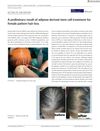
 Stem cell treatment improved hair density in female hair loss patient.
 25 citations
,
May 2020 in “Stem Cells Translational Medicine”
25 citations
,
May 2020 in “Stem Cells Translational Medicine” ADSC-CE treatment safely increases hair density and thickness in androgenetic alopecia patients.
 March 2025 in “International Journal of Trichology”
 Injecting stem cells from a patient's own fat can improve hair growth in women with hair loss.
Mesotherapy with stem cells showed promising hair growth results in some patients with hair loss, but more research is needed.
 55 citations
,
May 2017 in “Current stem cell research & therapy”
55 citations
,
May 2017 in “Current stem cell research & therapy” Using fat-derived stem cells for hair loss treatment is safe and effective, improving hair growth and patient satisfaction.
Mesenchymal stem cell-derived exosomes significantly increase hair density and thickness in androgenic alopecia patients.
July 2023 in “Journal of personalized medicine” Injecting a person's own fat stem cells into their skin can make it look younger and improve double eyelids for over a year.
 33 citations
,
September 2019 in “Dermatologic Surgery”
33 citations
,
September 2019 in “Dermatologic Surgery” Using a special stem cell formula on the scalp once a month for six months helped people with hair loss grow more hair.
14 citations
,
June 2021 in “Archives of Dermatological Research” Combining stem cell media with laser or microneedling can effectively regrow hair in alopecia areata.
 88 citations
,
July 2019 in “International Journal of Molecular Sciences”
88 citations
,
July 2019 in “International Journal of Molecular Sciences” Using human fat tissue derived stem cells in micrografts can safely and effectively increase hair density in people with hair loss.
 November 2023 in “Stem cells and cloning”
 A new treatment using stem cell-conditioned media significantly improved hair growth in people with temporary hair loss.
October 2021 in “Plastic and reconstructive surgery. Global open” Adipose-derived stem cells may help treat hair loss.
Treating vitiligo with stem cells and melanocytes from hair, along with UVB light, works better than without the light.
 2 citations
,
January 2018 in “Journal of clinical & experimental dermatology research”
2 citations
,
January 2018 in “Journal of clinical & experimental dermatology research” Both fat-derived stem cells and platelet-rich plasma are effective and safe for hair loss, but stem cells give better results with more side effects.
 June 2026 in “Journal of Sulaimani Medical College”
 Adipose-derived stem cell exosomes are more effective and satisfying for treating hair loss than minoxidil.
 December 2024 in “Archives of Clinical & Experimental Dermatology”
 Combining stem cells with minoxidil improves hair growth more than minoxidil alone.