79 citations
,
October 2003 in “PubMed” Overexpression of PKCepsilon leads to increased TNFalpha, promoting metastatic squamous cell carcinoma in mice.
January 2022 in “Mammalian Genome” The wavy coat in NCT mice is caused by multiple genes, including a mutation in the Prss53 gene.
 23 citations
,
December 2013 in “British Journal of Dermatology”
23 citations
,
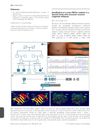
December 2013 in “British Journal of Dermatology” A new gene mutation linked to a skin condition was found in a Spanish family.
November 2022 in “Journal of Investigative Dermatology” ILC1-like cells can cause alopecia areata by themselves.
 April 2016 in “Journal of Investigative Dermatology”
 Sonic hedgehog signaling is needed for the development of touch-receptor cells in the skin, and the loss of Polycomb repressive complex 2 can lead to more of these cells.
 November 2023 in “Nature Communications”
 Cells lacking the Bax protein can outcompete others, leading to better tissue repair and hair growth.
4 citations
,
February 2023 in “Stem Cell Research & Therapy” Mouse skin cells can become sperm-like cells in the lab.
 November 2022 in “Gigascience”
 A specific genetic deletion in goats affects cashmere yield and thickness.
 45 citations
,
January 2010 in “Journal of Veterinary Medical Science”
45 citations
,
January 2010 in “Journal of Veterinary Medical Science” A gene mutation causes curly hair and hair loss in rats.
 9 citations
,
January 2021 in “International Journal of Medical Sciences”
9 citations
,
January 2021 in “International Journal of Medical Sciences” Sox10 is important for hair follicle development and hair growth cycles.
The FOS gene helps hair growth in Tan sheep.
 July 2026 in “Current Issues in Molecular Biology”
 Plerixafor may help restore skin pigmentation safely.
 September 2022 in “Research Square (Research Square)”
 Increasing Rps14 helps grow more inner ear cells and repair hearing cells in baby mice.
59 citations
,
November 2011 in “Development” Trps1 is essential for proper hair follicle development.
 September 2020 in “bioRxiv (Cold Spring Harbor Laboratory)”
 Different fish use the same genes to regrow teeth.
 17 citations
,
December 2001 in “Journal of Investigative Dermatology”
17 citations
,
December 2001 in “Journal of Investigative Dermatology” The osteopontin gene is active in a specific part of rat hair follicles during a certain hair growth phase and might affect hair cycle and diseases.
2 citations
,
August 2020 in “CRC Press eBooks” Tabby mutations in mice affect hair follicle development and help study genetic mapping and certain medical conditions.
9 citations
,
August 2021 in “International journal of molecular sciences” PPARγ is essential for maintaining healthy skin, controlling inflammation, and ensuring proper skin barrier function.
6 citations
,
February 2023 in “Genes” CUX1 boosts sheep hair cell growth and affects curl patterns.
2 citations
,
February 2025 in “Poultry Science” TBX5 gene influences feathered feet in Guangxi chickens by affecting cell growth and movement.
 May 2017 in “bioRxiv (Cold Spring Harbor Laboratory)”
 The peach gene pCTG134 helps control the interaction between auxin and ethylene hormones during fruit ripening.
10 citations
,
October 2018 in “Journal of molecular and cellular cardiology/Journal of Molecular and Cellular Cardiology” The gene NM_026333 slows down aging by affecting the NCX1 pathway and could be targeted for anti-aging treatments.
5 citations
,
April 2022 in “Genes” miR-129-5p affects hair growth by targeting the HOXC13 gene.
22 citations
,
June 2017 in “Stem cell reports” PTEN helps control the number and health of skin stem cells by working with the protein BMAL1.
6 citations
,
December 2023 in “Journal of Molecular Cell Biology” Removing Gsdma1/2/3 genes reduces skin cell overgrowth by blocking a specific cell pathway.
 184 citations
,
September 2006 in “PLoS Genetics”
184 citations
,
September 2006 in “PLoS Genetics” The Apc gene is crucial for normal skin and thymus development.
December 2019 in “Thèses en ligne de l'Université Toulouse III (Université Toulouse III)” EGM2 and SOX2 help form beige adipocytes by maintaining ASC immaturity and activating brown adipocytes.
5 citations
,
July 2024 in “Journal of Microbiology and Biotechnology” ICP5249 helps hair grow by activating a specific cell pathway.
 2 citations
,
September 2022
2 citations
,
September 2022 The PER3 rs772027021 SNP may cause mild skin pigmentation changes in a new subtype of dyschromatosis universalis hereditaria.
February 2026 in “Pediatric Dermatology”