Search
for
Sort by
Research
390-420 / 1000+ results
research RED LIGHT PROTOBIOMODULATION – THE WAY TO STAY YOUNG AND CURE DISEASE – A REVIEW OF THE LITERATURE
Red light therapy may help rejuvenate skin and regrow hair.
research Structural and epistatic regulatory variants cause hallmark white spotting in cattle
Two gene variants cause white spots in cattle.
research BAF200 Is Required for Heart Morphogenesis and Coronary Artery Development
BAF200 is essential for proper heart and coronary artery formation.
research 1747 PREDICTION OF BLADDER PROSTATIC OBSTRUCTION: DEVELOPMENT OF A SIMPLIFIED CLINICAL NOMOGRAM
Researchers created a simple tool to predict bladder blockage from prostate enlargement using urine flow rate and prostate volume.
research Adam10 haploinsufficiency causes freckle-like macules in Hairless mice
A mutation in the Adam10 gene causes freckle-like spots on Hairless mice.
research 008 Development of a Humanized Mouse Model of Vitiligo
research Linear Lichen Planopilaris of the Trunk: First Report of a Case
Linear lichen planopilaris can affect the trunk, not just the face.

research 3,4,5-Tri-O-Caffeoylquinic Acid Promoted Hair Pigmentation Through β-Catenin and Its Target Genes
A substance called TCQA could potentially darken hair by activating certain genes and increasing melanin.
research THE SHEPHERDS HOOK PHENOMENON PATTERN OF HAIR ROOTS A DEMONSTRATION OF COMPARATIVE BIOLECTROMAGNETISM BETWEEN HUMAN HAIRS AND MOUSE WHISKERS BY MEANS OF THE PHOTOELECTRIC EFFECT
Human hair and mouse whiskers emit similar biomagnetic fields.

research Photobiomodulation for the management of alopecia: mechanisms of action, patient selection and perspectives
Light therapy can stimulate hair growth and is more effective when started early, but more research is needed on its long-term effects and optimal use.

research 1272 p21Waf1/Cip1 is differentially expressed in epidermal versus follicular melanocytes and melanoma cells and is phenotypically regulated by UVB-mediated apoptosis
The protein p21 is more abundant in normal skin cells than in melanoma cells and may help protect against melanoma, with UVB light affecting its levels.

research Treatment of MSCs with Wnt1a-conditioned medium activates DP cells and promotes hair follicle regrowth
Wnt1a-conditioned medium from stem cells helps activate cells important for hair growth and can promote hair regrowth.
research Photobiomodulation for Alopecia: Mechanisms of Action
Photobiomodulation effectively stimulates hair growth and reduces hair loss.
research Pruritic urticarial papules and plaques of pregnancy
The skin condition PUPP usually gets better on its own after giving birth and is unlikely to happen again in future pregnancies.

research 944 Non-coding double stranded RNA induces retinoic acid synthesis and retinoid signaling to control regeneration
Non-coding RNA boosts retinoic acid production and signaling, aiding regeneration.
research Phototherapy in Childhood
Phototherapy is effective and well-tolerated for treating childhood psoriasis and pityriasis lichenoides chronica.

research Topical RT1640 treatment effectively reverses gray hair and stem cell loss in a mouse model of radiation‐induced canities
RT1640 treatment reverses gray hair and promotes hair growth in mice.
research Forensic DNA phenotyping: a review on SNP panels, genotyping techniques, and prediction models
Forensic DNA phenotyping faces challenges like inconsistent terms and limited genetic knowledge.
research Electrospun radially oriented berberine-PHBV nanofiber dressing patches for accelerating diabetic wound healing
The new nanofiber patch speeds up diabetic wound healing and improves healing quality.
research Anti-graying effect of the extract of Pueraria thunbergiana via upregulation of cAMP/MITF-M signaling pathway
Pueraria thunbergiana extract may help prevent hair from turning gray.
research Methodology for Restoring Lip Shape after Tissue Loss: Practical Experience with Permanent Makeup
Permanent makeup can effectively restore lip shape and color after tissue loss, improving appearance and well-being.
research A comparative study of skin transcriptomes and histological observations for black and white hair colors of giant panda
The study found that giant pandas have more melanin in black hair follicles than white, with gene expression differences that could affect hair color and skin health.
research Postinflammatory hyperpigmentation: a common but troubling condition
Postinflammatory hyperpigmentation causes dark skin patches and needs personalized treatment.
research Deciphering Early-Stage Molecular Mechanisms of Negative Pressure Wound Therapy in a Murine Model
Negative Pressure Wound Therapy speeds up wound healing by reducing inflammation and promoting skin cell growth.

research Efficacy of a wheat polar lipid complex in reducing hair loss and improving hair growth in healthy women: A randomized, double‐blind, placebo‐controlled clinical study
Wheat polar lipid complex reduces hair loss and improves hair growth in women.

research Mult-trait analysis of GWAS - Perceived youtfulness - UKBB
The conclusion is that certain traits, including perceived facial aging and BMI, are linked to perceived youthfulness differently in men and women.
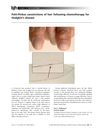
research Pohl-Pinkus constrictions of hair following chemotherapy for Hodgkin's disease
Chemotherapy caused the patient's hair to have alternating thick and thin segments.
research Short-Acting Scalp Micropigmentation with Roller and Needle
research Dosimetric analysis of the alopecia preventing effect of hippocampus sparing whole brain radiation therapy
Hippocampus sparing whole brain radiation therapy prevents hair loss and preserves cognitive function.