 April 2023 in “Journal of Investigative Dermatology”
 Disrupting a specific protein's function in hair follicle stem cells triggers their activation and a self-healing process.
June 2023 in “Zenodo (CERN European Organization for Nuclear Research)” Neutropenic patients show significant changes in immune cell types and lower neutrophil and natural killer cell percentages.
 32 citations
,
April 2017 in “Scientific Reports”
32 citations
,
April 2017 in “Scientific Reports” Platelet-rich plasma can help grow more mouse hair follicles, but it doesn't work for human hair follicles yet.
December 2024 in “International Journal of Molecular Sciences” Platelet-rich fibrin may help reduce nonmelanoma skin cancer cell growth.
11 citations
,
August 2025 in “Journal of Periodontal Research” Platelet-rich fibrin (PRF) is better for natural healing, especially in dental and medical treatments.
85 citations
,
March 2008 in “Journal of Cell Science” The mutation causing Hutchinson-Gilford progeria syndrome leads to severe skin problems and early death in mice.
June 2026 in “Materials Today Bio” The hydrogel helps heal skin and reduce inflammation.
 12 citations
,
February 2013 in “The Open Stem Cell Journal”
12 citations
,
February 2013 in “The Open Stem Cell Journal” DPSCs and SHED have great potential for medical treatments and tissue repair.
 14 citations
,
April 2005 in “Experimental Dermatology”
14 citations
,
April 2005 in “Experimental Dermatology” Stressed fibroblasts greatly increase melanin production in hair, skin, and eye cells, mainly due to a growth factor called bFGF.
 April 2023 in “Research Square (Research Square)”
 Lower GPX4 mRNA levels are linked to higher disease activity and symptoms in lupus patients.

Researchers improved mouse skin cell culture methods and created a similar immortal cell line, but need to clarify their methods and benefits.
 February 2024 in “Research Square (Research Square)”
 The research suggests that SFRP2 and PTGDS proteins might be indicators of female pattern hair loss and could contribute to hair loss.
 April 2017 in “The journal of investigative dermatology/Journal of investigative dermatology”
 Most patients experienced mild to moderate skin problems during a trial for a desmoid tumor treatment.
1 citations
,
December 2018 in “IOP conference series. Materials science and engineering” CD34+ hair follicle stem cells can become melanin-producing cells for treating skin conditions.
July 2025 in “Journal of Investigative Dermatology” Upadacitinib effectively treats pyoderma gangrenosum.
 September 2022 in “Anais Brasileiros de Dermatologia”
 Dermoscopy helped diagnose a rare skin disease which slightly improved with treatment.
 September 2017 in “Journal of Investigative Dermatology Symposium Proceedings”
 Prostaglandin D2 increases testosterone production in skin cells through a process involving reactive oxygen species, which could be a new target for treating hair loss and other skin conditions driven by testosterone.
 20 citations
,
September 2018 in “Journal of cutaneous pathology”
20 citations
,
September 2018 in “Journal of cutaneous pathology” Different skin diseases show unique patterns of skin cell separation, cell death, and granular layer changes.
14 citations
,
February 2008 in “Stem Cells and Development” Seven genes are highly expressed in both germ-line and hematopoietic stem cells.
November 2025 in “The Journal of Immunology” Different γδ T cell types have unique roles in causing alopecia areata.
 October 2012 in “Faculty Opinions – Post-Publication Peer Review of the Biomedical Literature”
 Scientists used a special imaging technique to observe that hair follicle regeneration involves cell division and structural changes, mostly in the lower part of the follicle, and that the dermal papilla at the base is crucial for regrowth.
 January 2019 in “Springer eBooks”
 PRP may help with hair loss and improve hair quality with few side effects, but more research is needed.
22 citations
,
August 2022 in “Molecular Metabolism” Pgc-1α helps skin repair by maintaining NAD+ levels, especially as we age.
3 citations
,
August 2023 in “Journal of Investigative Dermatology” 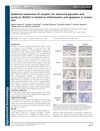 10 citations
,
November 2015 in “Experimental Dermatology”
10 citations
,
November 2015 in “Experimental Dermatology” Skin RAGE levels are linked to inflammation and cell death.
 March 2026 in “Frontiers in Pharmacology”
 Exprecell™ is as effective as traditional methods but produces more f-PRF and is simpler to use.
 8 citations
,
August 2020 in “Experimental dermatology”
8 citations
,
August 2020 in “Experimental dermatology” PRP therapy for alopecia shows inconsistent results due to natural variability in growth factor secretion by platelets.
 18 citations
,
February 2018 in “International Journal of Molecular Sciences”
18 citations
,
February 2018 in “International Journal of Molecular Sciences” PGD2 increases androgen receptor activity in hair cells, which could be targeted to treat hair loss.
 November 2023 in “Journal of Dermatological Science”
 Cells that move well may improve hair loss treatments by entering hair follicles.
8 citations
,
January 2025 in “Journal of Investigative Dermatology” Fetal skin has diverse fibroblast types that change as it develops.