7 citations
,
September 2021 in “Journal of Applied Polymer Science” Cuttlefish ink melanin protects hair from UV damage.
23 citations
,
September 1997 in “Veterinary dermatology” Mupirocin ointment effectively treats feline acne.
April 2023 in “The journal of investigative dermatology/Journal of investigative dermatology” MEF2C is crucial for normal hair cycle progression.
7 citations
,
April 2019 in “Animal biotechnology” The POMP gene is active in various goat tissues and affects hair growth, with certain treatments influencing its expression.
October 2025 in “Animals” Blue light masks improved coat condition and energy in horses with PPID.
 7 citations
,
February 2010 in “British Journal of Dermatology”
7 citations
,
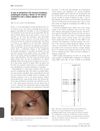
February 2010 in “British Journal of Dermatology” A woman with a rare autoimmune disorder had a blister on her eye and unique immune reaction, which was effectively treated with medication.
20 citations
,
February 2010 in “Journal of Investigative Dermatology” Slug (Snai2) helps regulate hair growth timing in mice.
June 2023 in “Clinical Cosmetic and Investigational Dermatology” Pentoxifylline effectively improves pretibial pruritic papular dermatitis.
9 citations
,
January 2011 in “American Journal of Dermatopathology” Pilomatrixoma involves abnormal hair keratin production and cell death, causing debris and cysts.
 April 2018 in “Journal of Investigative Dermatology”
 CENPV, a new partner of CYLD, helps regulate ciliary acetylated tubulin and is overexpressed in certain skin tumors.
 2 citations
,
August 2023 in “Development”
2 citations
,
August 2023 in “Development” Hair follicles in the back of the rosette fancy mouse have reversed orientations due to a gene mutation.
 22 citations
,
December 2003 in “Veterinary clinical pathology”
22 citations
,
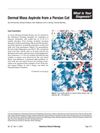
December 2003 in “Veterinary clinical pathology” The Persian cat has a skin infection caused by a fungus, treatable with antifungal medication.
August 2018 in “Cadernos de Agroecologia” The new sulfur paste effectively treats rabbit scabies, promoting healing and hair growth.
29 citations
,
December 2004 in “Developmental biology” cDermo-1 causes dense skin, feathers, and scales in chickens.
14 citations
,
October 2002 in “Journal of cutaneous pathology” MAP-2 is crucial for the structure of hair follicles and nails.
2 citations
,
March 1994 in “Journal of the European Academy of Dermatology and Venereology” White piedra can be effectively treated with 2% miconazole nitrate lotion.
16 citations
,
June 1983 in “Journal of Neurochemistry” Copper therapy improved health and enzyme activity in mice with copper deficiency.
 1 citations
,
August 2023 in “Genome research”
1 citations
,
August 2023 in “Genome research” The spiny mouse regenerates ear tissue asymmetrically, with gene expression differences possibly explaining its unique healing abilities.
26 citations
,
August 2014 in “Veterinary Dermatology” Sphynx cats have abnormal hair follicles and keratinization affecting their skin.
48 citations
,
July 1993 in “Archives of Dermatological Research” Merkel cells are abundant in facial vellus hair follicles, especially during the anagen phase.
8 citations
,
January 2017 in “Korean Journal of Physiology and Pharmacology” Pimecrolimus boosts melanin production and movement of skin pigment cells.
22 citations
,
April 1967 in “Australian Journal of Zoology” Southern elephant seals develop hair follicles and skin layers before birth, with moulting starting a week after birth and finishing in three weeks.
12 citations
,
April 2005 in “Journal of Herbs Spices & Medicinal Plants” Horse chestnut has ornamental uses and potential health benefits, but more research is needed on its cultivation and properties.
50 citations
,
January 1986 55 citations
,
February 2013 in “The Anatomical Record” Mouse nails are similar to human nails, making them useful for studying nail diseases.
46 citations
,
September 2007 in “Journal of Investigative Dermatology” 18 citations
,
November 2005 in “European Journal of Cell Biology” Keratin gene clusters in humans and marsupials are similarly organized.
110 citations
,
January 1983 in “Brain Research Reviews” Monkey lips have dense sensory nerves similar to those in other skin areas, explaining their sensitivity.
1 citations
,
June 2015 in “Journal of anatomy” A compound named ZCZ90 can increase muscle spindle firing, potentially helping treat muscle spasms and hypertension.
6 citations
,
January 2005 in “Han-guk hyeonmigyeong hakoeji/Applied microscopy” The 16th-century mummy's hair was well-preserved due to a calcium surface coat.