 July 2025 in “The Journal of Physiology”
 C-tactile afferents are linked to emotional touch and social bonding through hair movement.
7 citations
,
December 2010 in “대한의생명과학회지” Hair growth after depilation increases skin thickness, mast cell counts, and cell activity.
3D-ultrasound can non-invasively detect and predict alopecia areata phases and outcomes.
6 citations
,
January 1994 in “Skin Pharmacology and Physiology” Dermal papillae are crucial for hair growth and follicle development.
 6 citations
,
January 2019 in “The American Journal of Dermatopathology”
6 citations
,
January 2019 in “The American Journal of Dermatopathology” The conclusion is that fat tissue in the skin is a new finding in Frontal fibrosing alopecia and may contribute to hair follicle and muscle degeneration.
4 citations
,
July 2006 in “British journal of dermatology/British journal of dermatology, Supplement” Testosterone increases hair follicle cell growth when beard or axillary skin cells are present together.
April 2023 in “Cancer Research” Plucked hair can effectively monitor drug effects in cancer treatment.
7 citations
,
January 2012 in “International journal of trichology” Permanent hair removal with lasers may cure itchy black hair bristles on the back.
 27 citations
,
August 2005 in “The journal of investigative dermatology/Journal of investigative dermatology”
27 citations
,
August 2005 in “The journal of investigative dermatology/Journal of investigative dermatology” Researchers found new genes involved in hair growth, which could help develop new hair treatments.
 19 citations
,
July 2009 in “Clinical and Experimental Dermatology”
19 citations
,
July 2009 in “Clinical and Experimental Dermatology” The study found that long-term sun exposure does not significantly affect follicular plugs on the scalp, and the scalp's appearance is unique compared to other body parts.
 9 citations
,
June 2008 in “Springer eBooks”
9 citations
,
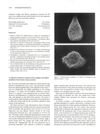
June 2008 in “Springer eBooks” Understanding hair follicle structure is key for treating hair disorders and could help develop new treatments.
 8 citations
,
September 1993 in “British journal of dermatology/British journal of dermatology, Supplement”
8 citations
,
September 1993 in “British journal of dermatology/British journal of dermatology, Supplement” A new method helps isolate key hair components to study hair growth and loss.
 3 citations
,
April 2015 in “International research journal of pharmacy”
3 citations
,
April 2015 in “International research journal of pharmacy” Gentamicin penetrates pig skin better through open hair follicles than blocked ones.
8 citations
,
April 2012 in “Laser Physics Letters” Antiseptic particles penetrate deeper into hair follicles than non-antiseptic ones.
 April 2018 in “Journal of Investigative Dermatology”
 STIM1 is essential for sweat secretion.

Hair feels different when touched and rubs together in various ways.
July 2025 in “InnovAiT Education and inspiration for general practice” 6 citations
,
January 1977 in “Archives of dermatological research”  7 citations
,
November 2014 in “Histochemistry and Cell Biology”
7 citations
,
November 2014 in “Histochemistry and Cell Biology” The we/we wal/wal mice have defects in hair growth and skin layer formation, causing hair loss, useful for understanding alopecia.
5 citations
,
August 2005 in “Anatomy and Embryology” Rat skin has a linear system of nerve fibers linked to hair follicles and muscles.
 November 2022 in “Journal of Investigative Dermatology”
 Butyrate helps hair grow longer, improves hair cell health, increases pigment production, and boosts hair's natural defenses.
14 citations
,
August 2004 in “Veterinary Dermatology” The horse had a rare type of hair loss caused by immune cells attacking hair follicles.
 13 citations
,
April 1994 in “Journal of Investigative Dermatology”
13 citations
,
April 1994 in “Journal of Investigative Dermatology” Androgen receptors found in monkey scalps, similar to humans, affect hair growth.
5 citations
,
October 2003 in “Archives of Dermatology” The elderly woman experienced hair loss and scalp itching, especially at the front hairline, and lost her eyebrows.
30 citations
,
February 1977 in “Nature” The dermal papilla can still grow new hair even after heavy radiation.
April 2023 in “Journal of Investigative Dermatology” 3D ultrasound can detect hair follicle changes and disease phases in alopecia areata.
1 citations
,
November 2003 in “Humana Press eBooks” AFM helps study hair surfaces for dermatology, cosmetics, and forensics.
48 citations
,
April 1995 in “PubMed” Testosterone helps beard and axillary hair cells grow by releasing growth factors from dermal papilla cells.
 1 citations
,
January 2012 in “Journal of The Society of Japanese Women Scientists”
1 citations
,
January 2012 in “Journal of The Society of Japanese Women Scientists” Murine hair has specific types of ceramides and glucosylceramides but lacks acylceramides.