 December 2015 in “Dermatologic Surgery”
 Double trichophytic closure effectively repairs thin scalp scars, reducing financial burden.
 7 citations
,
August 2015 in “Journal der Deutschen Dermatologischen Gesellschaft”
7 citations
,
August 2015 in “Journal der Deutschen Dermatologischen Gesellschaft” Scalp-to-scalp skin grafts quickly heal and hide well under regrown hair, making them good for repairing large scalp defects.
 9 citations
,
May 2012 in “Journal of Craniofacial Surgery”
9 citations
,
May 2012 in “Journal of Craniofacial Surgery” Submental tissue is good for repairing mouth area skin with minimal scarring and good cosmetic results.
 7 citations
,
January 2012 in “PubMed”
7 citations
,
January 2012 in “PubMed” Azelaic acid and finasteride can help preserve skin flaps after surgery by increasing BCL-2 protein and decreasing bax protein.
 1 citations
,
October 2021 in “PubMed”
1 citations
,
October 2021 in “PubMed” A woman had temporary hair loss after scalp surgery, which is a rare but self-healing condition that surgeons should recognize to avoid wrong treatment.
 1 citations
,
October 2019 in “Journal of Craniofacial Surgery”
1 citations
,
October 2019 in “Journal of Craniofacial Surgery” 3D virtual planning can help in precise skull reconstruction for advanced skin cancer, but patient-specific factors must be considered.
 July 2025 in “Australasian Journal of Plastic Surgery”
 A precise incision technique reduces hair loss and scarring on the scalp.
 11 citations
,
August 2004 in “Facial Plastic Surgery”
11 citations
,
August 2004 in “Facial Plastic Surgery” The endobrow-midface lift is a safe and effective way to rejuvenate the upper face with minimal complications and rare temporary hair loss.
 5 citations
,
May 2021 in “BMC surgery”
5 citations
,
May 2021 in “BMC surgery” A man's unusual scalp folds caused by a skin condition were treated with surgery and remained unchanged two years later.
1 citations
,
July 2017 in “Skin Appendage Disorders” A woman developed permanent hair loss after a face-lift surgery despite various treatments.
 January 2009 in “Indian Journal of Plastic Surgery”
 Surgical methods for hair loss due to scarring should be chosen based on the size, location, and shape of the area, with most patients seeing good results.
February 2025 in “Seminars in Plastic Surgery” Effective reconstruction techniques are crucial for treating severe facial injuries from ballistic trauma.
 January 2022 in “International Microsurgery Journal”
 This method effectively reconstructs scarred penopubic junctions after surgery.
 6 citations
,
September 1995 in “The American Journal of Cosmetic Surgery”
6 citations
,
September 1995 in “The American Journal of Cosmetic Surgery” The new technique PÂTÉ improved the amount of scalp tissue removed in surgeries.
 7 citations
,
September 1977 in “PubMed”
7 citations
,
September 1977 in “PubMed” A new technique called hair-lifting was introduced to treat male-pattern baldness and can also give a partial face-lift.
 November 2014 in “Springer eBooks”
 Using a patient's own tissue for browlifting can improve both the position and fullness of the brow for a longer-lasting rejuvenation.
1 citations
,
May 2007 in “Chinese Medical Journal” Complete removal of large scalp nevi is recommended to prevent complications.
 April 2023 in “Authorea (Authorea)”
 Hair transplantation can improve scars after removing a rare skin cancer.
1 citations
,
January 2000 in “Aesthetic Surgery Journal” Surgery involving blepharoplasty and an endoscopic forehead lift can rejuvenate the upper face.

The hairline can reliably guide neurosurgical planning.
 December 2002 in “Operative Techniques in Otolaryngology-Head and Neck Surgery”
 Hair loss from trauma can be managed using scalp expansion, flaps, and hair transplants to improve appearance and well-being.
2 citations
,
March 2010 in “Plastic & Reconstructive Surgery” A simple, safe, and cost-effective method using adhesive drapes effectively removes hair from scalp grafts, reducing infection risk.
1 citations
,
January 1997 in “European journal of plastic surgery” Tissue expansion can fix scalp issues from hair implants.
 21 citations
,
August 1991 in “The Journal of Dermatologic Surgery and Oncology”
21 citations
,
August 1991 in “The Journal of Dermatologic Surgery and Oncology” Using tissue expanders and hyaluronidase in scalp reduction surgery allows for more scalp removal and easier surgery.
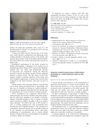 2 citations
,
December 2008 in “Clinical and Experimental Dermatology”
2 citations
,
December 2008 in “Clinical and Experimental Dermatology” A small forehead lesion led to the discovery of a significant brain arteriovenous malformation in a young girl.
35 citations
,
January 2011 in “Facial Plastic Surgery” Forehead lifting can restore a youthful look and improve brow aesthetics using various surgical and nonsurgical methods.
Brow lifts raise and smooth the forehead and can lower the hairline.
 14 citations
,
March 2015 in “Facial plastic surgery clinics of North America”
14 citations
,
March 2015 in “Facial plastic surgery clinics of North America” Individualized assessment and meticulous planning are crucial for successful brow and upper eyelid surgery.
 December 2017 in “Facial Plastic Surgery”
 The document concludes that successful treatment of upper and midface trauma should focus on restoring both appearance and function, with attention to facial structure, skin, and hair repair.
20 citations
,
January 2014 in “International Journal of Oral and Maxillofacial Surgery” Using superficial temporal fascia helps prevent Frey syndrome after parotid surgery.