 122 citations
,
April 1995 in “Journal of Cutaneous Pathology”
122 citations
,
April 1995 in “Journal of Cutaneous Pathology” The document describes how to tell different types of non-scarring hair loss apart by looking at hair and scalp tissue under a microscope.
 95 citations
,
January 2004 in “Archives of Dermatological Research”
95 citations
,
January 2004 in “Archives of Dermatological Research” Peripilar signs can help diagnose androgenetic alopecia and reveal its cause.
 90 citations
,
June 2006 in “The American Journal of Dermatopathology”
90 citations
,
June 2006 in “The American Journal of Dermatopathology” The document concludes that accurate diagnosis of different types of hair loss requires careful examination of hair and scalp tissue, considering both clinical and microscopic features.
 73 citations
,
April 2010 in “Anais Brasileiros de Dermatologia”
73 citations
,
April 2010 in “Anais Brasileiros de Dermatologia” Dermoscopy helps diagnose and monitor treatment for hair loss from scarring conditions like discoid lupus and lichen planopilaris.
 57 citations
,
January 2003 in “Clinical and experimental dermatology”
57 citations
,
January 2003 in “Clinical and experimental dermatology” Postmenopausal frontal fibrosing alopecia is a type of hair loss in postmenopausal women that may stop on its own but has no effective treatment.
 42 citations
,
June 2009 in “Journal of Cosmetic Dermatology”
42 citations
,
June 2009 in “Journal of Cosmetic Dermatology” Hair loss in males involves inflammation, collagen buildup, and follicle damage, with severity increasing with age and baldness duration.
 37 citations
,
October 2015 in “Anais Brasileiros de Dermatologia”
37 citations
,
October 2015 in “Anais Brasileiros de Dermatologia” Lichen planopilaris mostly affects women with fair skin and can look different on each person, needing early treatment to prevent hair loss.
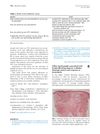 32 citations
,
September 2017 in “Journal of the American Academy of Dermatology”
32 citations
,
September 2017 in “Journal of the American Academy of Dermatology” Oral isotretinoin effectively treats yellow facial papules in frontal fibrosing alopecia patients.
 20 citations
,
July 2006 in “Veterinary dermatology”
20 citations
,
July 2006 in “Veterinary dermatology” Melatonin helped some Pomeranian dogs regrow hair, but it wasn't linked to estrogen receptors.
 18 citations
,
July 2018 in “Skin appendage disorders”
18 citations
,
July 2018 in “Skin appendage disorders” Trichoscopy helps diagnose hair and scalp disorders in dark-skinned people by identifying unique patterns.
 16 citations
,
January 2017 in “Anais brasileiros de dermatologia/Anais Brasileiros de Dermatologia”
16 citations
,
January 2017 in “Anais brasileiros de dermatologia/Anais Brasileiros de Dermatologia” Managing frontal fibrosing alopecia and lichen planus pigmentosus is challenging due to resistant hair loss and skin discoloration.
 16 citations
,
June 2015 in “Pediatric dermatology”
16 citations
,
June 2015 in “Pediatric dermatology” Lichen Planopilaris in teens is rare, often misdiagnosed, and responds well to steroids.
 15 citations
,
September 1999 in “British Journal of Dermatology”
15 citations
,
September 1999 in “British Journal of Dermatology” Epimorphin, a protein, plays a key role in the development of hair follicles in human fetuses, but it doesn't help in maintaining the stem cell population of the follicular skin layer.
 13 citations
,
January 2019 in “Skin appendage disorders”
13 citations
,
January 2019 in “Skin appendage disorders” FAPD is a possible diagnosis for hair loss in patients of color and requires multiple evaluations for accurate diagnosis.
 13 citations
,
January 2016 in “Journal of cosmetology & trichology”
13 citations
,
January 2016 in “Journal of cosmetology & trichology” Alternative treatments show promise for hair growth beyond traditional methods.
 11 citations
,
December 1921 in “Archives of dermatology and syphilology”
11 citations
,
December 1921 in “Archives of dermatology and syphilology” A rare scalp disease causes hair loss, pus-filled nodules, and scarring.
 10 citations
,
November 2022 in “Protein & Cell”
10 citations
,
November 2022 in “Protein & Cell” Quercetin significantly helps hair growth by activating hair follicles and improving blood vessel formation around them.
 9 citations
,
August 2014 in “The Journal of Dermatology”
9 citations
,
August 2014 in “The Journal of Dermatology” Scalp areas that look normal in people with hair loss may still show signs of disease under a microscope.
 8 citations
,
October 2020 in “Lasers in Medical Science”
8 citations
,
October 2020 in “Lasers in Medical Science” LLLT helps treat hair loss by increasing blood flow, reducing inflammation, and stimulating growth factors.
 5 citations
,
June 2019 in “Dermatopathology”
5 citations
,
June 2019 in “Dermatopathology” Histopathology is not reliable for detecting early fibrosis in traction alopecia or for showing how severe it is.
 5 citations
,
July 2013 in “Our Dermatology Online”
5 citations
,
July 2013 in “Our Dermatology Online” Lichen planopilaris is the most common type of scarring hair loss observed, with a variety of symptoms and tissue changes.
 4 citations
,
May 2021 in “Lasers in Surgery and Medicine”
4 citations
,
May 2021 in “Lasers in Surgery and Medicine” Light therapy reduces scalp inflammation, boosts hair regrowth with Minoxidil 2%.
 4 citations
,
February 2007 in “Journal of the European Academy of Dermatology and Venereology”
4 citations
,
February 2007 in “Journal of the European Academy of Dermatology and Venereology” The study suggests silicon might be important for healthy hair, as less silicon was found in people with hair loss.
 3 citations
,
March 2014 in “Annals of Hepatology”
3 citations
,
March 2014 in “Annals of Hepatology” A man lost all his hair after stopping hepatitis C treatment and it didn't grow back.
1 citations
,
December 2015 in “TURKDERM” Lichen planopilaris can be accurately diagnosed and effectively treated.
 July 2026 in “Frontiers in Cellular and Infection Microbiology”
 Staphylococcus levels may indicate hair loss in men and could help develop new treatments.

Follicular atopic dermatitis in dark skin can look different, making diagnosis harder.
 May 2026 in “Journal of Cutaneous and Aesthetic Surgery”
 Trichoscopy helps monitor changes and detect issues after hair transplants.
 February 2026 in “Cosmetics”
 Perifollicular elastolysis is poorly understood, with limited treatment options and inconsistent results.
 September 2025 in “Frontiers in Medicine”
 Angiopoietin-1 helps hair cells survive and grow, making it a potential treatment for hair loss.