 61 citations
,
March 2009 in “The Journal of the American Board of Family Medicine”
61 citations
,
March 2009 in “The Journal of the American Board of Family Medicine” Early diagnosis and treatment of discoid lupus erythematosus improve outcomes.
 29 citations
,
June 2013 in “Journal of the Saudi Society of Dermatology & Dermatologic Surgery”
29 citations
,
June 2013 in “Journal of the Saudi Society of Dermatology & Dermatologic Surgery” Alopecia areata is an autoimmune hair loss condition treated with corticosteroids, and histologic confirmation is the best diagnosis method.
 5 citations
,
November 2017 in “Dermatologica Sinica”
5 citations
,
November 2017 in “Dermatologica Sinica” Transverse scalp biopsies are more accurate for diagnosing non-cicatricial alopecia, but examining both types is best for accuracy.
 3 citations
,
February 2022 in “Cureus”
3 citations
,
February 2022 in “Cureus” Frontal fibrosing alopecia can sometimes look like syphilitic hair loss.
 3 citations
,
May 2018 in “Journal of Cosmetic Dermatology”
3 citations
,
May 2018 in “Journal of Cosmetic Dermatology” Biopsy can differentiate between alopecia areata and androgenic alopecia, and if more information is needed, testing for CD3 and CD8 can help.
 February 2026 in “Frontiers in Medicine”
 FUE hair transplants are generally safe but require careful planning to avoid rare complications.
 82 citations
,
March 2016 in “Autoimmunity reviews”
82 citations
,
March 2016 in “Autoimmunity reviews” Animal models have helped understand hair loss from alopecia areata and find new treatments.
 8 citations
,
November 2015 in “The American journal of dermatopathology/American journal of dermatopathology”
8 citations
,
November 2015 in “The American journal of dermatopathology/American journal of dermatopathology” Punctate follicular porokeratosis is a skin condition with specific features seen in hair follicles.
 May 2017 in “InTech eBooks”
 Trichoscopy and trichogram are useful for diagnosing hair and scalp conditions.
 339 citations
,
February 2014 in “Journal of The American Academy of Dermatology”
339 citations
,
February 2014 in “Journal of The American Academy of Dermatology” Most patients with frontal fibrosing alopecia are postmenopausal women, and treatments like finasteride and dutasteride can improve or stabilize the condition.
 62 citations
,
October 2016 in “Dermatologic Therapy”
62 citations
,
October 2016 in “Dermatologic Therapy” PRP more effective than minoxidil 5% for treating alopecia areata.
 59 citations
,
September 2008 in “Experimental dermatology”
59 citations
,
September 2008 in “Experimental dermatology” Both mouse and rat models are effective for testing alopecia areata treatments.
 44 citations
,
November 2011 in “The Journal of Dermatology”
44 citations
,
November 2011 in “The Journal of Dermatology” New understanding of the causes of primary cicatricial alopecia has led to better diagnosis and potential new treatments.
 20 citations
,
October 2016 in “Veterinary dermatology”
20 citations
,
October 2016 in “Veterinary dermatology” Dogs with generalized discoid lupus erythematosus have similar symptoms to humans and need continuous treatment.
 7 citations
,
June 2015 in “Cutaneous and Ocular Toxicology”
7 citations
,
June 2015 in “Cutaneous and Ocular Toxicology” Some drugs can cause skin reactions, which may improve when the drug is stopped, and rapid diagnosis and stopping the drug is crucial.
 3 citations
,
March 2014 in “Veterinary dermatology”
3 citations
,
March 2014 in “Veterinary dermatology” Norwegian puffin dogs have a unique type of hair loss that often doesn't get better on its own and responds well to ciclosporin treatment.
 1 citations
,
February 2021 in “Gastroenterology”
1 citations
,
February 2021 in “Gastroenterology” A woman with inflammatory bowel disease improved after treatment with ustekinumab for a rare skin condition associated with her disease.
 October 2023 in “bioRxiv (Cold Spring Harbor Laboratory)”
 A protein called EGFR protects hair follicle stem cells, and when it's disrupted, hair follicles can be damaged, but blocking certain pathways can restore hair growth.
Antimalarial agents are effective for LPP, and intralesional steroids are effective for FFA.
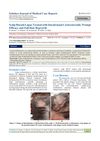 October 2025 in “Scholars Journal of Medical Case Reports”
 Intralesional corticosteroids effectively treat scalp Discoid Lupus and restore hair.
 1 citations
,
August 2022 in “Rheumatology (Bulgaria)”
1 citations
,
August 2022 in “Rheumatology (Bulgaria)” A woman experienced severe symptoms, including hair loss, after a COVID-19 vaccine, suggesting a possible autoimmune reaction.
 4 citations
,
January 2012 in “Chemical Immunology”
4 citations
,
January 2012 in “Chemical Immunology” Some drugs, especially biologics, can cause skin reactions that look like other skin diseases, and stopping the drug usually helps clear up these reactions.
 2 citations
,
January 2024 in “Advances in Dermatology and Allergology”
2 citations
,
January 2024 in “Advances in Dermatology and Allergology” S100A7 and IL-17 may contribute to inflammation in lichen planopilaris.
 67 citations
,
February 2009 in “Journal of Dermatology”
67 citations
,
February 2009 in “Journal of Dermatology”  30 citations
,
March 2015 in “Journal of Dermatology”
30 citations
,
March 2015 in “Journal of Dermatology” Hair thickness differences help diagnose hair loss severity.
 7 citations
,
March 2025 in “Archives of Dermatological Research”
7 citations
,
March 2025 in “Archives of Dermatological Research” Trichoscopy helps better understand and manage alopecia areata, improving patient outcomes.
 5 citations
,
September 2012 in “Springer eBooks”
5 citations
,
September 2012 in “Springer eBooks” Nanoparticles can be used to deliver drugs to hair follicles, potentially improving treatments for conditions like acne and alopecia, and could also be used for vaccine delivery and gene therapy.
 4 citations
,
January 2020 in “Lasers in Surgery and Medicine”
4 citations
,
January 2020 in “Lasers in Surgery and Medicine” Using a 308-nm excimer lamp with minoxidil promotes hair growth in Alopecia Areata patients, especially younger ones or those with smaller bald spots.
 December 2025 in “ADMET & DMPK”
 Personalized treatments for hair loss focus on specific genetic and biological pathways.
 January 2025 in “American Journal of Translational Research”
 Erianin may effectively treat alopecia areata by targeting the immune system.