 October 2020 in “Medicine - Programa De Formación Médica Continuada Acreditado”
 Female hyperandrogenism is a condition caused by too much male hormones, leading to skin issues and ovulation problems, often due to Polycystic Ovary Syndrome, and is treated based on individual symptoms.
 August 2019 in “Journal of The American Academy of Dermatology”
 5% minoxidil foam effectively regrows hair in women, with postmenopausal women seeing the most improvement.
 July 2018 in “Journal of College of Medical Sciences-nepal”
 Women with certain types of hair loss may have low iron levels.
May 2013 in “UTUPub (University of Turku)” Including androgens in hormone therapy may lower breast cancer risk.
 June 2003 in “Obstetrical & Gynecological Survey”
 After chemotherapy for a gestational trophoblastic tumor, normal pregnancy rates are possible, but there's a slightly higher risk of the tumor reoccurring in future pregnancies.
March 2023 in “Pakistan Journal of Medical and Health Sciences” Low vitamin D levels are linked to higher rates of hair loss in women.
 February 2022 in “Pakistan Journal of Medical and Health Sciences”
 Taking 2.5mg of finasteride daily can effectively improve hair loss in 62% of women, especially those pre-menopause or with less severe hair loss.

Proper medical treatments can control and even reverse female pattern hair loss, but it's important to check for related conditions like excessive male hormone production, especially in severe cases.
 10 citations
,
January 2019 in “The Nurse Practitioner”
10 citations
,
January 2019 in “The Nurse Practitioner” PCOS is a common hormonal disorder in women, treated with lifestyle changes, medication, and patient education.
 January 2015 in “Side effects of drugs annual”
 The document concludes that sex hormones and related compounds have various effects on health, with both potential benefits and risks.
 May 1993 in “Drugs & Therapy Perspectives”
 Formestane is a preferred second-line treatment for advanced breast cancer in postmenopausal women because it's effective and has fewer side effects.
January 2026 in “Clinics in Dermatology” Managing menopause symptoms like skin changes and hair thinning involves hormone therapy, procedures, and skincare, with emotional support being important.
 3 citations
,
January 2007 in “Elsevier eBooks”
3 citations
,
January 2007 in “Elsevier eBooks” The document concludes that individualized treatment and lifestyle changes are important for managing menopause symptoms and health risks.
 29 citations
,
May 1998 in “Bulletin of the American College of Nurse-Midwifery”
29 citations
,
May 1998 in “Bulletin of the American College of Nurse-Midwifery” The document concludes that menopause should be seen as a natural part of aging and managed with personalized care and informed choices.
 10 citations
,
December 2010 in “British Journal of Dermatology”
10 citations
,
December 2010 in “British Journal of Dermatology” After menopause, some women lose scalp hair and gain facial hair, with patterns suggesting different underlying causes.
July 2024 in “Journal of Investigative Dermatology” Skin hormone levels change significantly after menopause.
 June 2020 in “International Journal of Research in Dermatology”
 Early postmenopausal women often experience skin issues like vaginal dryness, swallowing difficulties, hair loss, and uncommonly, keratoderma and hirsutism, but many are unaware these are related to menopause.
June 2026 in “British Journal of Dermatology” Menopause often causes hair changes, and many women need better support and information.
 38 citations
,
December 2011 in “British Journal of Dermatology”
38 citations
,
December 2011 in “British Journal of Dermatology” Menopause-related hormonal changes affect hair but are not the only cause of hair changes in middle-aged women.
 July 2022 in “L Endocrinologo”
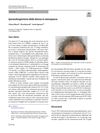
 A 77-year-old woman with hair loss had high testosterone and 17OH-progesterone levels, but no significant findings on imaging.
 180 citations
,
January 2003 in “American Journal of Clinical Dermatology”
180 citations
,
January 2003 in “American Journal of Clinical Dermatology” Menopause can lead to skin and hair problems due to hormonal changes, but hormone replacement therapy might help slow these effects.
1 citations
,
November 2023 in “Biomedicines” Menopause can cause hair thinning and texture changes due to hormonal and metabolic shifts.
Menopause is a clear hormonal transition in women, while men experience a gradual testosterone decline, with some needing lifestyle changes and targeted therapy.
 September 2023 in “Gynäkologische Endokrinologie”
 Menopause causes skin and hair to become drier and thinner, but hormone therapy can improve these conditions.
October 2019 in “DOAJ (DOAJ: Directory of Open Access Journals)” Menopausal acne is mainly caused by hormonal changes and can be managed with topical treatments, lifestyle changes, and sometimes medication.
January 2024 in “Cosmetics” Menopause worsens skin, hair, and nails, affecting self-esteem and quality of life.
 1 citations
,
May 2025 in “Maturitas”
1 citations
,
May 2025 in “Maturitas” Menopause can cause hair loss in women due to hormonal changes, affecting their well-being and quality of life.
 1 citations
,
September 2025 in “EMJ Dermatology”
1 citations
,
September 2025 in “EMJ Dermatology” Menopause affects skin and hair, and more research is needed for effective treatments.
Menopause causes skin issues like dryness and wrinkles, which can be managed with lifestyle changes and treatments.