Keratin gel may help repair damaged nerves.
352 citations
,
August 2003 in “Proceedings of the National Academy of Sciences” Nestin is found in hair follicle progenitor cells, linking them to neural stem cells.
 15 citations
,
December 2015 in “PLoS ONE”
15 citations
,
December 2015 in “PLoS ONE” Fibroblasts can be mistaken for neural cells, so functional validation is needed.
 50 citations
,
February 2007 in “Expert Opinion on Biological Therapy”
50 citations
,
February 2007 in “Expert Opinion on Biological Therapy” Hair follicle stem cells could help repair nerves and avoid ethical issues linked to embryonic stem cells.
10 citations
,
September 2024 in “Neural Regeneration Research” Stem cells improve nerve repair by enhancing blood vessel growth.
Rat hair follicle bulge cells can become nerve and glial cells, showing potential for neuroprotection.
7 citations
,
September 2013 in “Tissue engineering. Part A” Hair follicle stem cells can become motor neurons and reduce muscle loss after nerve injury.
14 citations
,
May 2008 in “Journal of Visualized Experiments” Mouse epidermal neural crest stem cells can become various cell types and are easily obtained from hair follicles.
 10 citations
,
January 2014 in “BioMed research international”
10 citations
,
January 2014 in “BioMed research international” Rat whisker cells can help turn other cells into nerve cells and might be used to treat brain injuries or diseases.
87 citations
,
June 2010 in “Stem Cell Research & Therapy” Stem cells can move to brain injury sites and be tracked, showing promise for treating brain diseases.
2 citations
,
May 2022 in “bioRxiv (Cold Spring Harbor Laboratory)” Rare Gli1+ fibroblasts are crucial for skin wound healing.
46 citations
,
October 2018 in “Neuroscience Bulletin”  November 2023 in “Research Square (Research Square)”
 NIR-II imaging effectively tracked stem cells that helped repair facial nerve defects in rats.
80 citations
,
September 2007 in “Cell Cycle” Stem cells in hair follicles can become various cell types, including neurons.
227 citations
,
February 1989 in “The Journal of Comparative Neurology” CGRP-IR axons may help maintain and renew tissues.
April 2009 in “The FASEB Journal” Keratin biomaterials from human hair help nerve regeneration by activating Schwann cells.
Type II spiral ganglion neurites avoid high concentrations of laminin and fibronectin.
December 2022 in “Stem Cells and Development” Exosomes from stem cells help improve nerve repair in rats.
 June 2026 in “Scientific Reports”
 Nestin-expressing hair follicle cells may be useful for nerve repair and regeneration.
 4 citations
,
June 2021 in “Basic and Clinical Neuroscience Journal”
4 citations
,
June 2021 in “Basic and Clinical Neuroscience Journal” Rat hair follicle stem cells can improve nerve repair and muscle function after injury.
January 2016 in “Methods in molecular biology” HAP stem cells in hair follicles could help repair nerves and spinal cords.
69 citations
,
October 2013 in “Tissue Engineering Part A” Keratin hydrogel improves nerve regeneration and motor recovery.
 5 citations
,
January 2016 in “Stem Cells International”
5 citations
,
January 2016 in “Stem Cells International” Certain skin cells near the base of hair muscles may help renew and stabilize skin, possibly affecting skin disorder understanding.
November 2007 in “Science” Keratin-based hydrogels from human hair help nerve repair better than traditional methods.
7 citations
,
July 2021 in “The journal of investigative dermatology/Journal of investigative dermatology” Human skin can be reconnected to nerves using stem cells, which may help with skin health and healing.
 February 2023 in “bioRxiv (Cold Spring Harbor Laboratory)”
 Merkel cells stabilize nerve endings in the skin, and they change independently of each other.
 146 citations
,
June 2012 in “PLoS ONE”
146 citations
,
June 2012 in “PLoS ONE” Paneth cells help support stem cells and aid tissue regeneration after injury.
 130 citations
,
September 2018 in “Cell Reports”
130 citations
,
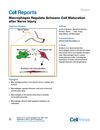
September 2018 in “Cell Reports” Macrophages help heal nerves by aiding the maturation of Schwann cells and are important for nerve repair.
12 citations
,
July 2019 in “Veterinary Dermatology” Nestin-expressing progenitor cells become outer root sheath keratinocytes.
4 citations
,
January 2016 in “Methods in molecular biology” HAP stem cells can repair nerves, grow hair follicle nerves, and become heart muscle cells, making them useful for regenerative medicine.