September 2023 in “Journal of the American Academy of Dermatology” Current guidelines may overlook beard and sideburn involvement in diagnosing frontal fibrosing alopecia in men.
 March 2012 in “Journal of The American Academy of Dermatology”
 Dermoscopy helps diagnose different hair loss conditions, and characteristics vary among ethnicities and individual cases.
January 2015 in “프로그램북(구 초록집)” Trichoscopy effectively diagnoses and assesses hair loss severity in androgenetic alopecia and alopecia areata.

Alopecia can negatively affect a person's mental health.

Hair loss due to a repaired brain bulge was successfully treated using a tissue expansion technique.
 December 2025 in “Russian Journal of Skin and Venereal Diseases”
 Thinner hair follicle structures are linked to non-scar alopecia.
 January 1996 in “Springer eBooks”
 Balding doesn't reduce the number of hair follicles, it just makes them smaller.
 February 2013 in “Journal of the American Academy of Dermatology”
 A woman's hair loss looked like a different condition due to her hairstyle, and treatment stopped further hair loss but didn't regrow hair.
 August 2015 in “Dermatología Argentina”
 Frontal fibrosing alopecia causes hairline recession and eyebrow loss in postmenopausal women.
January 2009 in “Chinese Journal of Aesthetic Medicine” The treatment helped regrow hair in people with androgenetic alopecia.
2 citations
,
August 1993 in “Archives of Dermatology” A 39-year-old woman developed uncombable hair syndrome after taking oral contraceptives.
 2 citations
,
December 2004 in “Medicine”
2 citations
,
December 2004 in “Medicine” Different hair and scalp disorders cause hair loss or excess hair growth, with various treatments available depending on the specific condition.
November 2012 in “Annales de Dermatologie et de Vénéréologie” Frontal fibrosing alopecia can occur in children, not just postmenopausal women.
 February 2012 in “Expert Review of Endocrinology & Metabolism”
 The document suggests more research is needed to understand the link between baldness and prostate cancer.
9 citations
,
July 1982 in “International Journal of Dermatology” A 31-year-old man's hair turned white suddenly, likely due to alopecia areata.
 January 2025 in “Revista del Centro Dermatológico Pascua”
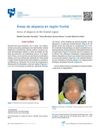
 Early diagnosis and treatment can help manage fibrosing alopecia in older women.
July 2026 in “Journal of the American Academy of Dermatology” 1 citations
,
March 1991 in “PubMed”  4 citations
,
October 2018 in “Experimental Dermatology”
4 citations
,
October 2018 in “Experimental Dermatology” Dermoscopy shows that diffuse alopecia areata progresses through specific hair growth stages.
September 1998 in “Journal of the European Academy of Dermatology and Venereology” PUVA-turban therapy can help some people with severe alopecia areata regrow hair.
1 citations
,
March 2023 in “Journal of the Turkish Academy of Dermatology” Temporal triangular alopecia may be linked to sebaceous nevus and shows a new pinkish background feature.
 October 2024 in “Journal of Cutaneous and Aesthetic Surgery”
 Including the parietal eminence in hair transplants improves scalp appearance and balance.
 March 2023 in “Oxford University Press eBooks”
 The document's conclusion cannot be determined from the provided text.
 August 2021 in “Clinical and Experimental Dermatology”
 Children under 10 can experience hair thinning without hormone issues, and it may improve with treatment.
 July 2025 in “Journal of Dermatology Research Reviews & Reports”
 A 10-year-old girl with hair and eyelash loss showed significant regrowth after treatment.
 January 2004 in “Springer eBooks”
 Telogen effluvium is a condition that causes temporary hair loss.
A 2-year-old boy with a rare type of lupus causing hair loss improved with oral steroids.
6 citations
,
July 2004 in “JDDG Journal der Deutschen Dermatologischen Gesellschaft” Frontal fibrosing alopecia in postmenopausal women can be managed with early treatment using corticosteroids to stop hair loss.
December 2025 in “Zenodo (CERN European Organization for Nuclear Research)” Alopecia areata causes sudden, patchy hair loss due to an immune attack on hair follicles.