 3 citations
,
August 2021 in “Research Square (Research Square)”
3 citations
,
August 2021 in “Research Square (Research Square)” The most common sign of aging at the gene level is more Ectodysplasin A2 Receptor (EDA2R) being made.
 November 2022 in “Journal of Investigative Dermatology”
 Botanical extract improved well-being and skin health in a test group compared to a placebo.
 8 citations
,
June 2022 in “International Journal of Molecular Sciences”
8 citations
,
June 2022 in “International Journal of Molecular Sciences” Tiny particles called extracellular vesicles show promise for skin improvement and anti-aging in facial care but face challenges like low production and lack of research.
 April 2024 in “Journal of applied cosmetology”
 Using hyaluronic acid fillers in the temple area of the face can improve looks but has risks, so choosing the right technique and product is important for safety.
 77 citations
,
July 2013 in “Best Practice & Research in Clinical Obstetrics & Gynaecology”
77 citations
,
July 2013 in “Best Practice & Research in Clinical Obstetrics & Gynaecology” Menopause reduces skin collagen and elasticity, and while estrogen therapy can help, its risks require careful consideration.
 3 citations
,
November 2020 in “Cleveland Clinic Journal of Medicine”
3 citations
,
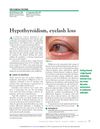
November 2020 in “Cleveland Clinic Journal of Medicine” Eyelash loss can be a sign of thyroid problems.
 3 citations
,
September 2021 in “Experimental and Therapeutic Medicine”
3 citations
,
September 2021 in “Experimental and Therapeutic Medicine” Early diagnosis of Keratosis pilaris atrophicans faciei can lead to better, personalized treatments.
 14 citations
,
October 2021 in “Dermatology and Therapy”
14 citations
,
October 2021 in “Dermatology and Therapy” UV exposure accelerates skin aging by altering elastin, leading to wrinkles.
1 citations
,
January 2024 in “Egyptian Dental Journal /Egyptian Dental Journal” The combined treatment improves lip texture, elasticity, and firmness for up to nine months.
 2 citations
,
May 2017 in “Archives of Plastic Surgery”
2 citations
,
May 2017 in “Archives of Plastic Surgery” The document concludes that understanding the evolution of the human face helps cosmetic surgeons meet aesthetic desires.
 5 citations
,
February 2023 in “European journal of endocrinology”
5 citations
,
February 2023 in “European journal of endocrinology” Older patients with Cushing's syndrome often have different symptoms and treatment outcomes compared to younger patients.
 3 citations
,
July 2011 in “Journal of the Egyptian Women's Dermatologic Society (Print)”
3 citations
,
July 2011 in “Journal of the Egyptian Women's Dermatologic Society (Print)” Acne is common in adult women, often continues from adolescence, and can lead to scarring.
 May 2024 in “British journal of dermatology/British journal of dermatology, Supplement”
 Hair follicles in androgenetic alopecia age faster, especially in the front.
 4 citations
,
February 2025 in “GeroScience”
4 citations
,
February 2025 in “GeroScience” Increasing neuropeptide Y in the brain can slow aging signs in mice.
January 2016 in “Georg Thieme Verlag eBooks” Tailoring facelift techniques to individual needs improves patient satisfaction.
 September 2016 in “Journal of Dermatological Science”
 Golden oyster mushroom extract may protect skin cells from aging by its antioxidant properties.
 15 citations
,
January 2002 in “Gynecological endocrinology”
15 citations
,
January 2002 in “Gynecological endocrinology” Hormones affect skin aging and fat distribution, and treatments can help, but only minoxidil is proven for female hair loss.
 May 2026 in “The EMBO Journal”
 Skin aging can be slowed by targeting cells, hormones, and the microbiome.
 65 citations
,
June 2003 in “EMBO journal”
65 citations
,
June 2003 in “EMBO journal” Noggin overexpression delays eyelid opening by affecting cell death and skin cell development.
August 2020 in “Research Square (Research Square)” Enhanced stem cells can reduce fat buildup in eye tissue for Graves' disease.
 November 2023 in “Experimental Dermatology”
 Exosomes from human hair follicle cells can improve aging hair follicle cell function and help regenerate hair follicles.
 3 citations
,
June 2017 in “Aesthetic plastic surgery”
3 citations
,
June 2017 in “Aesthetic plastic surgery” The new facial treatment improved wrinkles and skin thickness, with most patients seeing results within a month, despite some temporary swelling and bruising.
 June 2020 in “International Journal of Research in Dermatology”
 Xerosis and wrinkling are common in elderly skin, but some conditions can be harmful.
1 citations
,
September 2025 in “Eye” Certain drugs can cause eyelid inflammation, so doctors should monitor and educate patients on eyelid care.
October 1940 in “Clinical and Experimental Optometry” Vitamin A deficiency can cause eye problems and other health issues.
January 2024 in “Wiadomości Lekarskie” Cosmetic products with antioxidants and regenerative ingredients can reduce skin aging symptoms.
 February 2026 in “Journal of Regenerative Medicine and Biology Research”
 Exosomes show promise for anti-aging and regenerative treatments.
 October 2021 in “Journal of Investigative Dermatology”
 Skin cell strength decreases significantly as we age.

EFBL offers hidden incisions, faster recovery, and fewer risks, but may raise hairline and cost more.
 21 citations
,
July 2010 in “International Journal of Cosmetic Science”
21 citations
,
July 2010 in “International Journal of Cosmetic Science” Older people's hair becomes less shiny because it gets more uneven and curved.