38 citations
,
September 2004 in “Journal of Autoimmunity” Alopecia areata patients have more activated T cells in their blood, which may help in developing treatments.
11 citations
,
February 1990 in “PubMed” Zinc may help treat alopecia areata by boosting certain immune cells.
2 citations
,
October 1990 in “PubMed” Severe alopecia areata involves higher levels of certain immune cells, which can be normalized with betamethasone.
15 citations
,
December 2018 in “International journal of environmental research and public health/International journal of environmental research and public health” EGCG may help treat alopecia areata by blocking certain immune responses and reducing specific harmful immune cells.
 13 citations
,
February 2007 in “British Journal of Dermatology”
13 citations
,
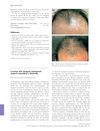
February 2007 in “British Journal of Dermatology” EF and PXE not closely related.
 27 citations
,
April 2018 in “Journal of autoimmunity”
27 citations
,
April 2018 in “Journal of autoimmunity” iNKT cells can help prevent and treat alopecia areata by promoting hair regrowth.
12 citations
,
April 2017 in “Experimental and Therapeutic Medicine” Patients with severe active alopecia areata have lower CD200 expression and an imbalance in their immune system.
26 citations
,
March 1987 in “Journal of the American Academy of Dermatology” Minoxidil helps hair regrowth by stimulating hair follicles and reducing immune responses.
7 citations
,
October 1988 in “Clinics in Dermatology” Minoxidil may help hair regrowth in alopecia areata by affecting T-cells.
4 citations
,
September 2011 in “Journal of the American Academy of Dermatology” A man developed a skin cancer called folliculotropic mycosis fungoides after a kidney transplant.
September 2011 in “Chinese Journal of Dermatology” A man's skin condition was misdiagnosed and later identified as a rare type of skin cancer, which did not improve with treatment.
 20 citations
,
June 2010 in “Genes and Immunity”
20 citations
,
June 2010 in “Genes and Immunity” Blood tests can help understand the genetic differences in people with alopecia areata, including how severe it is and if it's inherited.
 12 citations
,
March 2016 in “BBA clinical”
12 citations
,
March 2016 in “BBA clinical” Increased Toll-like receptors in blood cells may contribute to alopecia areata and could be a target for new treatments.
 4 citations
,
July 2008 in “British journal of dermatology/British journal of dermatology, Supplement”
4 citations
,
July 2008 in “British journal of dermatology/British journal of dermatology, Supplement” Poor response to topical immunotherapy in alopecia areata patients is linked to impaired cell responses.

Alopecia areata patients have higher levels of certain immune receptors, suggesting new treatment possibilities.
8 citations
,
March 2013 in “Cell Transplantation” Injecting young pig stem cells can make old pig skin look younger and more elastic.
 1 citations
,
October 2022 in “International Journal of Molecular Sciences”
1 citations
,
October 2022 in “International Journal of Molecular Sciences” Using healthy donor stem cells can potentially calm overactive immune cells and reduce inflammation in severe hair loss patients, offering a possible treatment method.
June 2024 in “Clinical and Experimental Obstetrics & Gynecology” Blood count parameters are not reliable for predicting recurrent implantation failure.
 47 citations
,
December 2019 in “Frontiers in immunology”
47 citations
,
December 2019 in “Frontiers in immunology” A new mutation in the STING protein causes a range of symptoms and its severity may be affected by other genetic variations; treatment with a specific inhibitor showed improvement in one patient.
 3 citations
,
January 2019 in “Jikken doubutsu ihou/Jikken doubutsu/Experimental animals/Jikken Dobutsu”
3 citations
,
January 2019 in “Jikken doubutsu ihou/Jikken doubutsu/Experimental animals/Jikken Dobutsu” Pigs without the Hairless gene showed skin and thymus changes, useful for studying human hair disorders.
 1 citations
,
August 2018 in “bioRxiv (Cold Spring Harbor Laboratory)”
1 citations
,
August 2018 in “bioRxiv (Cold Spring Harbor Laboratory)” A new mutation in the TMEM173 gene and a risk allele in IFIH1 cause a unique set of immune-related symptoms.
 2 citations
,
September 2018 in “Tissue Engineering Part A”
2 citations
,
September 2018 in “Tissue Engineering Part A” Xeno-free three-dimensional stem cell masses are safe and effective for improving blood flow and tissue repair in limb ischemia.
 April 2020 in “Research Square (Research Square)”
 Women with PCOS may have a reduced ability to fight breast tumor cells over time.
April 2023 in “Journal of Investigative Dermatology” Increased TEMRA cells can predict treatment outcomes in rapidly progressive alopecia areata.
75 citations
,
October 2012 in “Journal of Investigative Dermatology” Alopecia areata can be triggered by specific immune cells without genetic or environmental factors.
April 2023 in “Journal of Investigative Dermatology” Contact immunotherapy can change immune responses in alopecia areata, suggesting new treatment targets.
5 citations
,
October 2012 in “Veterinary Pathology” A Doberman Pinscher had a rare form of autoimmune disease causing hair loss and other severe symptoms.
3 citations
,
October 2024 in “Experimental Dermatology” Higher CRHR1 levels in AA patients lead to increased inflammation.
1 citations
,
November 2025 in “Stem Cell Research & Therapy” Immortalized hair follicle cells could be useful for regenerative medicine and treating inflammation and oxidative stress.
July 2019 in “Indian dermatology online journal” Alopecia areata can show unusual red-dotted vessels and dithranol treatment may mask typical patterns.