29 citations
,
July 2008 in “British Journal of Dermatology” The patient had paraneoplastic pemphigus without mucosal involvement.
 3 citations
,
July 2008 in “British journal of dermatology/British journal of dermatology, Supplement”
3 citations
,
July 2008 in “British journal of dermatology/British journal of dermatology, Supplement” Terbinafine can cause hair loss.
 2 citations
,
November 2012 in “European Journal of Dermatology”
2 citations
,
November 2012 in “European Journal of Dermatology” Hair transplant surgery may cause alopecia areata, a new possible complication.
 September 2016 in “Journal of dermatological science”
 Collagen XVII is crucial for skin cell growth and nail health.
 September 2016 in “Journal of dermatological science”
 Adult skin cells can be used to create new hair in a lab.
 January 2016 in “Journal of Investigative Dermatology”
 Some cells may slow melanoma growth, a protein could affect skin pigmentation, a gene-silencing method might treat hair defects, skin bacteria changes likely result from eczema, and a defensin protein could help treat multiple sclerosis.
 January 2016 in “Experimental Dermatology”
 New findings suggest potential treatments for melanoma, hyperpigmentation, hair defects, and multiple sclerosis, and show skin microbiome changes don't cause atopic dermatitis.
 July 2008 in “British Journal of Dermatology”
 Cyclosporin doesn't stop hair loss.
 211 citations
,
April 2018 in “Cold Spring Harbor Perspectives in Biology”
211 citations
,
April 2018 in “Cold Spring Harbor Perspectives in Biology” Keratins are crucial for cell structure, growth, and disease risk.
70 citations
,
January 2014 in “International review of cell and molecular biology” Keratin proteins are crucial for healthy skin, but mutations can cause skin disorders with no effective treatments yet.
 59 citations
,
June 2023 in “Nature Aging”
59 citations
,
June 2023 in “Nature Aging” Blocking IL-17 signaling may reduce skin inflammation and delay aging.
 43 citations
,
January 2012 in “Biological Research”
43 citations
,
January 2012 in “Biological Research” The origins of many adult skin stem cells are still mostly unknown.
 27 citations
,
July 2017 in “Scientific Reports”
27 citations
,
July 2017 in “Scientific Reports” N-WASP is essential for healthy skin and preventing inflammation.
 18 citations
,
September 2003 in “The journal of investigative dermatology/Journal of investigative dermatology”
18 citations
,
September 2003 in “The journal of investigative dermatology/Journal of investigative dermatology” VDUP1 is found in skin and hair follicles, interacts with sciellin, and may help regulate skin cell differentiation.
 17 citations
,
February 2015 in “Cell Death and Disease”
17 citations
,
February 2015 in “Cell Death and Disease” Inhibiting AP1 in mice skin causes structural changes and weakens the skin barrier.
 11 citations
,
March 2024 in “Cell and Tissue Research”
11 citations
,
March 2024 in “Cell and Tissue Research” Telocytes have potential in therapy and tissue regeneration, but challenges in identification and cultivation remain.
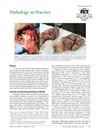 6 citations
,
January 2015 in “Journal of the American Veterinary Medical Association”
6 citations
,
January 2015 in “Journal of the American Veterinary Medical Association” A 7-year-old dog with a rare autoimmune disease was euthanized due to severe anemia and poor prognosis.
 6 citations
,
July 2009 in “Veterinary dermatology”
6 citations
,
July 2009 in “Veterinary dermatology” Vesiculobullous lesions should be considered part of canine cutaneous epitheliotropic T-cell lymphoma.
 5 citations
,
October 2015 in “The American journal of pathology”
5 citations
,
October 2015 in “The American journal of pathology” Mice with a mutated Dsg3 gene showed severe symptoms but not the typical blistering of pemphigus vulgaris.
 3 citations
,
February 2021 in “bioRxiv (Cold Spring Harbor Laboratory)”
3 citations
,
February 2021 in “bioRxiv (Cold Spring Harbor Laboratory)” Adult esophageal cells can start to become like skin cells, with a key pathway influencing this change.
 3 citations
,
September 2005 in “Experimental dermatology”
3 citations
,
September 2005 in “Experimental dermatology” The cornified envelope is crucial for skin's barrier function and involves key proteins and genetic factors.
 1 citations
,
July 2016 in “Elsevier eBooks”
1 citations
,
July 2016 in “Elsevier eBooks” Understanding skin structure and development helps diagnose and treat skin disorders.
 December 2025 in “Italian Journal of Anatomy and Embryology”
 Understanding embryologic layers improves skin disorder diagnosis and supports developing targeted therapies.

Menopause-related skin changes may increase fungal infections and inflammation.
 January 2019 in “Durham e-Theses (Durham University)”
 Advanced microscopy shows hair damage and keratin proteins' roles, aiding future cosmetic treatments.
 January 2016 in “Research Explorer (The University of Manchester)”
 Activating the Eda/Edar pathway improves wound healing by enhancing hair follicle growth.
 January 2012 in “Durham e-Theses (Durham University)”
 Keratin 15 affects cell behavior and characteristics in skin cells.
28 citations
,
January 2015 in “Journal of Cell Science” PINCH-1 is crucial for skin cell adhesion and movement, working with EPLIN and ILK.
 January 2017 in “Springer eBooks”
 The document explains various skin conditions and their treatments.
 5 citations
,
October 2025 in “International Journal of Nanomedicine”
5 citations
,
October 2025 in “International Journal of Nanomedicine” Traditional Chinese Medicine and biomaterials help heal chronic wounds by targeting multiple pathways.