December 2025 in “Biomedicines” Addressing body image and weight can help improve female sexual dysfunction.

Exosome therapies improve skin, hair, and healing but face challenges like cost and regulation.
November 2022 in “IntechOpen eBooks” Nanotechnology can improve wound healing by enhancing treatments and dressings.
Machine learning helps find new uses for existing drugs, improving healthcare.
6 citations
,
November 2024 in “Molecular Medicine” Hormones can improve wound healing by regulating the healing process.
 July 2026 in “Zenodo (CERN European Organization for Nuclear Research)”
 PRP therapy safely promotes hair growth by injecting concentrated platelets into the scalp.
 July 2026 in “Zenodo (CERN European Organization for Nuclear Research)”
 PRP therapy safely promotes hair growth by injecting concentrated platelets into the scalp.
 December 2022 in “BMC women's health”
 The CNC® prosthetic system improved body image in breast cancer patients with hair loss from chemotherapy but did not significantly change their psychological wellbeing.
Higher pre-pregnancy BMI is linked to more stress in mothers and more behavioral problems in two-year-old children.
5 citations
,
August 2025 in “Biomedicines” Early detection and multidisciplinary management of skin and mouth side effects from breast cancer treatments improve patient outcomes.
1 citations
,
August 2024 in “Journal of Cosmetic Dermatology” Oscillatory punches work better for soft scalps or deep punches in FUE surgery.
 September 2025 in “International Journal of Molecular Sciences”
 Hair analysis could help diagnose and treat schizophrenia more effectively.
 April 2025 in “International Journal of Molecular Sciences”
 New treatments for hair loss show promise with advanced therapies and better targeting.

Topical treatments like minoxidil and corticosteroids are effective for hair loss, with JAK inhibitors promising for alopecia areata.
12 citations
,
September 2024 in “MedComm” Bioprinting shows promise in medicine but needs collaboration to overcome challenges.
December 2025 in “Journal of Cell Communication and Signaling” Vitamin D receptor is crucial for hair health and may help treat hair loss.
 December 2024 in “Kırıkkale Üniversitesi Tıp Fakültesi Dergisi”
 Chromosomal microarray analysis is important for diagnosing rare genetic variations and guiding treatment.
246 citations
,
February 2021 in “Trends in Pharmacological Sciences” Drug repurposing offers a faster, cheaper way to find treatments for rare diseases.
56 citations
,
August 2011 in “Best Practice & Research Clinical Gastroenterology” Cancer prevention has progressed with successful drugs and vaccines, but challenges remain in understanding genetic changes and improving strategies.
29 citations
,
May 2025 in “Polymers” DLP bioprinting shows promise for medical uses, but needs more material options and strength improvements.
24 citations
,
March 2024 in “Small Science” Single-cell encapsulation shows promise for medical use but faces production challenges.
17 citations
,
December 2022 in “Biosensors” Triboelectric nanogenerators can power wearable medical devices for long-term self-treatment and monitoring.
12 citations
,
November 2022 in “Cosmetics” 3D printed microneedles are likely to become more common in cosmetics for better skin delivery.
10 citations
,
February 2022 in “Cancers” More research and guidelines are needed for managing prostate cancer in people with high-risk genetic mutations.
10 citations
,
April 2018 in “Journal of Mind and Medical Sciences” The mind and body don't directly interact; the mind acts as an interface linking abstract and physical data.
7 citations
,
August 2023 in “Life” Extracellular vesicles could help tailor drug treatments, but more research is needed.
7 citations
,
February 2023 in “Exploration of Medicine” Drug repurposing offers promising strategies to improve tuberculosis treatment despite challenges.
7 citations
,
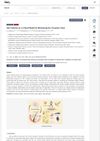
August 2020 in “Current topics in medicinal chemistry” New cancer treatments aim to reduce side effects and improve effectiveness.
 5 citations
,
January 2023 in “International Journal of Molecular Sciences”
5 citations
,
January 2023 in “International Journal of Molecular Sciences” Hair follicles could be used to noninvasively monitor our body's internal clock and help identify risks for related diseases.
3 citations
,
October 2025 in “Cancer” PROTACs offer a new, precise way to treat cancer by breaking down harmful proteins.