 2 citations
,
April 2012 in “Science-business Exchange”
2 citations
,
April 2012 in “Science-business Exchange” Blocking a protein called prostaglandin D2 might help treat hair loss.
 68 citations
,
November 2012 in “Journal of Investigative Dermatology”
68 citations
,
November 2012 in “Journal of Investigative Dermatology” Prostaglandin D2 blocks new hair growth after skin injury through the Gpr44 receptor.
Targeting the PGI2 pathway may help heal diabetic foot ulcers.
October 2022 in “The Korean Journal of Physiology and Pharmacology” Targeting the PGD2-DP2 pathway may help treat hair loss.
 105 citations
,
August 2010 in “Pharmacology & therapeutics”
105 citations
,
August 2010 in “Pharmacology & therapeutics” Formyl-peptide receptor agonists could be new anti-inflammatory drugs.
 April 2016 in “Journal of Investigative Dermatology”
 Blocking Prostaglandin D₂ (PGD₂) could help treat hair loss.
1 citations
,
January 2013 Bimatoprost treats glaucoma and promotes hair growth, with potential for more medical uses.
 1 citations
,
May 2025 in “Natural Products and Bioprospecting”
1 citations
,
May 2025 in “Natural Products and Bioprospecting” PEVIII is a promising treatment for Pseudomonas aeruginosa keratitis.
 43 citations
,
July 2013 in “Pharmacological reviews”
43 citations
,
July 2013 in “Pharmacological reviews” New research on prostamide F2α has led to treatments for glaucoma and eyelash growth and may have more medical uses.
 205 citations
,
March 2012 in “Science Translational Medicine”
205 citations
,
March 2012 in “Science Translational Medicine” PGD2 stops hair growth and is higher in bald men with AGA.
 December 2023 in “Frontiers in pharmacology”
 Progesterone initially worsens but later reduces neuropathic pain in mice, through different mechanisms.
July 2025 in “Annals of Medicine” Gestrinone pellets may help reduce pelvic pain in endometriosis safely.
 1 citations
,
April 2016 in “Journal of Investigative Dermatology”
1 citations
,
April 2016 in “Journal of Investigative Dermatology” Blocking Prostaglandin D₂ may help treat hair loss.
 April 2023 in “Journal of Investigative Dermatology”
 Treprostinil, a drug, can delay wound healing in healthy cells but doesn't affect diabetic foot ulcer cells, suggesting further research could help understand its role in treating these ulcers.
29 citations
,
September 2018 in “Journal of the American Heart Association” EP 2 receptor is essential for heart repair by helping macrophages work properly.
 25 citations
,
July 2024 in “Frontiers in Pharmacology”
25 citations
,
July 2024 in “Frontiers in Pharmacology” Rimegepant causes more nausea and skin issues, while ubrogepant causes more muscle issues; personalized treatment is important.
61 citations
,
September 2011 in “Pain” PEA reduces pain by increasing neurosteroid synthesis in the spinal cord.
 3 citations
,
May 2011 in “Journal of the American Academy of Dermatology”
3 citations
,
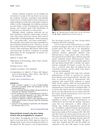
May 2011 in “Journal of the American Academy of Dermatology” A woman's excessive hair growth around a leg ulcer was linked to a treatment with Prostaglandin E1 ointment.
 9 citations
,
August 2014 in “European journal of ophthalmology”
9 citations
,
August 2014 in “European journal of ophthalmology” PGF2α receptors in human eyelids are found in specific parts of hair follicles, explaining eyelash changes with glaucoma treatment.
July 2025 in “Journal of Investigative Dermatology” Upadacitinib effectively treats pyoderma gangrenosum.
16 citations
,
November 2018 in “The journal of pain/Journal of pain” 14,15-EET may help reduce poststroke pain by affecting certain brain proteins.
 42 citations
,
February 1998 in “The Journal of Steroid Biochemistry and Molecular Biology”
42 citations
,
February 1998 in “The Journal of Steroid Biochemistry and Molecular Biology” PNU 157706 is a more effective treatment than finasteride for conditions caused by DHT, like enlarged prostate and hair loss.
 9 citations
,
September 2017 in “Journal of Investigative Dermatology Symposium Proceedings”
9 citations
,
September 2017 in “Journal of Investigative Dermatology Symposium Proceedings” Prostaglandin D2 increases testosterone production in skin cells through a process involving reactive oxygen species, and antioxidants may help treat hair loss.
 May 2012 in “Faculty Opinions – Post-Publication Peer Review of the Biomedical Literature”
 Prostaglandin D2, found in higher levels in bald scalps, stops hair growth, suggesting that blocking its receptor could potentially treat hair loss.
9 citations
,
January 2021 in “Mediators of Inflammation” 15d‐PGJ2 cream protects against UVB-induced skin damage in mice.
 25 citations
,
January 2017 in “Steroids”
25 citations
,
January 2017 in “Steroids” Allopregnanolone increases growth and changes gene activity in human brain cancer cells.
28 citations
,
November 2009 in “European Journal of Neuroscience” Progesterone and allopregnanolone increase glycine release in rat brain cells.
51 citations
,
May 2004 in “American journal of ophthalmology” Using topical prostaglandin F2α for glaucoma may cause loss of eyelash or eyebrow pigment.
 January 2016 in “Faculty Opinions – Post-Publication Peer Review of the Biomedical Literature”
 A substance called prostaglandin D2 is found more in bald scalps and it stops hair from growing. Blocking its receptor could potentially treat hair loss.
9 citations
,
August 2023 in “Molecules” Two peptides, RMYYY and VMYMI, may be effective anti-inflammatory drugs.