 50 citations
,
January 2016 in “The Journal of Clinical Endocrinology and Metabolism”
50 citations
,
January 2016 in “The Journal of Clinical Endocrinology and Metabolism” Certain microRNAs in the fluid around eggs are linked to Polycystic Ovary Syndrome and may help diagnose it.
21 citations
,
December 2005 in “The journal of investigative dermatology/Journal of investigative dermatology” T-cells in alopecia areata scalp show abnormal regulation, leading to less inflammation.
 February 2024 in “New phytologist”
 DNA changes in tetraploid wheat improve root growth and nitrogen use.
2 citations
,
December 2020 in “Frontiers in genetics” Researchers found genes linked to feather growth speed in Shouguang chickens, highlighting two genes that might explain differences in feathering.
 1 citations
,
October 2022 in “JCI insight”
1 citations
,
October 2022 in “JCI insight” Deleting the BRD4 protein in certain skin cells causes hair loss and skin inflammation.
 June 2020 in “bioRxiv (Cold Spring Harbor Laboratory)”
 Lef1 helps adult skin cells maintain their ability to heal wounds and regenerate hair, but the study's methods and conclusions have been questioned.
May 2005 in “Cancer Research” Melanoma cells lose their ability to form tumors when placed in a zebrafish embryo environment.
 7 citations
,
May 2019 in “European Journal of Human Genetics”
7 citations
,
May 2019 in “European Journal of Human Genetics” BMP4-related anomalies can cause a wide range of eye, brain, and hand/foot problems, and new cases show this variability.
128 citations
,
December 2006 in “Journal of Biological Chemistry” Altering SSAT affects fat metabolism and body fat in mice.
87 citations
,
January 1999 in “British Journal of Dermatology” Trichoblastic fibroma and basal cell carcinoma are similar but different from trichoepithelioma.
 32 citations
,
January 2012 in “Clinical & Developmental Immunology”
32 citations
,
January 2012 in “Clinical & Developmental Immunology” Targeting CD200 could be a new treatment for rheumatoid arthritis.
 28 citations
,
February 2010 in “British journal of dermatology/British journal of dermatology, Supplement”
28 citations
,
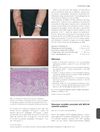
February 2010 in “British journal of dermatology/British journal of dermatology, Supplement” WNT10A mutations cause varied symptoms in patients with odonto-onycho-dermal dysplasia.
25 citations
,
March 2007 in “The journal of investigative dermatology/Journal of investigative dermatology” A specific gene mutation causes varying hair loss severity in a Pakistani family.
13 citations
,
August 2024 in “iScience” 3D spheroid culture makes stem cells better at reducing inflammation.
11 citations
,
April 1993 in “PubMed” Human hair cells can change based on their environment, especially interactions with certain skin cells.
10 citations
,
November 2008 in “Veterinary Dermatology” The mouse hairy ears mutation causes longer ear hair due to changes in gene expression.
9 citations
,
September 2013 in “Journal of histochemistry and cytochemistry/The journal of histochemistry and cytochemistry” Matriptase is highly active in hair follicles and sebaceous glands, especially during hair growth phases.
5 citations
,
March 2017 in “Gene” CAP1 decreases the expression of a hair-related protein in young Tan sheep's skin.
 5 citations
,
October 2015 in “The American journal of pathology”
5 citations
,
October 2015 in “The American journal of pathology” Mice with a mutated Dsg3 gene showed severe symptoms but not the typical blistering of pemphigus vulgaris.

mEphA1 receptor tyrosine kinase is important for skin and hair development and may play a role in certain diseases.
 43 citations
,
February 2013 in “Developmental dynamics”
43 citations
,
February 2013 in “Developmental dynamics” Foxi3 expression in developing teeth and hair is controlled by the ectodysplasin pathway.
35 citations
,
April 1998 in “PubMed” Activated erbB-2 in mice skin causes severe skin and hair abnormalities.
29 citations
,
January 2021 in “G3 Genes Genomes Genetics” A 195 bp duplication in the HOXC10 gene causes crests in domestic chickens.
November 2024 in “Biochemical and Biophysical Research Communications” Abnormal gene expression related to keratin causes hair loss in certain mice.
 June 2023 in “Frontiers in Genetics”
 Genes related to calcium signaling and lipid metabolism are important for curly hair in Mangalitza pigs.
May 2014 in “The journal of immunology/The Journal of immunology” Early over-expression of FoxN1 harms immune and skin development.
 October 2021 in “Journal of Investigative Dermatology”
 Poor blood supply in hair follicles is linked to nutrient deficiency in patients with female pattern hair loss, and adding more nutrients could potentially fix this.
 April 2023 in “Journal of Investigative Dermatology”
 The specific skin disease variant p.(Arg2000Trp) in plectin can cause a wide range of symptoms, which should be considered when diagnosing patients.
52 citations
,
June 2014 in “PLANT PHYSIOLOGY” Arabidopsis plants adjust gene expression to maintain balance when auxin pathways are disrupted.
46 citations
,
November 1998 in “Experimental Cell Research” K15 gene is mainly active in the basal layers of hair follicles and epithelia, aiding early skin cell development.