 7 citations
,
January 2019 in “Australasian Journal of Dermatology”
7 citations
,
January 2019 in “Australasian Journal of Dermatology” A genetic marker linked to a type of hair loss was found in most patients studied.
1 citations
,
January 2020 in “Indian journal of dermatology, venereology, and leprology” CD117 and platelet-derived growth factor receptor α may play a role in alopecia areata.
54 citations
,
October 2007 in “The FASEB Journal” Phospholipase C-δ1 is crucial for normal hair development.
13 citations
,
August 2017 in “Journal of Cellular Physiology” PD‐L1 and PD‐L2 may not effectively control immune activation in alopecia areata.
 4 citations
,
November 2016 in “Journal of Cutaneous Pathology”
4 citations
,
November 2016 in “Journal of Cutaneous Pathology” Three characteristics of plasmacytoid dendritic cells help tell apart lupus-related hair loss from LPP.
 38 citations
,
February 2012 in “British Journal of Dermatology”
38 citations
,
February 2012 in “British Journal of Dermatology” AR/EDA2R gene linked to early-onset female hair loss, but 20p11 gene not involved.
 1 citations
,
November 2024 in “Cutis”
1 citations
,
November 2024 in “Cutis” PLLA injections can cause hair loss and skin issues.
60 citations
,
July 2014 in “Autophagy” The protein FLCN is involved in cellular cleanup and is regulated by ULK1.
June 2003 in “Faculty Opinions – Post-Publication Peer Review of the Biomedical Literature” GLABRA2 represses root hair formation by inhibiting a specific gene.
 January 2017 in “Open Journal of Endocrine and Metabolic Diseases”
 The document concludes that managing Dunnigan-Type Familial Partial Lipodystrophy involves treating associated health issues and using medications like metformin and leptin replacement.
 November 2018 in “Biomedical Journal of Scientific and Technical Research”
 Long-Acting Platelet Rich Plasma therapy can effectively reduce hair shedding, thicken hair, and promote new growth in women with pattern hair loss.
 68 citations
,
July 2011 in “Journal of Biochemistry/The journal of biochemistry”
68 citations
,
July 2011 in “Journal of Biochemistry/The journal of biochemistry” New LPA receptors (LPA4, LPA5, LPA6) have diverse roles in the body.
7 citations
,
August 2017 in “Genetic testing and molecular biomarkers” A new mutation in the FLCN gene linked to Birt-Hogg-Dube syndrome was found, suggesting people with certain lung collapse should be tested for this mutation and screened for kidney and colon cancer.
 86 citations
,
July 2002 in “Clinical and Experimental Dermatology”
86 citations
,
July 2002 in “Clinical and Experimental Dermatology” FPHL is a common, age-related, genetic hair loss with unclear causes and limited treatment options.
15 citations
,
June 2019 in “Biochemical Journal” A new genetic disorder caused by an ODC1 mutation can be treated with DFMO.
 1 citations
,
May 2023 in “European Journal of Human Genetics”
1 citations
,
May 2023 in “European Journal of Human Genetics” Rare ULBP3 gene changes may raise the risk of Alopecia areata, a certain FAS gene deletion could cause a dysfunctional protein in an immune disorder, and having one copy of a specific genetic deletion is okay, but two copies cause sickle cell disease.
September 2003 in “Faculty Opinions – Post-Publication Peer Review of the Biomedical Literature” GLABRA2 gene controls root-hair growth by regulating phospholipid signaling.
 28 citations
,
February 2012 in “PLoS ONE”
28 citations
,
February 2012 in “PLoS ONE” A PKP1 gene mutation causes skin fragility and hair loss in Chesapeake Bay retriever puppies.
24 citations
,
December 2018 in “Inflammation and Regeneration” Phospholipase A2 enzymes play key roles in skin health and disease.
194 citations
,
November 2006 in “Science” A genetic mutation in the LIPH gene causes hair loss and growth defects.
8 citations
,
January 2011 in “International journal of trichology” Accurate diagnosis of APL is crucial to avoid unnecessary treatments.
 1 citations
,
January 2021 in “Journal of biological chemistry/The Journal of biological chemistry”
1 citations
,
January 2021 in “Journal of biological chemistry/The Journal of biological chemistry” FLCN helps control iron levels in cells.
19 citations
,
October 1996 in “International Journal of Dermatology” Pseudopelade is a rare inherited hair loss condition with a genetic cause.
 4 citations
,
January 1970 in “Journal of Bangladesh College of Physicians and Surgeons”
4 citations
,
January 1970 in “Journal of Bangladesh College of Physicians and Surgeons” Early diagnosis and genetic counseling are crucial for managing adrenoleukodystrophy.
Poly-D,L-lactic acid boosts hair growth in aged skin by activating hair follicle stem cells.
 September 2021 in “CRC Press eBooks”
 Lichen planopilaris causes permanent hair loss and scarring due to damage to hair follicles and can be mistaken for other hair loss conditions.
32 citations
,
August 1982 in “Journal of the American Academy of Dermatology” GLPLS and LPP are variants of lichen planus.
 5 citations
,
October 2019 in “The journal of investigative dermatology/Journal of investigative dermatology”
5 citations
,
October 2019 in “The journal of investigative dermatology/Journal of investigative dermatology” The research linked PLCD1 gene variants to the development of trichilemmal cysts.
 February 2026 in “International Journal of Molecular Sciences”
 PDLLA filler can improve hair thickness and shine by reducing age-related hair decline.
 April 2012 in “Informa Healthcare eBooks”
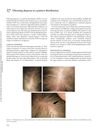
 Fibrosing alopecia in a pattern distribution is a unique hair loss condition with inflammation and scarring, resembling but distinct from common balding.