 4 citations
,
January 2025 in “Translational Psychiatry”
4 citations
,
January 2025 in “Translational Psychiatry” Remote photobiomodulation improves brain injury outcomes and behavior in rats.
 6 citations
,
June 2013 in “British Journal of Dermatology”
6 citations
,
June 2013 in “British Journal of Dermatology” Intense pulsed light treatment mainly damages pigmented hair parts but spares stem cells, allowing hair to regrow.
July 2026 in “Clinics in Dermatology” Topical melatonin may help protect and rejuvenate skin.
May 2026 in “Materials Today Bio” The nanocomplex protects hair from UV damage and strengthens it.
24 citations
,
January 2013 in “Lasers in medical science” The fractional ultrapulse CO2 laser is a safe and effective non-surgical treatment for upper eyelid issues and brow lifting.
5 citations
,
August 2025 in “Journal of Radiation Research” Understanding skin reactions to radiation has improved, helping to reduce injuries and prevent skin cancer.
13 citations
,
August 2021 in “Journal of Cosmetic Dermatology” Tea extracts can protect hair from UV damage.
160 citations
,
July 2008 in “Experimental dermatology” Melatonin protects the skin by scavenging free radicals and repairing DNA damage.
January 2023 in “Indian journal of pharmacy practice” Over-the-counter cosmetic creams can cause skin damage on the face that is visible under dermoscopy and confirmed by tissue analysis.
 134 citations
,
September 2008 in “Lasers in surgery and medicine”
134 citations
,
September 2008 in “Lasers in surgery and medicine” Low fluence photoepilation temporarily removes hair by targeting the hair follicle's pigmented area without severe damage.
20 citations
,
September 2022 in “Journal of Biomedical Optics” PBM helps improve cell survival in 3D tissue engineering.
19 citations
,
December 1999 in “International Journal of Dermatology” Dihydroxyacetone in self-tanning lotion helped reduce sun-related skin issues in a woman with variegate porphyria.
 April 2016 in “Journal of Investigative Dermatology”
 Vitamin D can reduce skin inflammation caused by UV rays by enhancing cell "fitness" and skin repair.
52 citations
,
February 2009 in “Journal of the American Academy of Dermatology” A 93-year-old woman developed a rare scalp condition after therapy, which improved with steroids, not antibiotics.
1 citations
,
March 2024 in “Life” Dermoscopy can help assess the severity of chronic radiation-induced skin damage in head and neck cancer patients.
 May 2023 in “Dermatology Online Journal”
 No increased skin cancer risk was found in alopecia patients treated with photobiomodulation.
1 citations
,
November 2021 in “Journal of General and Family Medicine” Stopping finasteride improved a man's skin rash caused by light exposure.
 10 citations
,
January 2013 in “Journal of skin cancer”
10 citations
,
January 2013 in “Journal of skin cancer” PKC ε increases hair follicle stem cell turnover and may raise skin cancer risk.
 5 citations
,
November 2017 in “Asian Journal of Beauty and Cosmetology”
5 citations
,
November 2017 in “Asian Journal of Beauty and Cosmetology” Sinapic acid may protect skin cells from UV damage and reduce inflammation, making it a promising anti-aging cosmetic ingredient.
July 2020 in “DOAJ (DOAJ: Directory of Open Access Journals)” Excessive sun protection might contribute to frontal fibrosing alopecia.
2 citations
,
December 2024 in “Journal of Photochemistry and Photobiology B Biology” Pulsed wave red LED light is more effective than continuous wave light for promoting hair regrowth.
 8 citations
,
September 2002 in “Genes to Cells”
8 citations
,
September 2002 in “Genes to Cells” Killing specific cells in hair follicles can lead to hair growth problems in mice.
 9 citations
,
May 2019 in “Vestnik dermatologii i venerologii”
9 citations
,
May 2019 in “Vestnik dermatologii i venerologii” The method could improve vitiligo treatment by effectively delivering therapy to hair follicles.
 10 citations
,
March 2014 in “Scandinavian journal of clinical and laboratory investigation”
10 citations
,
March 2014 in “Scandinavian journal of clinical and laboratory investigation” Malondialdehyde-modified DNA may trigger an immune response in alopecia areata patients.
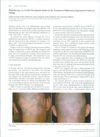 10 citations
,
January 2010 in “Acta dermato-venereologica”
10 citations
,
January 2010 in “Acta dermato-venereologica” Light therapy can effectively treat vitiligo and hair loss caused by a specific medication.
 32 citations
,
August 2019 in “Nature Communications”
32 citations
,
August 2019 in “Nature Communications” Chemotherapy causes permanent hair follicle damage by triggering stem cell loss.
3 citations
,
September 2021 in “Data in brief” Bleaching hair changes its structure and weakens it, which is important for understanding hair damage and creating treatments.
April 2012 in “Neuropediatrics” Trichothiodystrophy is a rare genetic disorder causing hair issues and sometimes linked to DNA repair defects.
January 2011 in “Junshi yixue” Longer exposure to high-power millimeter wave radiation causes more severe skin damage in mice.
 January 2026 in “Journal of Hard Tissue Biology”
 Red LED light boosts cell activity and growth, aiding wound healing and blood vessel repair.