 19 citations
,
July 2009 in “Clinical and Experimental Dermatology”
19 citations
,
July 2009 in “Clinical and Experimental Dermatology” The study found that long-term sun exposure does not significantly affect follicular plugs on the scalp, and the scalp's appearance is unique compared to other body parts.
57 citations
,
December 2011 in “Lasers in Surgery and Medicine” Selective photothermolysis can target sebaceous glands and may treat acne effectively.
 14 citations
,
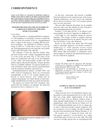
January 2005 in “Pediatric Dermatology”
14 citations
,
January 2005 in “Pediatric Dermatology” UVA1-light therapy successfully treated a child's skin condition, mycosis fungoides.
 1 citations
,
March 2024 in “Brain Imaging and Stimulation”
1 citations
,
March 2024 in “Brain Imaging and Stimulation” A low-cost, 3D-printed light therapy device is safe and effective but needs more testing before use on people.
5 citations
,
January 2011 in “International Journal of Cosmetic Science” 1,2,3,4-tetrahydroquinoline compounds are great for stable, pure blue hair dye.
 5 citations
,
December 2022 in “Research in Biotechnology and Environmental Science”
5 citations
,
December 2022 in “Research in Biotechnology and Environmental Science” Interest in using microorganisms to reduce ocean pollution is growing.
26 citations
,
April 1998 in “Journal of Investigative Dermatology” Sunscreens with higher SPF and UVA filters offer the best protection against skin aging from UVA rays.
13 citations
,
September 2014 in “Journal of photochemistry and photobiology. B, Biology” UV radiation increases protein loss from hair and reduces hair protein quality.
 57 citations
,
June 2021 in “Polymers”
57 citations
,
June 2021 in “Polymers” Photothermal hydrogels are promising for infection control and tissue repair, and combining them with other treatments could improve results and lower costs.

Phototherapy with red or blue light can safely improve hair growth and scalp health in androgenetic alopecia.
 June 2026 in “Dermatology and Therapy”
 Combining multiple ingredients is the most effective treatment for hyperpigmentation.
19 citations
,
January 1999 in “Journal of cutaneous laser therapy” Laser hair removal is a promising method for long-term or permanent hair removal.
 8 citations
,
August 2015 in “Journal of dermatological science”
8 citations
,
August 2015 in “Journal of dermatological science” Rhododendrol in skin-whitening products can cause skin depigmentation and immune reactions.
 January 2023 in “Our Dermatology Online”
 Laser hair removal is effective but may have side effects.
15 citations
,
June 2019 in “JEADV. Journal of the European Academy of Dermatology and Venereology/Journal of the European Academy of Dermatology and Venereology” Chemical and physical treatments like bleaching, dyeing, and UV radiation damage both Caucasian and Afro-ethnic hair.
November 2024 in “Journal of Investigative Dermatology” Blocking the JAK/STAT pathway may help reduce skin sensitivity in Xeroderma pigmentosum.
 58 citations
,
November 2013 in “Journal of Innovative Optical Health Sciences”
58 citations
,
November 2013 in “Journal of Innovative Optical Health Sciences” Multiphoton microscopy is a promising tool for detailed skin imaging and could improve patient care if its challenges are addressed.
NB-UVB phototherapy is an effective and safe treatment for vitiligo, especially on hands and feet, and can be improved with tacrolimus.
February 2024 in “Institutional Repository of the Federal Technological University of Paraná (RIUT) (Federal University of Technology – Paraná)” Photobiomodulation can influence gene and protein expression related to healing and inflammation.
 January 1998 in “Lasers in Surgery and Medicine”
 Lasers are effective and safe for various medical treatments, including cancer, wound healing, and skin conditions.
 2 citations
,
July 2004 in “Proceedings of SPIE, the International Society for Optical Engineering/Proceedings of SPIE”
2 citations
,
July 2004 in “Proceedings of SPIE, the International Society for Optical Engineering/Proceedings of SPIE” Near-infrared laser therapy with Indocyanine Green dye improves acne by reducing inflammation without side effects.
April 2026 in “Spectrochimica Acta Part A Molecular and Biomolecular Spectroscopy” 7 citations
,
August 2007 in “Journal of Biotechnology” October 2025 in “Pediatric Dermatology” UVFD helps quickly diagnose hair loss conditions in children.
8 citations
,
January 2018 in “Journal of Analytical Methods in Chemistry” A new method accurately measures a drug in skin for cancer therapy research.
 9 citations
,
August 2017 in “Photochemistry and Photobiology”
9 citations
,
August 2017 in “Photochemistry and Photobiology” Red light at 627 nm can safely trigger IL-4 release in skin cells, potentially helping treat inflammatory skin conditions.
19 citations
,
August 2019 in “Journal of Cellular Biochemistry” ADSCs help protect skin from UV damage and aging.
 11 citations
,
April 2021 in “Advanced synthesis & catalysis”
11 citations
,
April 2021 in “Advanced synthesis & catalysis” PXX is an effective and affordable photocatalyst for creating new chemical bonds in organic synthesis.
October 2013 in “CRC Press eBooks” Low-level light therapy is used in cosmetics and dermatology to repair skin, reduce inflammation, and treat various skin conditions.
36 citations
,
June 2016 in “Journal of dermatological treatment” The combination therapy significantly improved Riehl’s melanosis in patients without serious side effects.