 July 2022 in “The journal of investigative dermatology/Journal of investigative dermatology”
 Increasing type 17 collagen reduces aging signs in skin cells caused by UV light.
 March 2026 in “Frontiers in Cell and Developmental Biology”
 Photobiomodulation may help reduce pain and inflammation in knee osteoarthritis, but its long-term benefits are unclear.
1 citations
,
May 2017 in “Journal of cosmetic and laser therapy” Lasers can help reduce skin side effects from cancer treatment.
 21 citations
,
January 2023 in “Biomaterials Science”
21 citations
,
January 2023 in “Biomaterials Science” Microneedle patches with alpha-arbutin and resveratrol can effectively reduce skin pigmentation without irritation.
 5 citations
,
September 2015 in “Journal of The American Academy of Dermatology”
5 citations
,
September 2015 in “Journal of The American Academy of Dermatology” Taking photos of your own skin can lead to fewer skin biopsies for mole monitoring.
 January 2026 in “Современные проблемы науки и образования (Modern Problems of Science and Education)”
 308 nm excimer phototherapy can help some people with alopecia areata regrow hair, especially if their condition is less severe.
September 2014 in “Emergency Medicine News” The man's skin condition improved with sun protection and topical steroids, but UV exposure still caused flare-ups.
 January 2026 in “Nanoscale Advances”
 Microneedles combined with light therapy can improve skin disease diagnosis and treatment.
11 citations
,
January 2006 in “Journal of the American Leather Chemists Association” Oxidizing agents break down keratin in wool and hair, causing swelling and increased solubility.
 January 2026 in “Inflammation and Regeneration”
 Two-photon microscopy improves skin imaging but faces safety and cost challenges for clinical use.
 September 2018 in “University of the Arts London Research Online (University of the Arts London)”
 L-arginine, hydrolysed keratin, and cystine-silanol copolymer can help protect hair from damage during and after bleaching.
17 citations
,
May 2019 in “Molecules” These temporary hair dyes may be harmful to human health.
1 citations
,
June 2011 in “InTech eBooks” Darker skin provides more protection against UV damage and cancer.

A natural, eco-friendly treatment using casein and tannic acid strengthens hair by 21% while keeping it elastic.
 108 citations
,
December 2003 in “Lasers in surgery and medicine”
108 citations
,
December 2003 in “Lasers in surgery and medicine” ICG-enhanced NIR laser therapy may be a promising acne treatment with improvement and no side effects.
 21 citations
,
October 2014 in “Actas dermo-sifiliográficas/Actas dermo-sifiliográficas”
21 citations
,
October 2014 in “Actas dermo-sifiliográficas/Actas dermo-sifiliográficas” Hair dyes can change hair color temporarily or permanently but may cause side effects like skin reactions and hair damage.
2 citations
,
May 2018 in “Dermatologic Surgery” 64 citations
,
June 2009 in “Photomedicine and Laser Surgery” Excimer light effectively treats various skin diseases, including psoriasis, vitiligo, and mycosis fungoides.
 October 1997 in “Dermatologic Surgery”
 The Epilight Hair Removal System is effective for temporary hair removal with few side effects, but more research is needed to confirm its safety and long-term results.
1 citations
,
August 1999 in “ACS symposium series” Polymer JR400 sticks to hair but washes off with detergent.
 September 1998 in “Journal of The European Academy of Dermatology and Venereology”
 Phototrichogram helps assess hair loss severity.
 May 2024 in “Brazilian Journal of Hair Health”
 Phototherapy with red and blue light can effectively treat hair loss.
 2 citations
,
January 2015 in “Elsevier eBooks”
2 citations
,
January 2015 in “Elsevier eBooks” The document says biodegradable cosmetics and packaging are better for the environment and user experience.
 May 2008 in “The International Conference on Mathematics and Engineering Physics”
 Nanoparticles can increase light sensitivity in oil-producing skin glands.
 1 citations
,
June 2025 in “International Journal of Plant and Environment”
1 citations
,
June 2025 in “International Journal of Plant and Environment” Nickel oxide nanoparticles made with plant extract can kill bacteria and fungi and break down dyes.
 February 2023 in “Frontiers in Bioengineering and Biotechnology”
 Optical imaging and light therapy show promise for diagnosing and treating liver injury caused by surgery.
 1 citations
,
September 1984 in “Journal of Biological Education”
1 citations
,
September 1984 in “Journal of Biological Education” Plants change their growth in response to shade based on light signals detected by phytochrome.
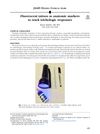 July 2018 in “Journal of The American Academy of Dermatology”
 Fluorescent tattoos are a good way to mark the scalp for hair treatments because they're accurate, invisible in normal light, and have low risk.
2 citations
,
April 2024 in “Cosmetics” Plant extracts can help remove permanent makeup without lasers.
15 citations
,
July 2000 in “The journal of investigative dermatology/Journal of investigative dermatology” Fluorescence can effectively measure acne treatment progress.