1 citations
,
September 2024 in “Porto Biomedical Journal” Early and accurate diagnosis of primary vitreoretinal lymphoma is crucial to prevent serious complications.
55 citations
,
July 2016 in “Eye” 7 citations
,
February 2012 in “British Journal of Dermatology” TH antibodies in vitiligo and AA patients recognize the same protein parts.
 4 citations
,
July 1994 in “Clinics in Dermatology”
4 citations
,
July 1994 in “Clinics in Dermatology” Eosinophilia-myalgia syndrome, linked to contaminated L-tryptophan supplements, caused severe symptoms and some deaths, with long-term effects in survivors.
 July 2015 in “Actas Dermo-Sifiliográficas”
 A young woman with a rare fungal infection showed significant improvement after treatment with antifungal medication.
 3 citations
,
January 2022 in “Medical Mycology Journal”
3 citations
,
January 2022 in “Medical Mycology Journal” Malassezia fungi in healthy noses can form a "spaghetti-and-meatballs" structure.
4 citations
,
November 2020 in “Case reports in dermatology” A rare skin condition causes red, dark, bumpy facial lesions.
24 citations
,
July 2005 in “Journal of the American Academy of Dermatology” A woman's eyelashes grew thicker and longer after taking topiramate, but returned to normal when she stopped the medication.
 March 2025 in “JDDG Journal der Deutschen Dermatologischen Gesellschaft”
 Facial hyperpigmentation improved with oral isotretinoin and ivermectin cream after Demodex mites were identified as the cause.

A rare skin condition in a 17-year-old was diagnosed late, stressing the need for careful evaluation and genetic testing.
 July 2023 in “Photodermatology, Photoimmunology and Photomedicine”
 Infrared radiation can cause skin aging and cancer at high temperatures but may have therapeutic benefits at controlled levels.
July 1979 in “Archives of Dermatology” A 68-year-old woman with benign mucous membrane pemphigoid has eye, mouth, and skin issues, including thick plaques and nail changes.
September 2012 in “British Small Animal Veterinary Association eBooks” The document concludes that pigmentation disorders in animals involve complex interactions between melanocytes and keratinocytes.
10 citations
,
January 1995 in “Dermatology” Dermatologists should consider congenital syndromes like TRPS in young adults with early hair loss.
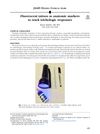 July 2018 in “Journal of The American Academy of Dermatology”
 Fluorescent tattoos are a good way to mark the scalp for hair treatments because they're accurate, invisible in normal light, and have low risk.
1 citations
,
July 2025 in “BMC Psychology” Social rejection can harm long-term mental health in transgender individuals.
 6 citations
,
January 2014 in “Clinical hemorheology and microcirculation”
6 citations
,
January 2014 in “Clinical hemorheology and microcirculation” Hereditary elliptocytosis causes elongated red blood cells and can lead to mild or no symptoms.
August 2024 in “Journal of the American Academy of Dermatology” Nail color change might be an early sign of skin pigmentation from minocycline.
 January 2026 in “Figshare”
 Finasteride can cause melasma, especially in people with darker skin.
17 citations
,
March 2005 in “Journal of Investigative Dermatology” Autofluorescence in hair follicle stem cells can interfere with studies but may help isolate these cells.
 January 2000 in “Optics Letters”
 Laser treatment can inhibit hair growth and different hair colors reach different temperatures when lasered.
 March 2005 in “Journal of The American Academy of Dermatology”
 Mycophenolate mofetil improved skin condition in a man with nephrogenic fibrosing dermopathy.
March 2026 in “Actas Dermo-Sifiliográficas” Most dermatologists think post-finasteride syndrome is rare, possibly psychiatric, and needs more research.
 June 2023 in “LA Referencia (Red Federada de Repositorios Institucionales de Publicaciones Científicas)”
 Home photobiomodulation therapy can improve life quality and mobility for disabled individuals.
January 1990 in “대한피부과학회지” Peanut agglutinin staining helps differentiate malignant melanoma from nevocellular nevus.
 July 2023 in “bioRxiv (Cold Spring Harbor Laboratory)”
 Seeing trauma causes fear in mice by lowering their natural fear-reducing hormones.
 April 2024 in “International Journal of Women’s Dermatology”
 Laser hair reduction can sometimes cause a rare skin condition called Fox-Fordyce disease.
7 citations
,
February 2023 in “Journal of Dermatological Treatment” The Scalp Photographic Index (SPI) is a reliable tool for assessing scalp conditions.
2 citations
,
October 2001 in “Mycoses” A cat had a rare fungal infection caused by Microsporum gypseum.
January 2016 in “Elsevier eBooks” Dermatophycosis is a treatable fungal skin infection spread by contact with infected animals.