 21 citations
,
January 2012 in “Biological and Pharmaceutical Bulletin”
21 citations
,
January 2012 in “Biological and Pharmaceutical Bulletin” Liposomes and iontophoresis effectively deliver protective enzymes into the skin against UV damage.
Multiphoton microscopy helps understand and improve vitiligo treatments by visualizing skin cell changes.
January 2026 in “Dermatologic Therapy” Photobiomodulation therapy effectively promotes hair regrowth and improves quality of life in alopecia areata without side effects.
57 citations
,
December 2011 in “Lasers in Surgery and Medicine” Selective photothermolysis can target sebaceous glands and may treat acne effectively.
 May 2023 in “Brazilian Journal of Animal and Environmental Research”
 Photobiomodulation effectively treats hair loss in dogs with black hair follicular dysplasia.
 3 citations
,
September 2017 in “Pediatric Dermatology”
3 citations
,
September 2017 in “Pediatric Dermatology” Avoiding allergens can improve skin and hair conditions in adults with allergic reactions.
5 citations
,
November 2015 in “Journal of Cosmetic Dermatology” Effective pain relief methods for photoepilation include topical anesthetics, cooling devices, and skin stimulation.
1 citations
,
August 2024 in “Journal of Pharmacy & Pharmaceutical Sciences” The DPCP/HPβCD complex improves solubility and anti-inflammatory effects for alopecia areata treatment.
 April 2023 in “Journal of Investigative Dermatology”
 Sunlight simulation causes skin inflammation, with different skin types reacting at different levels of exposure.
1 citations
,
June 1999 in “American Journal of Contact Dermatitis” Tazarotene gel is more effective for acne than tretinoin and works as well as adapalene.
8 citations
,
January 2019 in “Journal of cosmetic dermatology” Modified phenol peels effectively reduced stubborn skin pigmentation in patients with Lichen Planus Pigmentosus.
2 citations
,
April 2002 in “The journal of investigative dermatology/Journal of investigative dermatology” Vitamin D3 is important for hair growth and protecting skin from damage caused by long-term sun exposure.
October 2017 in “Our Dermatology Online” DCP in isopropanol is better tolerated for treating alopecia areata.
3 citations
,
August 2017 in “Dermatologic therapy” UVA-1 phototherapy might help treat alopecia areata.
26 citations
,
March 2020 in “Antioxidants” Microwave-assisted Opuntia humifusa extract protects skin cells from pollution damage.
 2 citations
,
March 2019 in “Lasers in surgery and medicine”
2 citations
,
March 2019 in “Lasers in surgery and medicine” Higher light doses cause more damage to hair follicles, predicting better hair removal results.
1 citations
,
June 2022 in “Photobiomodulation, photomedicine, and laser surgery” 22 citations
,
March 1999 in “International Journal of Clinical Practice” Diphencyprone (DCP) is an effective treatment for severe alopecia areata and resistant warts, with some risks.
May 2026 in “International Journal of Cosmetic Science” UV radiation damages hair similar to bleaching, but double bleaching causes more severe protein degradation.
23 citations
,
May 2010 in “Surface and interface analysis” Chemical treatments and UV radiation severely damage the lipid layer on hair.
 9 citations
,
November 2017 in “Journal of Glaucoma”
9 citations
,
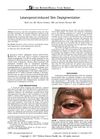
November 2017 in “Journal of Glaucoma” Latanoprost eye drops may cause skin depigmentation.
19 citations
,
April 2021 in “Journal of Cosmetic Dermatology” The treatment with silk proteins and linseed polysaccharides effectively protects and repairs chemically damaged hair.
 32 citations
,
January 2022 in “International Journal of Molecular Sciences”
32 citations
,
January 2022 in “International Journal of Molecular Sciences” Melatonin, a hormone, can help protect skin from aging by reducing stress, inflammation, and damage, and may also help treat hair loss in women.
18 citations
,
January 2021 in “Theranostics” The targeted nanohybrids effectively reduced psoriasis symptoms and improved skin health.
 January 1993 in “Side effects of drugs annual”
 Natural products like propolis are causing more skin allergies, and certain skin treatments and medications have various side effects and risks.
 August 2025 in “Annals of Medicine”
 Mycophenolate mofetil may safely help restore skin color in depigmentation conditions.
 7 citations
,
October 2006 in “Medical hypotheses”
7 citations
,
October 2006 in “Medical hypotheses” UV light might cause excessive hair growth by increasing PGE2 in the skin.
19 citations
,
April 2020 in “Oxidative Medicine and Cellular Longevity” Fernblock® helps protect skin cells from pollution and stress, reducing inflammation and damage.
 160 citations
,
December 2016 in “Journal of biophotonics”
160 citations
,
December 2016 in “Journal of biophotonics” Low-level laser therapy, now called photobiomodulation, is recognized for its broad medical applications and scientific backing.
April 2005 in “Journal of Investigative Dermatology” Vitamin D helps protect skin, PSORS1 gene's risk interval for psoriasis is expanded, hair follicles can be generated from mouse cells, and interferon-γ may cause pigmented skin lesions.