Photography helps track hair loss and supports treatment approvals.
50 citations
,
February 2004 in “Journal of Investigative Dermatology”  1 citations
,
June 2022 in “Journal of The American Academy of Dermatology”
1 citations
,
June 2022 in “Journal of The American Academy of Dermatology” Combining scalp photos with hair density and caliber measurements gives a more accurate assessment of hair loss.
15 citations
,
July 2000 in “The journal of investigative dermatology/Journal of investigative dermatology” Fluorescence can effectively measure acne treatment progress.
 December 2020 in “Nippon Laser Igakkaishi”
 Photobiomodulation therapy is beneficial in plastic surgery and dermatology.
 November 2025 in “Clinical Cosmetic and Investigational Dermatology”
 Digital microscopy can help diagnose hirsutism by measuring hair growth.
11 citations
,
July 2019 in “Pediatric dermatology” Children with alopecia areata have different trichoscopic features than adults, including more empty follicular openings and pigtail hairs.
 2 citations
,
March 2018 in “The Journal of Dermatology”
2 citations
,
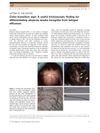
March 2018 in “The Journal of Dermatology” The "color-transition sign" helps tell apart alopecia areata incognita from telogen effluvium by looking at hair color changes.
 11 citations
,
April 2013 in “SpringerPlus”
11 citations
,
April 2013 in “SpringerPlus” Human skin's melanocytes respond to light by changing shape, producing pigments and hormones, which may affect sleep patterns.
April 2012 in “Neuropediatrics” Trichothiodystrophy is a rare genetic disorder causing hair issues and sometimes linked to DNA repair defects.
 96 citations
,
January 2013 in “International Journal of Trichology”
96 citations
,
January 2013 in “International Journal of Trichology” Trichoscopy is a useful, non-invasive way to diagnose different types of hair loss.
 January 2026 in “Inflammation and Regeneration”
 Two-photon microscopy improves skin imaging but faces safety and cost challenges for clinical use.
 23 citations
,
November 2014 in “Anais Brasileiros de Dermatologia”
23 citations
,
November 2014 in “Anais Brasileiros de Dermatologia” Trichoscopy helps tell apart scalp lesions in pemphigus vulgaris and pemphigus foliaceus and is useful for choosing biopsy locations.
13 citations
,
January 2012 in “Dermatologic surgery” The trichometer is a quick and reliable tool for measuring hair quantity.
 May 2022 in “Experimental dermatology”
 Trichothiodystrophy hair is structurally abnormal with protein and organization issues.
 6 citations
,
January 2015 in “Dermatology”
6 citations
,
January 2015 in “Dermatology” Trichoscopy helps diagnose hair and scalp problems but isn't always definitive and should be used with other methods.
Multiphoton microscopy can effectively distinguish between scarring and non-scarring alopecia.
3 citations
,
September 2018 in “Journal of Structural Biology” Oxidized trichocyte keratin has a helical dislocation in its structure.
 September 2023 in “Skin appendage disorders”
 Trichoscopy, a method of examining hair, can objectively measure how well botulinum toxin works for hair loss treatment.
31 citations
,
February 2007 in “Journal of Structural Biology” Oxidation changes the structure of hair protein filaments, causing them to compact and rearrange.
January 2021 in “Skin Appendage Disorders” May 2022 in “Dermatology practical & conceptual” Trichoscopy is crucial for diagnosing and managing androgenetic alopecia, showing increased vellus hairs, empty follicles, and fibrosis with severity.
 September 2023 in “Biomedical Optics Express”
 New imaging techniques show testosterone delays hair growth and shrinks follicles in mice, but have limited depth for viewing.
September 2017 in “Journal of Investigative Dermatology” Photodynamic therapy can potentially remove nonpigmented hair by damaging hair follicles.

A portable imaging system shows promise for diagnosing skin diseases and checking laser treatment effects.
 14 citations
,
January 2020 in “International Journal of Biological Sciences”
14 citations
,
January 2020 in “International Journal of Biological Sciences” Multiphoton microscopy can effectively assess breast cancer treatment responses without labels.
7 citations
,
June 2019 in “Coloration Technology” Translucent keratin films are better for testing hair dyes.
 January 2023 in “Asian Journal of Pediatric Research”
 Trichoscopy is crucial for diagnosing and assessing alopecia areata in children.
1 citations
,
June 2022 in “Photobiomodulation, photomedicine, and laser surgery” March 2026 in “Drug Testing and Analysis” PTeCA is a reliable marker for detecting oxidative hair treatments.