December 2025 in “Yassawi Journal of Health Sciences” Trichoscopy is essential for accurately diagnosing and differentiating types of hair loss.
February 2012 in “Proceedings of SPIE, the International Society for Optical Engineering/Proceedings of SPIE” A new imaging technique can observe stem cells in living mice without harming them.
 38 citations
,
January 2016 in “Indian Journal of Dermatology, Venereology and Leprology”
38 citations
,
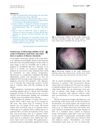
January 2016 in “Indian Journal of Dermatology, Venereology and Leprology” Trichoscopy is useful for diagnosing different types of hair loss.
 15 citations
,
November 2016 in “Journal of The American Academy of Dermatology”
15 citations
,
November 2016 in “Journal of The American Academy of Dermatology” Exclamation mark hairs suggest early scalp disease, while white dots indicate it's chronic.
June 2023 in “Journal of Biological Chemistry” Get3d protein helps maintain photosynthesis in plants and photosynthetic bacteria.
September 2021 in “CRC Press eBooks” Traumatic alopecia causes hair loss from pulling or rubbing, leading to broken hairs and changes in the scalp.
 134 citations
,
September 2008 in “Lasers in surgery and medicine”
134 citations
,
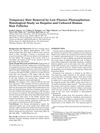
September 2008 in “Lasers in surgery and medicine” Low fluence photoepilation temporarily removes hair by targeting the hair follicle's pigmented area without severe damage.
 September 2023 in “Journal of The American Academy of Dermatology”
 People were generally happy with the home light therapy devices for hair loss.
December 2021 in “2021 International Conference on Electronic Information Technology and Smart Agriculture (ICEITSA)” Chemical dyes damage hair's internal structure more than perming, as shown by a special imaging technique.
 April 2017 in “Journal of Investigative Dermatology”
 Triptolide effectively and safely reduces actinic keratosis lesions in mice.
March 2026 in “Pakistan Armed Forces Medical Journal” Trichoscopy is useful for diagnosing and assessing androgenetic alopecia severity.
 March 2023 in “Journal of skin and stem cell”
 Trichoscopy is a good, quick, non-invasive way to diagnose different types of hair loss.
 June 2023 in “Italian journal of dermatology and venereology”
 Trichoscopy effectively diagnoses allergic scalp contact dermatitis.
June 2015 in “Turkish Journal of Dermatology” Trichoscopy helps diagnose different hair diseases effectively.
7 citations
,
March 2004 in “Journal of the American Academy of Dermatology” Tiger tail banding and hair abnormalities are reliable indicators for diagnosing trichothiodystrophy.
1 citations
,
January 2010 in “Biophysical journal” Hair fluorescence intensity can measure radiation exposure effectively.
 1 citations
,
January 2022 in “Electronic Imaging”
1 citations
,
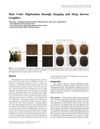
January 2022 in “Electronic Imaging” A new method accurately captures and renders hair color for virtual reality and hair dye use.
 March 2021 in “Revista Medicina Cutánea Ibero-Latino-Americana”
 Trichoscopy helps diagnose scarring alopecia early and non-invasively.
 1 citations
,
September 1984 in “Journal of Biological Education”
1 citations
,
September 1984 in “Journal of Biological Education” Plants change their growth in response to shade based on light signals detected by phytochrome.
 2 citations
,
November 2022 in “IP Indian journal of clinical and experimental dermatology”
2 citations
,
November 2022 in “IP Indian journal of clinical and experimental dermatology” Dermoscopic and histopathological features combined can help diagnose Pityriasis versicolor.
 April 2026 in “International Journal of Drug Delivery Technology”
 Trichoscopy is a reliable, non-invasive tool for diagnosing scalp alopecias.
 September 2014 in “Proceedings of SPIE, the International Society for Optical Engineering/Proceedings of SPIE”
 OCT can effectively examine and reveal details about human hair and scalp conditions.
4 citations
,
April 2024 in “Clinical Cosmetic and Investigational Dermatology” Trichoscopy helps distinguish between scalp Discoid Lupus Erythematosus and Lichen Planopilaris for accurate diagnosis and treatment.
 February 2026 in “JOURNAL OF CLINICAL AND DIAGNOSTIC RESEARCH”
 Trichoscopy effectively detects early hair follicle changes before visible baldness in men under 40.
Phototherapy with red or blue light can safely improve hair growth and scalp health in androgenetic alopecia.
October 1995 in “Pediatric Research” December 2025 in “Al-Azhar International Medical Journal /Al-Azhar International Medical Journal” Using both trichoscopy and folliscopy together improves hair loss diagnosis in men.
 September 2024 in “Archiv Euromedica”
 Trichoscopy is a quick, accurate, and non-invasive method to diagnose and treat non-scarring hair loss.
 26 citations
,
September 2016 in “International Journal of Dermatology”
26 citations
,
September 2016 in “International Journal of Dermatology” Trichoscopy is good for telling apart tinea capitis and alopecia areata in kids.
 May 2024 in “Brazilian Journal of Hair Health”
 Phototherapy with red and blue light can effectively treat hair loss.