 July 2019 in “Facial Plastic Surgery Clinics of North America”
 New techniques and technologies are improving facial plastic and reconstructive surgery.
 July 2018 in “Elsevier eBooks”
 The most common cause of hair loss in children is tinea capitis, followed by alopecia areata and telogen effluvium.
 November 2017 in “Research Journal of Health Sciences”
 Skin infections and eczema were most common in all ages, acne in teens and young adults, and nutritional skin problems and infestations in children.
 January 2017 in “Dermatology Review”
 Skin issues from chronic graft-versus-host disease greatly affect daily life, needing teamwork between blood and skin doctors.
 January 2017 in “Qucosa (Saxon State and University Library Dresden)”
 Plasma protein binding significantly affects glucocorticosteroid concentration in blood, saliva, and hair.
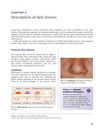
The document explains different types of skin lesions and their characteristics, causes, and related conditions.
 November 2016 in “Der Hautarzt”
 Hair thinning on top of the head is common in female androgenetic alopecia.

Female hair loss is often hereditary and can be treated with medication, hair transplants, and lasers.
 February 2016 in “Aktuelle Dermatologie”
 Low-Level Laser Therapy significantly improves hair density in women with hormonally and age-related hair loss.

Proper care and understanding of skin diseases in pregnant women are crucial for their health and recovery.
Skin changes throughout life, from development before birth to aging effects like wrinkles, influenced by both genetics and environment.
 April 2014 in “Jurnal Biomedik : JBM”
 An 8-year-old girl had nail and hair issues that improved without specific treatment, but fungal nail infection was hard to cure.
 March 2013 in “Journal für Kardiologie (Krause & Pachernegg GmbH)”
 Hormones significantly affect hair growth and loss, with potential for new treatments.
 August 2010 in “Journal of The American Academy of Dermatology”
 The document explains the diagnosis and characteristics of woolly hair nevus and alopecia neoplastica.
 January 2005 in “Elektronische Hochschulschriften der LMU München (Ludwig-Maximilians-Universität München)”
 Topical immunotherapy with DPCP is most effective for certain alopecia areata types, with success linked to age and disease duration, and influenced by a gene polymorphism.
 April 1963 in “Archives of Dermatology”
 Dermatological conditions are complex and treatments often have mixed results.
 July 2008 in “British Journal of Dermatology”
 Cyclosporin doesn't stop hair loss.
 April 1999 in “Therapeutische Umschau”
 Hair loss and excessive growth treated with various options, including new laser technology.
 12 citations
,
September 2018 in “International Journal of Cosmetic Science”
12 citations
,
September 2018 in “International Journal of Cosmetic Science” Palmitoyl tetrapeptide-20 may help reduce hair greying and increase melanin production.
October 2025 in “Our Dermatology Online” Tranexamic acid and oral retinoids may effectively treat lichen plan pigmentosus.
3 citations
,
May 1979 in “PubMed”  5 citations
,
March 2023 in “Journal of the American Academy of Dermatology”
5 citations
,
March 2023 in “Journal of the American Academy of Dermatology” Prurigo pigmentosa mainly affects middle-aged White and Asian women, often linked to a ketogenic diet, and is best treated with oral antibiotics.
January 2023 in “Springer eBooks”  7 citations
,
March 2003 in “PubMed”
7 citations
,
March 2003 in “PubMed” The scalp has a natural speckled pattern of increased pigment around hair follicles, possibly linked to local hormone production.
152 citations
,
December 2003 in “Micron” As people age, their hair follicles produce less pigment, leading to gray and white hair, due to factors like reduced enzyme activity and damage to melanocyte DNA.
164 citations
,
February 2010 in “Journal of Cell Science” Human dermal stem cells can become functional skin pigment cells.
2 citations
,
August 1987 in “Archives of Dermatology” Langerhans' cells are not responsible for depigmentation in this mouse model.
September 2024 in “Journal of Investigative Dermatology” VIP reduces hair pigmentation by decreasing melanin production.
 2 citations
,
November 1995 in “American Journal of Obstetrics and Gynecology”
2 citations
,
November 1995 in “American Journal of Obstetrics and Gynecology” Taking vitamin B6 corrected a pregnant woman's metabolic disorder, which changed her hair color.
November 2022 in “Skin Appendage Disorders” PT-20 did not significantly improve gray hair repigmentation.