 6 citations
,
January 2000 in “Dermatology”
6 citations
,
January 2000 in “Dermatology” A girl's severely tangled hair couldn't be fixed and had to be cut due to a rare condition called plica neuropathica.
2 citations
,
May 1991 in “PubMed” Nevus comedonicus is a rare skin condition causing dark bumps, treatable with retinoic acid or surgery.
7 citations
,
February 1962 in “Experimental Biology and Medicine” Male and female mice have different lipid compositions in their skin during hair growth cycles.
 28 citations
,
October 1992 in “JEADV. Journal of the European Academy of Dermatology and Venereology/Journal of the European Academy of Dermatology and Venereology”
28 citations
,
October 1992 in “JEADV. Journal of the European Academy of Dermatology and Venereology/Journal of the European Academy of Dermatology and Venereology” SIP is a better method for measuring hair growth accurately.
 February 2026 in “International Journal of Molecular Sciences”
 Removing Lrig1-positive cells in mice leads to temporary loss of sebaceous glands.
 63 citations
,
November 1999 in “British journal of dermatology/British journal of dermatology, Supplement”
63 citations
,
November 1999 in “British journal of dermatology/British journal of dermatology, Supplement” Hair sensitivity to androgens is partly controlled by specific enzyme expressions in different hair areas.
2 citations
,
January 2002 in “Zhiwu Yanjiu” Capitate trichomes have more endoplasmic reticulum and vacuoles, while peltate trichomes have more plastids and larger subcuticular spaces.
August 2025 in “Dermatopathology” Pilomatricomas are often linked to genetic syndromes, especially Apert syndrome, and genetic analysis is crucial for diagnosis.
7 citations
,
September 2020 in “Bioscience Biotechnology and Biochemistry” The scalp has more diverse bacteria, while hair has more bacteria and unique types.
January 1981 in “Purdue e-Pubs (Purdue University)” Pig skin is similar to human skin, with no major changes as they age.
11 citations
,
January 2016 in “Biointerphases” The hair's outermost surface has multiple layers of lipids and proteins.
22 citations
,
August 1999 in “Mechanisms of Development” Pmg-1 and Pmg-2 are new genes important for skin and mammary gland development.
April 2018 in “Journal of Investigative Dermatology” Mutations in Far2 mice cause hair loss due to sebaceous gland issues.
13 citations
,
November 1985 in “International Journal of Dermatology” The study found clear differences in lesion distribution and microscopic features among trichostasis spinulosa, keratosis pilaris, and eruptive vellus hair cysts.
7 citations
,
June 2017 in “Journal of Cutaneous Pathology” Cystic panfolliculoma resembles hair follicle tumors due to specific cell interactions.
63 citations
,
July 2006 in “British Journal of Dermatology” Psoriasis causes changes in certain keratins and shrinks sebaceous glands in the scalp.
September 2022 in “Medical Mycology” Scalp fungi and sebum differences may affect hair loss in men.
7 citations
,
March 2021 in “Journal of Investigative Dermatology” Lipases, especially gehB, are crucial for Staphylococcus aureus to enter and colonize hair follicles.
 14 citations
,
October 2018 in “PloS one”
14 citations
,
October 2018 in “PloS one” Deleting the Far2 gene in mice causes sebaceous gland issues and patchy hair loss.
 1 citations
,
July 2022 in “PLOS ONE”
1 citations
,
July 2022 in “PLOS ONE” The study concluded that people with Lichen Planopilaris have a more diverse scalp bacteria and different metabolic pathways compared to healthy individuals.
 July 2025 in “YAKUGAKU ZASSHI”
 Understanding skin microbes and sebum can help manage atopic dermatitis and hair loss.
 19 citations
,
May 2007 in “Dermatologic therapy”
19 citations
,
May 2007 in “Dermatologic therapy” The document concludes that various treatments, including laser therapy, are effective for managing pseudofolliculitis barbae, especially in darker skin types.
34 citations
,
January 1983 in “Journal of Investigative Dermatology”  December 2021 in “International journal of research - granthaalayah”
 A young woman had a rare, usually non-cancerous tumor on her face that was initially mistaken for a different condition.
April 2012 in “Journal of evolution of medical and dental sciences” No effective treatment exists to stimulate hair growth in atrichia with papular lesions.
 1 citations
,
January 2018 in “Acta dermato-venereologica”
1 citations
,
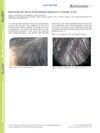
January 2018 in “Acta dermato-venereologica” A teenager's hair with alternating white and dark bands, known as Pili annulati, is a genetic condition that is usually harmless and often considered attractive.
 27 citations
,
July 2018 in “Experimental dermatology”
27 citations
,
July 2018 in “Experimental dermatology” Autophagy is crucial for normal sebaceous gland function and sebum composition.
 29 citations
,
February 2013 in “Proceedings of the National Academy of Sciences of the United States of America”
29 citations
,
February 2013 in “Proceedings of the National Academy of Sciences of the United States of America” Loss of Fz6 disrupts hair follicle and associated structures' orientation.
December 2025 in “Bioengineering” Sebum is essential for skin health but can cause acne if unbalanced.
4 citations
,
July 1983 in “Journal of steroid biochemistry/Journal of Steroid Biochemistry” Certain hormones can reduce skin oil and hair growth, potentially helping treat acne and excessive hair in women.