1 citations
,
April 2016 in “Journal of lipid research” Lipin-1 is important for skin cell differentiation and skin barrier function.
 6 citations
,
May 2013 in “PloS one”
6 citations
,
May 2013 in “PloS one” The Foxn1(-/-) nude mouse shows disrupted and expanded skin stem cell areas due to high Lhx2 levels.
176 citations
,
February 2006 in “Cancer Research” Patched1 helps prevent tumors by controlling cell growth.
117 citations
,
August 1999 in “Nature Genetics” Reducing PIEZO1 speeds up wound healing.
 17 citations
,
February 2015 in “Cell Death and Disease”
17 citations
,
February 2015 in “Cell Death and Disease” Inhibiting AP1 in mice skin causes structural changes and weakens the skin barrier.
 May 2025 in “Science Advances”
 PIEZO1 helps keep hair follicle stem cells inactive, affecting hair growth.
April 2020 in “The FASEB Journal” Loss of Rap1 protein speeds up heart aging in mice.
37 citations
,
December 1995 in “Journal of Cell Science” Nexin 1 may help control hair growth.
May 2025 in “Experimental Dermatology” A new genetic tool improves the study of hair growth and potential hair disorder treatments.
 27 citations
,
September 1999 in “Journal of Investigative Dermatology”
27 citations
,
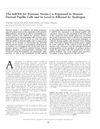
September 1999 in “Journal of Investigative Dermatology” Human skin cells contain Protease Nexin-1, and male hormones can decrease its levels, potentially affecting hair growth.
May 2022 in “The journal of immunology/The Journal of immunology” FOXN1 is crucial for thymus development and immune response in Xenopus laevis.
1 citations
,
April 2025 in “BMC Veterinary Research” PSAT1 is key for hair growth and stem cell function in cashmere goats.
 March 1998 in “Journal of dermatological science”
 Protease Nexin-1 is found in human hair growth cells and is affected by male hormones.
April 2010 in “The journal of immunology/The Journal of immunology” FoxN1 gene is crucial for proper thymus structure and normal skin appearance.
May 2017 in “The journal of immunology/The Journal of immunology” Patients with certain FoxN1 gene mutations have severe immune issues but normal skin and hair.
 April 2023 in “The journal of investigative dermatology/Journal of investigative dermatology”
 The protein p21 is more abundant in normal skin cells than in melanoma cells and may help protect against melanoma, with UVB light affecting its levels.
October 2014 in “Cancer research” Blocking mTORC1 reduces skin tumor growth in mice.
4 citations
,
May 2023 in “Pigment Cell & Melanoma Research” BMI1 is essential for preventing hair greying and maintaining hair color.
Researchers made a mouse model with curly hair and hair loss by editing a gene.
May 2014 in “The journal of immunology/The Journal of immunology” Early over-expression of FoxN1 harms immune and skin development.
 June 2018 in “The Journal of Sexual Medicine”
 Finasteride helps female-pattern hair loss.
 6 citations
,
August 2007 in “Journal of Surgical Research”
6 citations
,
August 2007 in “Journal of Surgical Research” Mice genetically modified to produce more Del1 protein had faster hair regrowth.
17 citations
,
April 2011 in “Journal of Dermatological Science” The study created a mouse model that survives longer and shows fewer symptoms of pemphigus vulgaris.
1 citations
,
November 2024 in “EMBO Reports” Deleting Gpr54 speeds up hair growth and regeneration.
July 2024 in “Journal of Investigative Dermatology” PH-762 shows promise in treating skin cancer by effectively targeting and silencing PD-1 in tumors with minimal side effects.
 January 2025 in “Cellular and Molecular Biology”
 The PIP5K1A gene helps cashmere growth in goats by promoting cell proliferation, and melatonin boosts its expression.
 April 2023 in “Journal of Investigative Dermatology”
 Blocking casein kinase 1 in skin cells can help melanocyte precursors move better, potentially helping with conditions like vitiligo or gray hair.
 6 citations
,
September 2015 in “Journal of Investigative Dermatology”
6 citations
,
September 2015 in “Journal of Investigative Dermatology” Using special RNA to target a mutant gene fixed hair problems in mice.
 2 citations
,
October 2017 in “Revista Da Associacao Medica Brasileira”
2 citations
,
October 2017 in “Revista Da Associacao Medica Brasileira” Removing p16INK4a from skin cells can lead to faster and more clumped growth, which might help with hair growth.