 4 citations
,
February 2018 in “Journal of Investigative Dermatology”
4 citations
,
February 2018 in “Journal of Investigative Dermatology” The document concludes that a protein involved in hair growth may link to baldness and that more research is needed on its role in hair loss and skin cancer treatments.
 158 citations
,
February 2000 in “Archives of dermatology”
158 citations
,
February 2000 in “Archives of dermatology” Some people with pattern hair loss may also have scalp inflammation and scarring similar to lichen planopilaris.
 September 2021 in “CRC Press eBooks”
 Lichen planopilaris causes permanent hair loss and scarring due to damage to hair follicles and can be mistaken for other hair loss conditions.
 March 2026 in “Frontiers in Medicine”
 Different types of alopecia cause hair loss due to immune system issues, with some allowing regrowth and others causing permanent loss.
 January 2012 in “Yearbook of Dermatology and Dermatologic Surgery”
 Alopecia areata is a hair loss condition that often starts before age 30 and can affect various body parts, with unpredictable hair regrowth chances.
 September 2025 in “American Journal of Dermatopathology”
 Lupus panniculitis can cause patchy hair loss and was successfully treated with medication.
 3 citations
,
July 2014 in “QJM”
3 citations
,
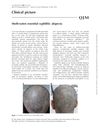
July 2014 in “QJM” A 35-year-old man had patchy hair loss that was actually due to syphilis, not alopecia areata.
 July 2023 in “Deleted Journal”
 Alopecia areata is the most common type of baldness treated with corticosteroids and minoxidil.
 19 citations
,
January 2011 in “Clinics”
19 citations
,
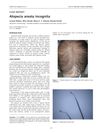
January 2011 in “Clinics” A young woman with a rare hair loss condition improved with steroid and biotin treatment.
July 1996 in “Hair transplant forum international”  January 2014 in “Pathology”
 Non-scarring hair loss can be diagnosed with two 4mm punch biopsies, one cut vertically and the other transversely.
The man has patchy hair loss likely due to alopecia areata.
 January 2025 in “Dermatology Practical & Conceptual”
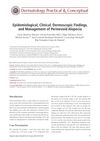
 Perinevoid alopecia can be effectively treated with non-invasive corticosteroids.
 5 citations
,
October 1984 in “The BMJ”
5 citations
,
October 1984 in “The BMJ” Up to 50% of scalp hair can be lost before it appears thin, and treatment is only needed for hair loss caused by diseases or deficiencies.
2 citations
,
October 2020  71 citations
,
March 2009 in “Seminars in cutaneous medicine and surgery”
71 citations
,
March 2009 in “Seminars in cutaneous medicine and surgery” Alopecia areata can cause unpredictable hair loss, and treatments like corticosteroids and minoxidil may help but have varying side effects.
8 citations
,
January 2002 in “Piel” Postmenopausal women may experience frontal hairline and eyebrow loss due to cicatricial fibrosis.
20 citations
,
June 2019 in “Archives of dermatological research” Combining DPCP and anthralin helps regrow hair in some alopecia areata patients.
February 2006 in “DOAJ (DOAJ: Directory of Open Access Journals)” Alopecia areata treatments include immune inhibitors, topical sensitizers, irritants, and minoxidil, with future focus on immunosuppressive approaches.
 October 2023 in “Acta dermato-venereologica”
 Minoxidil and platelet-rich plasma can help turn thin hair into thicker hair in male pattern baldness.
 9 citations
,
January 2010 in “International Journal of Trichology”
9 citations
,
January 2010 in “International Journal of Trichology” The study found that the cause of alopecia areata can be identified through tissue analysis, and vertical sections are enough for diagnosis.
January 2026 in “International journal of Indian medicine” Ayurvedic treatment can effectively regrow hair in alopecia areata without side effects.
June 2024 in “Kerala Journal of Ayurveda” Ayurvedic treatment led to significant hair regrowth in alopecia areata.
 January 2025 in “Journal of Rawalpindi Medical College”
 Alopecia Areata affects both genders almost equally, mostly on the scalp, with common signs like yellow dots and exclamation mark hairs, especially in young people.
June 2011 in “European Journal of Pediatric Dermatology” An 11-year-old girl with hair thinning was diagnosed with monilethrix and early androgenetic alopecia.
 June 2025 in “Italian Journal of Dermatology and Venereology”
 Thorough scalp examination is crucial for diagnosing alopecia areata incognita in men with diffuse hair loss.
 November 2024 in “Journal of Cutaneous and Aesthetic Surgery”
 Combining platelet-rich plasma and minoxidil can effectively regrow hair in severe alopecia areata cases.
January 2022 in “Clinical Cases in Dermatology” A woman has a permanent hair loss condition treated with steroids and new medicines, but hair might not regrow.
June 2025 in “British Journal of Dermatology” A rare dual diagnosis of alopecia areata and lichen planopilaris requires thorough evaluation for effective treatment.
 July 2023 in “IntechOpen eBooks”
 Some types of hair loss can be reversed, others are permanent, and treatments vary by type.