Karunjchirakam Chooranam significantly improved symptoms in most PCOS cases.
January 2023 in “Indian Journal of Dermatology, Venereology and Leprology” Higher platelet counts and activators in PRP improve hair density and thickness in treating hair loss.
July 2025 in “Kottakkal Journal of Ayurvedic Medicine And Research” Bakuchi therapy significantly improved psoriasis symptoms.
January 2026 in “International Ayurvedic Medical Journal” Ayurvedic treatment improved hair loss in a 23-year-old male.
5 citations
,
January 2016 in “BLDE University Journal of Health Sciences” Kasisa Bhasma is safer and nontoxic compared to Shodhita Kasisa.
Ayurvedic treatment may improve quality of life for cancer patients undergoing chemo and radiotherapy.
 1 citations
,
October 2018 in “International Journal of Research in Dermatology”
1 citations
,
October 2018 in “International Journal of Research in Dermatology” Most women with excessive hair growth in South India have hirsutism without a known cause, with common facial hair growth and some showing hormonal imbalances and polycystic ovaries.
 April 2021 in “Journal of evolution of medical and dental sciences”
 Women with PCOS have higher levels of certain androgens, which are good at predicting excess hair growth.
A rare case of a woman having both lichen planus pigmentosus and classic lichen planopilaris at the same time.
January 2025 in “Journal of medical & health sciences review.” Hormonal imbalances and genetics are key in familial hirsutism.
1 citations
,
June 2022 in “Frontiers in Neuroanatomy” Early hormones shape sex-specific differences in rat glands.
 15 citations
,
December 2021 in “Nature Communications”
15 citations
,
December 2021 in “Nature Communications” Androgens in female meerkats influence aggression and dominance, affecting social dynamics and offspring behavior.
23 citations
,
July 1994 in “Journal of Dermatological Science” Pili torti hair twists due to uneven outer root sheath cell development.
Social hair plucking in rhesus macaques is an abnormal behavior with both social and aggressive traits and health impacts.

Social hair plucking in rhesus macaques is an abnormal behavior with both social and aggressive traits and health impacts.
April 2025 in “Journal of Ayurveda and Integrated Medical Sciences” Ayurvedic treatment led to significant hair regrowth in an 11-year-old with alopecia areata.
12 citations
,
September 2020 in “JAMA Dermatology” PRP patients show varied symptoms and need more research to understand related conditions.
July 2019 in “bioRxiv (Cold Spring Harbor Laboratory)” Mixing equal parts of honey and ghee is harmful.
April 2023 in “Australasian Journal of Dermatology” Both methods of platelet-rich plasma showed positive effects on hair loss.
1 citations
,
December 2023 in “Frontiers in Behavioral Neuroscience” UVB exposure increases appetite by activating p53 in skin cells.
October 1984 in “Kidney international” The patient had complex urinary tract issues and ambiguous genitalia, with physical features suggesting a hormonal imbalance.
 April 2026 in “Zenodo (CERN European Organization for Nuclear Research)”
 An Ayurvedic approach with Anu Taila Nasya, Shiro Abhyanga, and iron supplements effectively reduces hair loss.
 April 2026 in “Zenodo (CERN European Organization for Nuclear Research)”
 An Ayurvedic approach with Anu Taila Nasya, Shiro Abhyanga, and iron supplements effectively reduces hair loss.
 August 2022 in “International Journal of Current Science Research and Review”
 Ayurveda can make poisonous plants medicinal through specific purification processes.
May 2022 in “Hormones and behavior” Prairie dogs with fewer neighbors are more stressed but their number of babies isn't affected.
11 citations
,
January 2011 in “Journal of pediatric endocrinology & metabolism/Journal of pediatric endocrinology and metabolism” Adolescents and young adults with Prader-Willi syndrome show a range of sexual interests and behaviors.
 1 citations
,
September 2023
1 citations
,
September 2023 Tridax procumbens and ginger juice together protect the liver from paracetamol damage.
87 citations
,
February 2009 in “PubMed” Alopecia in captive primates can be caused by many factors, so thorough testing is needed before blaming stress.
36 citations
,
July 1988 in “Archives of Dermatological Research” Pili annulati is caused by a protein metabolism disorder affecting hair structure.
 6 citations
,
October 2012 in “Journal of Heredity”
6 citations
,
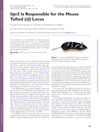
October 2012 in “Journal of Heredity” The Itpr3 gene causes a specific hair pattern in mice.