Pseudopelade is likely an independent disease due to its distinct features.
 1 citations
,
September 2021 in “CRC Press eBooks”
1 citations
,
September 2021 in “CRC Press eBooks” Frontal Fibrosing Alopecia is a hair loss condition mainly affecting postmenopausal women, with unclear causes and various clinical patterns.
November 2015 in “Pediatrics in review” The boy had severe facial swelling and scalp infection after using his mother's shampoo.
13 citations
,
January 1985 in “International Journal of Dermatology” The document found differences in lesion distribution and microscopic features among trichostasis spinulosa and similar skin conditions.
 January 2024 in “Archives of pathology & laboratory medicine”
 New findings may help diagnose and understand scarring alopecia better.
24 citations
,
May 2000 in “Journal of the American Academy of Dermatology” Pseudopelade can affect both the scalp and beard, causing hair loss.
 19 citations
,
September 2002 in “Acta dermato-venereologica”
19 citations
,
September 2002 in “Acta dermato-venereologica” Topical tacrolimus did not regrow hair in alopecia universalis patients.
 3 citations
,
July 2018 in “Elsevier eBooks”
3 citations
,
July 2018 in “Elsevier eBooks” Erosive pustular dermatosis of the scalp is a rare condition that causes scarring hair loss, mainly in older women, and requires ongoing treatment.
7 citations
,
January 2019 in “Dermatology Online Journal” Ustekinumab treatment didn't prevent frontal fibrosing alopecia.
June 2023 in “Journal of Paediatrics and Child Health” Early treatment of a rare scalp infection led to full recovery and hair regrowth.
46 citations
,
November 2014 in “Journal of Cutaneous Pathology” Recognizing diverse presentations of folliculotropic mycosis fungoides is crucial to avoid diagnostic errors.
 September 2019 in “Journal of Investigative Dermatology”
 Smoking and certain health conditions like thyroid disease may make palmoplantar pustulosis harder to treat.
 April 2018 in “Journal of Investigative Dermatology” 3 citations
,
June 2021 in “Case Reports in Infectious Diseases”
April 2018 in “Journal of Investigative Dermatology” 3 citations
,
June 2021 in “Case Reports in Infectious Diseases” Fungal infections should be considered in scalp swelling to avoid misdiagnosis.
4 citations
,
December 2017 in “Journal of zoo and wildlife medicine” Hormonal changes during the reproductive cycle may cause seasonal skin problems in captive female fossas.
 November 2023 in “International Journal of Trichology”
 Trichoscopic features help diagnose and assess female pattern hair loss severity, with inflammation playing a key role.
5 citations
,
November 2010 in “Veterinary Record” The monkeys' skin infection was cured in eight weeks using oral terbinafine, topical washes, and disinfectant fogging.
 January 2026 in “Frontiers in Medicine”
 FFA and FAPD might be related or stages of the same disease.
 7 citations
,
October 2015 in “Actas Dermo-Sifiliográficas”
7 citations
,
October 2015 in “Actas Dermo-Sifiliográficas” New treatments for Frontal Fibrosing Alopecia show promise, especially finasteride and dutasteride, with most patients seeing improvement or stabilization.
 5 citations
,
January 2010 in “International journal of trichology”
5 citations
,
January 2010 in “International journal of trichology” PUVASOL might effectively treat complete scalp baldness.
1 citations
,
May 2002 in “AAP Grand Rounds” Tinea capitis, though rare in infants, should be considered for hair loss or scalp issues, with oral griseofulvin as the recommended treatment.
17 citations
,
April 1997 in “American Journal of Dermatopathology” PC-associated alopecia has unique microscopic features.
 September 2023 in “International Journal of Dermatology”
 Younger people are at a higher risk for Fibrosing Alopecia in a Pattern Distribution than previously thought, with common symptoms and possible involvement of mast cells in its development.
3 citations
,
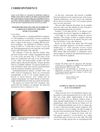
December 2024 in “Pediatric Dermatology” Lichen planopilaris can cause patchy hair loss in children and may respond to certain treatments.
 21 citations
,
January 2005 in “Pediatric Dermatology”
21 citations
,
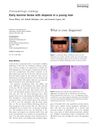
January 2005 in “Pediatric Dermatology” An 8-year-old girl with vitiligo developed extra hair growth on her knee after using tacrolimus ointment.
 3 citations
,
April 2016 in “International Journal of Dermatology”
3 citations
,
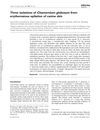
April 2016 in “International Journal of Dermatology” A young man was diagnosed with trichoepitheliomas, causing thick skin and hair loss.
 9 citations
,
January 2008 in “Medical mycology”
9 citations
,
January 2008 in “Medical mycology” A dog's skin infection caused by the fungus Chaetomium globosum was effectively treated with ketoconazole.
 28 citations
,
January 2014 in “Indian Journal of Dermatology, Venereology and Leprology”
28 citations
,
January 2014 in “Indian Journal of Dermatology, Venereology and Leprology” Chinese patients with primary cicatricial alopecia often have folliculitis decalvans, benefit from treatment, but may experience relapse, with dermoscopy being a useful diagnostic tool.
July 2025 in “Cell & Bioscience” Specific immune cells and pathways contribute to hair follicle inflammation and hair loss, suggesting potential treatments for lichen planopilaris.
 30 citations
,
January 2020 in “Journal of The American Academy of Dermatology”
30 citations
,
January 2020 in “Journal of The American Academy of Dermatology” Fibrosing alopecia in a pattern distribution is a hair loss condition often confused with other types, requiring early treatment but usually not resulting in significant hair regrowth.