 November 2023 in “International journal of Ayurveda and pharma research”
 The herbal hair oil effectively promotes hair growth, nourishes the scalp, and prevents dandruff.

Plant-based compounds can improve wound dressings and skin medication delivery.
450 citations
,
January 2005 in “The journal of investigative dermatology/Journal of investigative dermatology” Hair color is determined by melanin produced and transferred in hair follicles.
 124 citations
,
December 2016 in “Pharmaceuticals”
124 citations
,
December 2016 in “Pharmaceuticals” TRP channels in the skin are important for sensation and health, and targeting them could help treat skin disorders.
69 citations
,
January 2021 in “Journal of Biological Chemistry” Plant-derived amino acids can help develop new antimicrobial drugs.
 67 citations
,
September 2003 in “Journal of cutaneous pathology”
67 citations
,
September 2003 in “Journal of cutaneous pathology” Skin problems are very common in people with end-stage kidney disease.
 58 citations
,
November 2013 in “Journal of Innovative Optical Health Sciences”
58 citations
,
November 2013 in “Journal of Innovative Optical Health Sciences” Multiphoton microscopy is a promising tool for detailed skin imaging and could improve patient care if its challenges are addressed.
 41 citations
,
July 2015 in “Current Drug Discovery Technologies”
41 citations
,
July 2015 in “Current Drug Discovery Technologies” Some plants may help with hair growth and have fewer side effects than synthetic drugs, but more research is needed to confirm their effectiveness.
20 citations
,
February 2023 in “Biology” Innovative cosmetics could safely change hair color by targeting biological hair pigmentation processes.
 9 citations
,
May 2013 in “JAMA Dermatology”
9 citations
,
May 2013 in “JAMA Dermatology” Sunlight exposure improved a patient's skin condition, and there may be a link between a certain disease and skin growths; a leukemia treatment caused changes in hair color and growth.
 7 citations
,
August 2018 in “South African Medical Journal”
7 citations
,
August 2018 in “South African Medical Journal” Clinicians should understand tattoos to manage health issues, as tattoos can cause complications and affect medical assessments.
 5 citations
,
February 2011 in “Expert Opinion on Drug Discovery”
5 citations
,
February 2011 in “Expert Opinion on Drug Discovery” We need better treatments for hair loss, and while test-tube methods are helpful, they can't fully replace animal tests for evaluating new hair growth treatments.
4 citations
,
June 2022 in “Frontiers in Cell and Developmental Biology” Plant extracts might help control stem cell growth for medical use.
 3 citations
,
January 2012 in “Wageningen Academic Publishers eBooks”
3 citations
,
January 2012 in “Wageningen Academic Publishers eBooks” Hair health depends on various factors and hair loss can significantly affect a person's well-being; understanding hair biology is key for creating effective hair care treatments.
2 citations
,
June 2025 in “MedComm – Biomaterials and Applications” Plant-based antioxidants can help heal diabetic wounds by reducing stress, infections, and inflammation.
1 citations
,
July 2025 in “Cosmetics” Plant extracts could be effective natural skincare ingredients.
 July 2026 in “International Journal of Multidisciplinary Sciences and Arts”
 Papaya seed oil and virgin coconut oil pomade effectively enhances hair shine and moisture.
 April 2026 in “Nanomaterials”
 Plant-derived vesicles from Ayurvedic plants may improve treatment delivery for hair growth and other conditions.
February 2026 in “Molecular and Cellular Probes” Stem cell and plant exosomes may help heal and regenerate skin.
 December 2025 in “Frontiers in Medicine”
 ARWH is a rare hair disorder with no cure, but potential treatments include minoxidil and other therapies.
 November 2025 in “Frontiers in Pharmacology”
 Botanical treatments like saw palmetto, rosemary oil, and ginseng may help reduce hair loss in menopausal women.
November 2025 in “Pharmacological Research” Plant-derived nanoparticles from Polygoni Multiflori Radix promote hair growth better than Minoxidil by affecting androgen pathways.
 November 2025 in “Quality in Sport”
 Consistent use of natural methods is key for healthy hair and scalp.
 January 2025 in “bioRxiv (Cold Spring Harbor Laboratory)”
 Rhamnose may help hair growth and pigmentation, making it a potential treatment for hair loss.
 January 2025 in “INTERANTIONAL JOURNAL OF SCIENTIFIC RESEARCH IN ENGINEERING AND MANAGEMENT”
 Herbal hair conditioners nourish and protect hair naturally without harsh chemicals.
 January 2025 in “International Journal of Advanced Research in Science Communication and Technology”
 Polyherbal hair dyes are safer and more eco-friendly than chemical dyes.
 November 2024 in “IP Indian Journal of Clinical and Experimental Dermatology”
 Graves' disease often causes skin issues, especially hyperpigmentation, which may be linked to treatments.
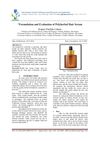 June 2024 in “International Journal of Pharmaceutical Research and Applications”
 Polyherbal hair serum can hydrate the scalp and promote hair growth safely.
 April 2024 in “International journal of women's health”
 Adult female acne is a complex condition that can worsen with menopause, requiring holistic treatment and tailored skincare at different life stages.

The herbal hair dye using Platycladus orientalis effectively prevents hair loss, covers gray, and is gentle and safe for all ages.