 November 2024 in “Deleted Journal”
 Platelet-rich plasma injections can help treat hair loss in lupus patients.
 October 2024 in “Journal of Education Health and Sport”
 Alopecia areata treatment should be personalized, using topical or systemic therapies based on severity, with promising options like JAK inhibitors needing more research.
 January 2024 in “Archives of dermatological research”
 Both treatments for alopecia areata showed similar modest effectiveness.
 July 2023 in “The Egyptian Journal of Hospital Medicine ”
 The conclusion is that emotional support and a variety of treatments are important for alopecia areata, but more research is needed.
 July 2023 in “Clinical dermatology review”
 Intralesional triamcinolone acetonide is better than PRP for treating scalp alopecia areata, leading to faster and more complete hair regrowth.
 June 2023 in “Dermatology and therapy”
 Doctors in the Middle East need better treatments and more knowledge about new therapies for hair loss condition Alopecia Areata.
 October 2022 in “The Egyptian Journal of Hospital Medicine”
 Topical corticosteroids are the preferred first treatment for children with Alopecia Areata.
 July 2022 in “Singapore Medical Journal”
 Most children with alopecia areata improved with treatment, but those with more hair loss had worse outcomes.
 March 2021 in “Clin-Alert”
 The FDA warned about safety issues with remdesivir and tofacitinib, finasteride is linked to suicidality, potent topical corticosteroids increase osteoporosis risk, henna can cause hemolysis in G6PD deficiency, chemotherapeutic agents can cause adverse reactions, drug interactions are common in cancer patients, ketamine can reduce at-risk drinking, high dose of anticholinergics increases dementia risk in Parkinson's patients, and prenatal exposure to second-generation antipsychotics increases pregnancy complications.
 September 2019 in “Journal of Investigative Dermatology”
 Smoking and certain health conditions like thyroid disease may make palmoplantar pustulosis harder to treat.
Alopecia Areata is treated with drugs and therapies to reduce inflammation and immune response.
 January 2018 in “Advances in Dermatology and Allergology”
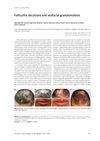
 Treatment with dapsone, topical corticosteroids, and antibiotics improved the man's skin conditions.
 January 2016 in “Springer eBooks”
 Alopecia Areata is an unpredictable autoimmune hair loss condition with limited and variable treatment effectiveness.
 January 2012 in “Springer eBooks”
 Lupus can cause different skin problems, and treatments like quitting smoking and using certain creams or medicines can help.
 August 2009 in “Expert Review of Dermatology”
 Pregnancy can cause skin changes and conditions that need correct diagnosis and treatment for the health of the mother and baby.
 June 2006 in “Almustansiriya journal of pharmaceutical sciences/Al-Mustansiriyah journal of pharmaceutical sciences”
 Melatonin may help reduce the needed dose of prednisolone and improve hair growth in alopecia areata patients.
August 1993 in “Journal of Dermatological Science” Cyclosporin and minoxidil promote hair growth.
 January 1991 in “Journal of Pediatric Health Care”
 Hair loss in children can be caused by fungal infections, trauma, autoimmune disorders, or stress, and treatments vary depending on the cause.
 July 1988 in “Journal of The American Academy of Dermatology”
 Various dermatologic treatments were effective for skin conditions like acne, rosacea, hair loss, and psoriasis from December 1986 to December 1987.
 January 1987 in “Side effects of drugs annual”
 Some cosmetics and dermatological drugs can cause allergic reactions and side effects, like skin irritation and systemic issues.
December 2021 in “International Journal of Research in Dermatology” PRP shows promise for treating hair loss but needs standardized methods to confirm its effectiveness.
 1 citations
,
January 2015 in “Side effects of drugs annual”
1 citations
,
January 2015 in “Side effects of drugs annual” The document concludes that various dermatological treatments and drugs can cause skin reactions and side effects.
Antimalarial agents are effective for LPP, and intralesional steroids are effective for FFA.
 197 citations
,
January 2019 in “Neuropsychopharmacology”
197 citations
,
January 2019 in “Neuropsychopharmacology” Male and female bodies respond differently to stress, influenced by hormones and development stages, with implications for stress-related diseases.
 11 citations
,
January 2017 in “Journal of Endocrinology/Journal of endocrinology”
11 citations
,
January 2017 in “Journal of Endocrinology/Journal of endocrinology” Female mice with disrupted 5α-reductase 1 had significant metabolic issues, including stress response problems, insulin resistance, liver fat buildup, and obesity.
 6 citations
,
October 2018 in “PLoS ONE”
6 citations
,
October 2018 in “PLoS ONE” Stress can slow hair growth and affect skin color by impacting the body's stress response system.
 40 citations
,
November 2009 in “Experimental Dermatology”
40 citations
,
November 2009 in “Experimental Dermatology” The mineralocorticoid receptor may play a role in skin and hair health and could be a new target for treating related disorders.
 38 citations
,
January 2014 in “International Journal of Endocrinology”
38 citations
,
January 2014 in “International Journal of Endocrinology” Adrenal disorders can cause lasting brain and behavior issues in children.
 16 citations
,
March 2000 in “Clinical Biochemistry”
16 citations
,
March 2000 in “Clinical Biochemistry” Women with hair loss had higher levels of certain hormones, suggesting a link to a condition like PCOS.
Depressed teens have different steroid levels in urine, which may help identify and treat them.