
Photobiomodulation effectively improves skin and hair conditions with minimal side effects.
 26 citations
,
April 1999 in “Dermatologic Clinics”
26 citations
,
April 1999 in “Dermatologic Clinics” The long-pulsed alexandrite laser is effective for hair reduction, particularly for light-skinned individuals with dark hair, but caution is needed for darker skin.
 1 citations
,
January 2019 in “Journal of Nuclear Technologyin Applied Science (JNTAS) (Print)”
1 citations
,
January 2019 in “Journal of Nuclear Technologyin Applied Science (JNTAS) (Print)” Low-level laser therapy speeds up skin healing and stimulates hair follicles in mice after radiation exposure.
 5 citations
,
January 2021 in “IEEE Access”
5 citations
,
January 2021 in “IEEE Access” Electric pulses can effectively activate platelets and release growth factors, offering a better alternative to traditional methods.
 36 citations
,
April 2016 in “Experimental Dermatology”
36 citations
,
April 2016 in “Experimental Dermatology” Photobiomodulation may help with hair growth and wound healing, but research is inconsistent and needs better quality studies.
1 citations
,
January 1987 Low-output laser irradiation can stimulate or inhibit biological processes depending on the dose.
 134 citations
,
September 2008 in “Lasers in surgery and medicine”
134 citations
,
September 2008 in “Lasers in surgery and medicine” Low fluence photoepilation temporarily removes hair by targeting the hair follicle's pigmented area without severe damage.
 2 citations
,
March 2019 in “Lasers in surgery and medicine”
2 citations
,
March 2019 in “Lasers in surgery and medicine” Higher light doses cause more damage to hair follicles, predicting better hair removal results.
 January 2017 in “Lasers in Surgery and Medicine”
 The 2017 issue emphasized progress in laser and energy-based skin treatments, but noted the need for more research on certain procedures and technologies.
 5 citations
,
November 2020 in “Cells”
5 citations
,
November 2020 in “Cells” Placental mesenchymal stem cells and their conditioned medium significantly improve healing in local radiation injuries.
January 2006 in “Zhongguo linchuang jiepouxue zazhi” Low intensive pulse magnetic fields can speed up wound healing by boosting skin stem cell growth and development.
September 1998 in “Journal of the European Academy of Dermatology and Venereology” Low-level light therapy can promote hair growth by stimulating cell interactions in hair follicles.
 43 citations
,
September 2017 in “Lasers in Surgery and Medicine”
43 citations
,
September 2017 in “Lasers in Surgery and Medicine” LED light therapy may help hair growth by activating certain cell pathways.
26 citations
,
July 2023 in “International Journal of Nanomedicine” The microneedle system shows promise for non-invasive brain drug delivery.
 June 2001 in “Proceedings of SPIE”
 Low energy laser therapy effectively treats certain skin conditions and improves recovery time without side effects.
February 2016 in “Seoul National University Open Repository (Seoul National University)” Photodynamic therapy can temporarily remove nonpigmented hair but is less effective than lasers for black hair.
5 citations
,
January 2020 in “Acta dermatovenerologica Alpina, Pannonica et Adriatica (Tiskana izd.)” Injecting platelet-rich plasma or applying it with a laser or microneedling can treat hair loss effectively. The laser and microneedling methods cause less pain.
 10 citations
,
January 2016 in “Elsevier eBooks”
10 citations
,
January 2016 in “Elsevier eBooks” Nanoparticles can speed up wound healing and deliver drugs effectively but may have potential toxicity risks.
 308 citations
,
September 2010 in “Nucleic acids research”
308 citations
,
September 2010 in “Nucleic acids research” Increasing mir-302 turns human hair cells into stem cells by changing gene regulation and demethylation.
 42 citations
,
November 2002 in “The American journal of pathology”
42 citations
,
November 2002 in “The American journal of pathology” Distinct β-catenin patterns are linked to cell growth, not cell death, in lung cancer.
 23 citations
,
May 1984 in “Journal of the American Geriatrics Society”
23 citations
,
May 1984 in “Journal of the American Geriatrics Society” Benign Prostatic Hyperplasia may be caused by changes in how the body processes male hormones.
 20 citations
,
March 2013 in “Journal of Lipid Research”
20 citations
,
March 2013 in “Journal of Lipid Research” The research explains how a human enzyme binds and processes its substrate, which could relate to its role in biological functions and hair loss.
 14 citations
,
November 1982 in “British Journal of Dermatology”
14 citations
,
November 1982 in “British Journal of Dermatology” Testosterone conversion to 5α-DHT may not be essential for its effects on the skin.
 6 citations
,
September 2012 in “Clinical Interventions in Aging”
6 citations
,
September 2012 in “Clinical Interventions in Aging” Honokiol might help reduce male skin aging by maintaining testosterone levels.
 1 citations
,
January 2018 in “PubMed”
1 citations
,
January 2018 in “PubMed” Women with PCOS have a similar chance of getting pregnant using assisted reproductive treatment as those without PCOS.
 November 2025 in “Frontiers in Oncology”
 Sphaeranthus indicus and silver nanoparticles can help treat liver cancer by killing cancer cells.
 March 2018 in “Suez Canal University Medical Journal”
 New drugs targeting the JAK-STAT pathway show promise for treating inflammatory skin diseases.
 May 2015 in “Journal of Investigative Dermatology”
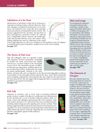
 Melanoma risk tools need improvement, a gene mutation causes a hair disorder that might be treated by managing cell stress, a potential therapy for a skin-ear disorder involves blocking cell channels, skin wrinkling may indicate lung aging regardless of smoking, and oxidative stress might contribute to common baldness.