 1 citations
,
March 2023 in “Frontiers in Cardiovascular Medicine”
1 citations
,
March 2023 in “Frontiers in Cardiovascular Medicine” A specific gene variant is linked to heart disease, increased heart muscle, curly hair, and thick skin on palms and soles.
 April 2018 in “The journal of investigative dermatology/Journal of investigative dermatology”
 Li2CO3 improved skin disease in a mouse model of Focal Dermal Hypoplasia without toxicity.
 January 2025 in “Iraqi Journal of Science”
 PDCD4 protein levels, affected by genetics and breastfeeding, may predict breast cancer treatment response.
 April 2018 in “Journal of Investigative Dermatology”
 CENPV, a new partner of CYLD, helps regulate ciliary acetylated tubulin and is overexpressed in certain skin tumors.
July 2024 in “Journal of Investigative Dermatology” CRISPR/Cas9 and prime editing can potentially fix skin disorder genes safely and effectively.
November 2025 in “Journal of Investigative Dermatology” A new genetic mutation causing Xeroderma Pigmentosum was found in an 8-year-old girl, affecting her DNA repair.
13 citations
,
September 2012 in “Cell & tissue research/Cell and tissue research” pCLCA2 protein may help maintain skin structure and function.
22 citations
,
September 2003 in “Journal of Investigative Dermatology” New mutations in the EBP gene cause CDPX2, affecting bones, skin, eyes, and hair, with females generally less affected than males.
April 2017 in “Journal of dermatological science” Removing PLCg1 from skin cells caused thicker oil glands and less hair in mice.
 11 citations
,
August 2017 in “Journal of Chromatographic Science”
11 citations
,
August 2017 in “Journal of Chromatographic Science” The new method is rapid, sensitive, and accurate for evaluating the quality of the medicinal herb Platycladi cacumen.
37 citations
,
February 2007 in “Experimental Dermatology” Increasing PDCD4 protein may help prevent or treat some skin cancers.
 June 2025 in “International Journal of Nephrology and Renovascular Disease”
 PLA2R1 overexpression harms kidney cells by stopping their growth cycle.
 November 2022 in “The journal of investigative dermatology/Journal of investigative dermatology”
 A patient with a new PLEC gene mutation showed symptoms of both muscular dystrophy and myasthenia gravis, which improved with steroid treatment.
 260 citations
,
July 2010 in “Cell”
260 citations
,
July 2010 in “Cell” Mutations in the SRD5A3 gene cause a new type of glycosylation disorder by blocking the production of a molecule necessary for protein glycosylation.
 34 citations
,
February 2016 in “Fertility and Sterility”
34 citations
,
February 2016 in “Fertility and Sterility” More PDCD4 is linked to obesity, insulin problems, and cell death in ovaries for those with polycystic ovary syndrome.
29 citations
,
September 2020 in “Polymers” The PCL/PHB blend allows for slower, more controlled curcumin release than individual polymers.
 April 2017 in “Journal of Investigative Dermatology”
 PRC1 influences skin stem cell development by both turning genes on and off, affecting hair growth and skin cell types.
49 citations
,
January 2010 in “Plant and Cell Physiology” LPR1 regulates root growth under low phosphate stress independently of SIZ1 in Arabidopsis thaliana.
23 citations
,
January 2017 in “BMC Medical Genetics” A new CDH3 gene mutation was found in a Spanish patient with sparse hair and eye issues.
 15 citations
,
November 2022 in “Cell Death and Disease”
15 citations
,
November 2022 in “Cell Death and Disease” CEP135 may predict cancer outcomes, and targeting PLK1 could help treat certain sarcomas.
 June 2024 in “Journal of Clinical Oncology”
 Dalpiciclib is the safest and most satisfying CDK4/6 inhibitor for advanced breast cancer patients in China.
 165 citations
,
September 2001 in “Genes & development”
165 citations
,
September 2001 in “Genes & development” CDP is crucial for lung and hair follicle cell development.
124 citations
,
November 2000 in “The journal of investigative dermatology/Journal of investigative dermatology” PAD3 plays a key role in hair and skin protein structure and may be linked to skin diseases.
 3 citations
,
September 2015 in “Journal of Vascular Surgery”
3 citations
,
September 2015 in “Journal of Vascular Surgery” Chemical lumbar sympathectomy is an effective and safe treatment for idiopathic livedo reticularis.
 86 citations
,
August 2011 in “Toxicological sciences”
86 citations
,
August 2011 in “Toxicological sciences” TCDD speeds up skin barrier formation by increasing certain gene expressions.
 July 2022 in “The journal of investigative dermatology/Journal of investigative dermatology”
 A patient with a PLEC mutation has epidermolysis bullosa, muscular dystrophy, and myasthenia gravis, which improved with steroid treatment.
 March 1998 in “Journal of dermatological science”
 Diphencyprone initially increases mouse hair growth, then slows it, possibly due to changes in specific protein levels.
23 citations
,
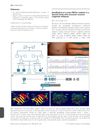
July 2016 in “JAMA Ophthalmology” CDH3-related disease causes worsening eye and hair issues.
 23 citations
,
December 2013 in “British Journal of Dermatology”
23 citations
,
December 2013 in “British Journal of Dermatology” A new gene mutation linked to a skin condition was found in a Spanish family.
 1461 citations
,
March 2004 in “Annals of oncology”
1461 citations
,
March 2004 in “Annals of oncology” Pegylated liposomal doxorubicin is as effective as conventional doxorubicin but causes fewer heart problems and side effects.