11 citations
,
February 1982 in “RePub (Erasmus University, Rotterdam)” Studying hair roots can help diagnose hair diseases and guide treatments.
 7 citations
,
August 2019 in “Clinical and Experimental Dermatology”
7 citations
,
August 2019 in “Clinical and Experimental Dermatology” The Mona Lisa's high forehead and sparse eyebrows might be due to a hair loss condition or Renaissance fashion trends, but the actual reason is unknown.
 7 citations
,
January 1981 in “Springer eBooks”
7 citations
,
January 1981 in “Springer eBooks” The document concludes that hair biology is complex and there are still unanswered questions about hair loss and follicle changes.

Hair microscopy is a useful and affordable way to diagnose hair disorders.
 January 2012 in “International Journal of Trichology”
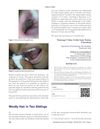
 Two siblings have a rare genetic condition causing curly, coarse hair.
Trichotillometry can measure hair plucking force, aiding alopecia treatment evaluation.
36 citations
,
August 2023 in “Journal of Investigative Dermatology” Understanding the hair growth cycle in mice is crucial for accurate research, as it affects study results and requires careful timing and methods.
7 citations
,
July 2025 in “The Journal of Physiology” C-tactile nerves are sensitive to hair movement.
20 citations
,
January 1979 in “Journal of Experimental Zoology” Plucking hair speeds up the next hair growth, but hormones can change this timing.
Malnourished people have weaker hair that is easier to pluck.
 1 citations
,
November 2017 in “International Journal of Research in Medical Sciences”
1 citations
,
November 2017 in “International Journal of Research in Medical Sciences” Dermoscopy helps distinguish between scarring and non-scarring hair loss and accurately diagnoses hair and scalp conditions without needing hair plucking.
 April 2026 in “Indian Dermatology Online Journal”
 Premature graying of hair is more common in males and linked to family history, smoking, hair plucking, and low levels of certain vitamins and minerals.
46 citations
,
December 2000 in “Seminars in Cutaneous Medicine and Surgery” Laser and light treatments offer quick, long-lasting hair removal for large areas.
3 citations
,
June 1979 in “The Journal of Dermatology” Glycosaminoglycan levels peak early in hair growth and decrease as the cycle progresses.
January 2023 in “Faculty of 1000 Research Ltd” Androgen loss may speed up hair greying.
18 citations
,
March 2023 in “Molecular Therapy — Nucleic Acids” Mechanical stimuli and CCL2 can help regenerate hair follicles in adult mice.
 7 citations
,
January 2020 in “Scientific Reports”
7 citations
,
January 2020 in “Scientific Reports” Rabbit skin analysis showed changes in hair growth and identified miRNAs that may regulate hair follicle development.
 September 2022 in “F1000Research”
 Removing hair from mice without reproductive glands led to grey hair, possibly helping to understand greying in aging.
September 2021 in “CRC Press eBooks” Traumatic alopecia causes hair loss from pulling or rubbing, leading to broken hairs and changes in the scalp.
32 citations
,
March 2006 in “PubMed” Eflornithine cream slows facial hair growth and works well with other treatments.
21 citations
,
February 2003 in “Hormones and Behavior” Androgens boost certain nest-building behaviors and greatly reduce food intake in rabbits.
 14 citations
,
January 2009 in “Experimental Dermatology”
14 citations
,
January 2009 in “Experimental Dermatology” Hair sheds gradually from the follicle, with readiness to shed indicated by less attachment material.
1 citations
,
June 1999 in “The American Journal of Cosmetic Surgery” The simplified eyebrow transplant technique is safe, effective, and looks natural.
1 citations
,
August 1984 in “Therapeutische Umschau. Revue thérapeutique” Permanent hair removal with lasers is the most promising treatment for excessive hair growth.
1 citations
,
January 1963 in “The Anatomical Record” Glyceride levels in mouse skin are higher during hair growth.
Cichlid fish regenerate teeth quickly due to specific cell interactions and gene expressions.
 October 2025 in “Indian Dermatology Online Journal”
 Cultural practices can influence trichotillomania, requiring culturally sensitive treatment.
May 2013 in “CRC Press eBooks” Electrolysis and laser treatments offer more permanent hair removal, but have limitations.
January 1999 in “대한피부과학회지” Trichotillomania is more common in young females and often linked to stress and psychiatric conditions, with hair loss and increased catagen hair observed.
 43 citations
,
August 2008 in “Regenerative Medicine”
43 citations
,
August 2008 in “Regenerative Medicine” Scientists created early-stage hairs from mouse cells that grew into normal, pigmented hair when implanted into other mice.