 1 citations
,
March 2024 in “Ophthalmic Plastic and Reconstructive Surgery”
1 citations
,
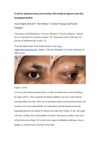
March 2024 in “Ophthalmic Plastic and Reconstructive Surgery” A pilomatrixoma in the eyebrow can cause hair loss and skin lightening.
 June 2018 in “Biomedical Journal of Scientific & Technical Research”
 Cells can change to help heal wounds better.
Retinoic acid can change skin development, like turning scales into feathers or forming glands.
7 citations
,
January 2014 in “International Journal of Trichology” Primary idiopathic pseudopelade of Brocq causes gradual, scarring hair loss with no effective treatment.
 1 citations
,
January 1995 in “Skin Cancer”
1 citations
,
January 1995 in “Skin Cancer” Immunohistochemistry helps accurately identify and differentiate malignant trichilemmoma.
39 citations
,
March 2017 in “Dermatologic clinics” UV light can help stimulate the growth of new pigment cells from hair follicles in people with vitiligo.
94 citations
,
October 1994 in “The Journal of Cell Biology” Too much keratin 16 in mice skin causes abnormal skin thickening and structure.
July 2013 in “University of Southern California Digital Library” New stem cells in nails and sweat glands can regenerate skin and hair.

De-epithelialization reduces complications in subcutaneous skin flap procedures.
6 citations
,
November 1984 in “Acta Dermato Venereologica” Hair follicles and sweat glands show different keratin staining patterns.
10 citations
,
August 2013 in “Experimental Dermatology” Hairless protein and putrescine regulate each other, affecting hair growth and skin balance.
7 citations
,
July 2016 in “Journal of Biomedical Materials Research Part A” cGEL hydrogel improves melanin production in skin cells, making it a promising option for skin treatments.
 April 2023 in “International journal of dermatology and venereology”
 Dermoscopic features can help identify and differentiate types of pityriasis versicolor.
 57 citations
,
January 2014 in “Cold Spring Harbor Perspectives in Medicine”
57 citations
,
January 2014 in “Cold Spring Harbor Perspectives in Medicine” Skin stem cells maintain and repair the outer layer of skin, with some types being essential for healing wounds.
 April 2024 in “Pigment cell & melanoma research”
 Different types of resting melanocyte stem cells have unique characteristics and vary in their potential to become other cells.
333 citations
,
March 2000 in “Proceedings of the National Academy of Sciences” Overexpressing GLI-1 in mice skin can cause tumors like human basal cell carcinomas.
 120 citations
,
August 2008 in “The journal of investigative dermatology/Journal of investigative dermatology”
120 citations
,
August 2008 in “The journal of investigative dermatology/Journal of investigative dermatology” Cytokeratin 19 and cytokeratin 15 are key markers for monitoring the quality and self-renewing potential of engineered skin.
 25 citations
,
January 2014 in “Annals of Dermatology”
25 citations
,
January 2014 in “Annals of Dermatology” Sfrp2 increases during hair follicle catagen phase and slows keratinocyte growth.
29 citations
,
March 2016 in “Dermatologic therapy” Platelet-rich plasma may successfully treat lichen planopillaris, as shown by one patient's symptom regression.
 39 citations
,
May 2010 in “Stem Cells”
39 citations
,
May 2010 in “Stem Cells” Ephrins slow down skin and hair follicle cell growth.
190 citations
,
July 2006 in “Experimental Dermatology” The hedgehog signalling pathway is key in skin development and basal cell carcinoma, offering insights for prevention and treatment.
Retinoids can help reduce keratin buildup in skin conditions.
 November 2024 in “Experimental Dermatology”
 SKO-derived SKP-like cells may help with hair regeneration and skin restoration.
 351 citations
,
February 2010 in “Nature Cell Biology”
351 citations
,
February 2010 in “Nature Cell Biology” Basal cell carcinoma mostly starts from cells in the upper skin layers, not hair follicle stem cells.
64 citations
,
March 2004 in “The journal of investigative dermatology/Journal of investigative dermatology” GPRC5D is linked to the formation of hair, nails, and certain tongue areas.
 January 2018 in “Stem cell biology and regenerative medicine”
 The nucleus is key in controlling skin growth and repair by coordinating signals, gene regulators, and epigenetic changes.
66 citations
,
October 1999 in “Annals of the New York Academy of Sciences” The Skin POMC System affects hair growth and skin responses to stress.
3 citations
,
September 2021 in “Journal of Clinical Medicine” Epidermal signaling helps regenerate fingertip tissue.
 1 citations
,
July 1973 in “British Journal of Dermatology”
1 citations
,
July 1973 in “British Journal of Dermatology” The document concludes that secondary syphilis cases are increasing and often misdiagnosed, pityriasis rubra pilaris can be distinguished from psoriasis by skin cell features, and different skin layers produce specific components during skin repair.

Proretinal nanoparticles are a safe and effective way to deliver retinal to the skin.