 March 2024 in “Advanced healthcare materials/Advanced Healthcare Materials”
 Scientists developed a new way to create skin-like structures from stem cells using a special 3D gel and a device that improves cell organization and increases hair growth.
20 citations
,
January 2013 in “Plastic & Reconstructive Surgery” The new device safely and effectively rejuvenates skin, making it thicker and healthier.
 October 2023 in “Facial Plastic Surgery”
 The PHAT technique effectively rejuvenates lips and face.
1 citations
,
January 2026 in “Science Advances” The 3D skin model mimics pemphigus vulgaris and helps test treatments.
 July 2023 in “Research Square (Research Square)”
 Skin's uneven surface and hair follicles affect its stress and strain but don't change its overall strength, and help prevent the skin from peeling apart.
 October 2025 in “International Wound Journal”
 Gamma-irradiated amniotic fluid improves healing and reduces thickness of hypertrophic scars.
 October 2022 in “International journal of medical science and clinical research studies”
 Mixing platelet-rich plasma with Poly-D,L-Lactic Acid helps reduce deep lines around the nose and mouth.
 28 citations
,
May 1998 in “Skin Research and Technology”
28 citations
,
May 1998 in “Skin Research and Technology” Scalp flaps are stiffer than skin from other body areas, which helps in planning reconstructive and cosmetic head surgeries.
 1 citations
,
December 2022 in “Archives of Dermatological Research”
1 citations
,
December 2022 in “Archives of Dermatological Research” Fluid Platelet-Rich Fibrin (PRF) is more effective and faster at improving acne scars than Platelet-Rich Plasma (PRP), with similar mild side effects.
32 citations
,
December 2015 in “PloS one” P144® improves hypertrophic scars by reducing size and thickness and increasing elasticity.
 1 citations
,
February 2004 in “Dermatologic Surgery”
1 citations
,
February 2004 in “Dermatologic Surgery” Deep Plane Fixation in scalp surgeries allows for more tissue removal with less tension, leading to better healing and less scarring.
19 citations
,
February 2022 in “Journal of Investigative Dermatology” Mechanical stretching can improve or hinder skin regeneration depending on duration.
60 citations
,
February 2014 in “Tissue Engineering Part A” Microporous scaffolds speed up skin healing and regeneration.
January 2026 in “Microsystems & Nanoengineering” New technologies replicate human skin for testing without animals.
47 citations
,
October 2020 in “Communications Biology” Balanced tension in skin is crucial for its structure and function.
1 citations
,
December 2024 in “Tissue Barriers” The epidermis is the stiffest skin layer.
December 2013 in “Pump Industry Analyst” The method effectively delivers vaccines through the skin without needles.
October 2022 in “Zenodo (CERN European Organization for Nuclear Research)” Combining PDLLA and PRP effectively reduces wrinkles and improves skin quality.
17 citations
,
February 2023 in “Cosmetics” 3D printed hollow microneedles could effectively treat skin wrinkles with fewer side effects.
 February 2004 in “Dermatologic Surgery”
 Deep Plane Fixation in scalp surgeries allows for more tissue removal with less tension and minimal scarring.
January 2012 in “Zhongguo shengwuzhipinxue zazhi” The material improved facial wrinkles and skin appearance.
December 2025 in “Advanced Healthcare Materials” The Spherical Skin Model improves drug and cosmetic testing by accurately mimicking human skin for efficient compound screening.
 August 2018 in “Journal of Investigative Dermatology”
 The conclusion is that using light-sheet fluorescence microscopy with a special solution can effectively create detailed 3D images of human skin for dermatological research.
July 2026 in “Acta Biomaterialia” A method was developed to create early-stage hair structures in lab-grown skin.
July 2025 in “Burns & Trauma” 3D cell spheroids can help reduce scars by delivering therapeutic vesicles.
 15 citations
,
October 2006 in “Journal of the American Academy of Dermatology”
15 citations
,
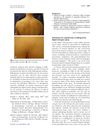
October 2006 in “Journal of the American Academy of Dermatology” Liquid nitrogen spray caused a temporary, harmless swelling under the skin in an elderly woman.
 1 citations
,
September 2024 in “Journal of Education Health and Sport”
1 citations
,
September 2024 in “Journal of Education Health and Sport” 3D skin bioprinting and "BioMask" offer promising new ways to treat facial skin injuries.
 87 citations
,
August 2017 in “Scientific Reports”
87 citations
,
August 2017 in “Scientific Reports” The nanofiber scaffolds improved skin wound healing by supporting cell growth and tissue repair.
 6 citations
,
September 1995 in “The American Journal of Cosmetic Surgery”
6 citations
,
September 1995 in “The American Journal of Cosmetic Surgery” The new technique PÂTÉ improved the amount of scalp tissue removed in surgeries.
March 2007 in “Journal of Plastic Reconstructive & Aesthetic Surgery” A new method was developed to create better skin models for healing and reconstruction.