A rare skin condition in a 17-year-old was diagnosed late, stressing the need for careful evaluation and genetic testing.
August 2021 in “Indian dermatology online journal” A young boy with a rare skin and nail condition improved significantly with simple topical treatments.
 August 2018 in “Journal of The American Academy of Dermatology”
 A 5-year-old girl with a rare skin disorder was effectively treated with skin creams instead of oral medication.
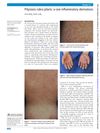 February 2018 in “BMJ case reports”
 An 18-year-old woman was diagnosed with a rare skin condition called Pityriasis rubra pilaris.
 May 2017 in “Journal of The American Academy of Dermatology”
 A woman with a skin disorder was found to have hepatitis C, which may be linked, and was safely treated with methotrexate.
December 2011 in “Journal of the Turkish Academy of Dermatology” Pityriasis rubra pilaris can occur with myasthenia gravis.
 July 2024 in “Quality in Sport”
 Combined minoxidil and PRP therapy improves hair growth without affecting physical performance.
July 2025 in “Colloids and Surfaces B Biointerfaces” A new method using hyaluronic acid liposomes improves Minoxidil's effectiveness and safety for hair growth treatment.
 June 2017 in “Journal of The American Academy of Dermatology”
 Microneedling with PRP and minoxidil (5%) improves hair growth more than minoxidil (5%) alone.
 1 citations
,
February 2022 in “JAMA Dermatology”
1 citations
,
February 2022 in “JAMA Dermatology” Minoxidil and finasteride are FDA-approved treatments for male hair loss, but off-label use of oral minoxidil, dutasteride, and higher doses of finasteride and minoxidil is increasing.
7 citations
,
September 1991 in “PubMed” 2% topical minoxidil helps hair regrowth in women with androgenetic alopecia.
26 citations
,
June 1988 in “PubMed” 3% topical minoxidil is ineffective for severe chronic alopecia areata.
 6 citations
,
May 2020 in “Pharmacology Research & Perspectives”
6 citations
,
May 2020 in “Pharmacology Research & Perspectives” A new gel form of minoxidil is equally effective for hair growth and safer for the heart and other organs than the traditional solution.
 12 citations
,
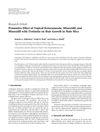
March 2014 in “ISRN Pharmacology (Print)”
12 citations
,
March 2014 in “ISRN Pharmacology (Print)” Minoxidil with tretinoin boosts hair growth most effectively, followed by minoxidil alone, and then ketoconazole.
37 citations
,
March 1986 in “Acta Dermato Venereologica” 1% minoxidil didn't improve hair growth in severe alopecia areata.
1 citations
,
January 2023 in “Drug Development and Industrial Pharmacy” DMSO-liposomes improve finasteride delivery for hair loss treatment.
 82 citations
,
March 1994 in “Archives of Dermatology”
82 citations
,
March 1994 in “Archives of Dermatology” 2% topical minoxidil effectively treats female hair loss with minimal side effects.
May 2025 in “Biological and Clinical Sciences Research Journal” Minoxidil is more effective than Procapil for treating hair loss.
 December 2012 in “Faculty Opinions – Post-Publication Peer Review of the Biomedical Literature”
 There are several promising treatments for hair loss, including dutasteride, latanoprost, ketoconazole shampoo, anti-androgens, laser/light treatment, and platelet-rich plasma, but more research is needed.
 34 citations
,
April 2009 in “Skin Pharmacology and Physiology”
34 citations
,
April 2009 in “Skin Pharmacology and Physiology” Minoxidil affects cell growth in two ways: low doses increase growth, while high doses slow it down and can be toxic.
January 2021 in “Medical research archives” The 5% minoxidil lotion without propylene glycol is effective, well-tolerated, and cosmetically acceptable for hair loss.
 13 citations
,
April 2009 in “Acta Medica Scandinavica”
13 citations
,
April 2009 in “Acta Medica Scandinavica” Minoxidil lowers blood pressure and causes hair growth, with some side effects.
 1 citations
,
January 2009 in “CRC Press eBooks”
1 citations
,
January 2009 in “CRC Press eBooks” Finasteride increases hair count and improves hair growth with low risk of side effects.
January 2024 in “Repositorio - Universidad de Ciencias Aplicadas y Ambientales UDCA.” Minoxidil is more effective than finasteride for treating hair loss in women aged 20 to 50 in Colombia.
 January 2022 in “Journal of Cosmetic Dermatology”
 Using basic fibroblast growth factor with minoxidil improves hair growth and patient satisfaction more than using minoxidil alone.
April 1985 in “Plastic & Reconstructive Surgery” Topical minoxidil can help regrow hair in alopecia areata but is less effective for severe cases.
The 2% minoxidil cream is stable, spreads well on the skin, and helps with hair growth.

The combination of ADSC secretome and minoxidil was most effective for hair growth in people with hair loss.
 December 2023 in “International Journal of Biomedicine”
 Topical finasteride might help with male hair loss with fewer side effects than pills, but more research is needed.
 September 2024 in “Journal of Skin and Stem Cell”
 MMP® with minoxidil may improve hair growth in chronic telogen effluvium.